

Article disponible en français
The Eternal Present · Heritages · 56 min
To reread the traditions in order to understand what they have shaped and what they can still transmit.

Serie: The wound of Duality — and the Return. Article 2
← Previous article: The wound of Duality — and the Return (1/3)
The first part of this crossing had drawn a map: six major spiritual traditions, to which two voices that emerged at the heart of the twentieth century were added, each one naming in its own way the wound of dual separation and the return toward the deeper unity that precedes it.
But a map, however rigorous, does not cross any threshold on its own. It illuminates the landscape; it does not say, by itself, how to walk.
The decisive question now becomes more concrete: how does one actually cross the veil of duality? Through what disciplines of the mind, what practices of the heart, what uses of the body, what ways of inhabiting action and engaging with the world, can human beings make non-duality more than a metaphysical intuition or a beautiful contemplative idea — a lived, direct, continuous reality?
This second installment focuses on these pathways as they are deployed in the traditions already explored. The irreducible lines of fracture between them, the singular place of the contemporary voices, and the question of what these legacies can still say to our time will be taken up in the third and final article.
Let us now continue our exploration by entering the fourth part of this series.
IV. The pathways: how does one cross the veil?
After the mapping of visions comes the decisive question of the pathways. Spiritual traditions differ not only in what they say about Reality, but also in the practices, disciplines, and arts of living they offer to help human beings concretely cross the veil of separation.
These paths are neither arbitrary nor interchangeable. Each one responds, in its own way, to the question: how can non-duality become a lived reality?
The universal sequence: mind, heart, body, action
Before entering into the details of the pathways specific to each tradition, we must pause on something remarkable: the progression we are about to observe — from the transformation of the mind to that of the heart, from incarnation in the body to its radiance in action — is not a grid imported from outside to artificially organize resistant material. It is a sequence that the traditions themselves have articulated, each with its own priorities and emphases, as the natural order of spiritual maturation.
This is not a hierarchy of value among these dimensions of being, as if the body were worth less than the heart or action less than contemplation. It is a logic of genesis: one cannot act durably in a just manner without a gaze having first been converted; but a light that never descends all the way to gestures, breath, relationships, and works would itself remain unfinished.
Buddhism gives the most systematic formulation of this with the eight branches of the Noble Eightfold Path, which invariably begin with sammā diṭṭhi, right view. Not because this view is more precious than action, but because action without right view is blind — just as right view without right action remains barren: right view begets right intention, which begets right speech, which begets right action.
Advaita Vedānta in Shankara’s formulation describes an analogous progression with a different pedagogy: śravaṇa (hearing), receiving truth in the intelligence, precedes manana, working it in the intimacy of the thinking heart, which precedes nididhyāsana, contemplating it until it becomes incarnate in direct awareness. And the jīvanmukta, the living liberated being who crowns this journey, acts in the world not out of duty but by nature, as the sun illuminates without deliberating.
Lurianic Kabbalah articulates the same sequence through the three upper spheres of the Tree of Life: ḥokhmah, the flash of pure vision, non-dual intuition, descends into bīnah, understanding — the heart’s work of articulating and integrating — before reaching daʿat, direct knowledge, intimate union. This inner descent continues downward along the Tree, all the way to Malkut, the Kingdom — action in the world — where the Tiqqun Olam, the mending of creation’s fabric through every just act, is accomplished.
Hesychasm in Gregory Palamas’ rendering describes this movement in its own language: the noûs, the contemplative intellect — the summit of the human spirit — must first be purified and illumined by theoria, the vision of the Uncreated Light, before descending into the heart, where it finds its natural dwelling. It is from this heart, inhabited and stabilized, that the body can itself become a place of divine presence, as a subject of deification and not merely a vehicle — and that diakonia, service of the world, becomes an authentic expression of spiritual life.
Sufism names the same stages: maʿrifa, contemplative knowledge of the Divine, illumines maḥabba, the love that transforms the heart from its very foundations; this love takes flesh in the samāʿ and in bodily dhikr; and the being thus traversed becomes khalīfa, vice-regent of the Divine in the world — not out of ambition but because it has become transparent to That which seeks to manifest through it.
The Dialogues with the Angel unfold this same arc with arresting economy. The threshold phrases that work on the mind — “You are my denser equal,” “From Eternal Life, temporal Life is born” — precede the discovery of the law of the heart — “All love is a path toward the Light” — which becomes incarnate in the valorization of bodily density as an irreplaceable vocation, before radiating outward into creative calling: “The new world can only be built from beauty.”
The Revelation of Arès carries this same sequence to a prophetic and collective scale: the liberation of the mind from its systems — “Empty your head of vain sciences” — precedes the transformation of the heart through love alone — “There is no faith but love, no law but good” — which is expressed in the recovered dignity of the upright praying body, and finds its fulfillment only in repentance as a collective task: changing one person is changing the world.
What is striking about this convergence is that it is not superficial. It reflects a deep, shared spiritual anthropology that traditions have discovered independently across multiple continents and over millennia: the transformation of the human being follows a logic of propagation, from the inside outward, from the most subtle to the most dense, from vision to act.
One cannot reverse the order without betraying the movement: wanting to change the world without first having changed one’s gaze is like rearranging furniture in a house whose windows have not been opened. And contemplating the light without ever letting it pass through the body to reach the hands and the world means keeping a treasure locked away, suffocating from never being spent.
Let us now look, tradition by tradition, at how each of these paths takes on flesh — with its own methods, its particular insistences, its telling silences, and its unexpected convergences with the others.
1. The non-dualism of Being: the Abrahamic paths
The three great monotheistic traditions have each produced currents that pushed their monotheism to its most vertiginous consequence: if God is truly the One, if nothing exists outside Him, how can a human being still stand before Him without being, at bottom, in Him? In their mystical forms — kabbalistic Judaism, contemplative Christianity, and Islamic Sufism — they do not merely affirm the fundamental unity of Reality: they seek to let it traverse the intellect, the heart, the body, and action, until it ceases to be a doctrine and becomes the very fabric of Life.
A. Kabbalah and Hasidism
The mind: Hitbonenut, or the intellect that descends into the heart
In the Hasidic tradition, and more particularly in the Chabad movement elaborated by Rabbi Schneur Zalman of Liadi (1745–1812) — the Alter Rebbe, founder of the Chabad-Lubavitch branch and author of the Tanya — hitbonenut (literally “inner contemplation,” from the root binah, understanding) designates a specific form of intellectual meditation that constitutes the pivot of the entire spiritual path. The process unfolds as follows: the practitioner chooses a concept from kabbalistic thought — the infinity of the Ein Sof, the omnipresence of the divine Presence, the deep identity of all things with their source — and subjects it to prolonged, intensive contemplation. He turns this concept over in all its aspects, exploring its implications, its nuances, its paradoxes, until it ceases to be an abstraction and begins to resonate in the totality of one’s being. Rabbi Schneur Zalman was accustomed to practicing hitbonenut for hours before beginning his prayer — not to accumulate additional knowledge, but so that intellectual truth might descend (yeridat ha-mohin) into the heart (lev) and transform his emotions into resonance with the Divine.
What radically distinguishes hitbonenut from simple intellectual study is its ultimate orientation. Study (limud) aims to understand. Hitbonenut aims at bittul — the nullification of the self, the dissolution of the perceived separation between oneself and the Ein Sof. The intellect is used not as an end, but as a bridge: it concentrates consciousness on divine truth until consciousness itself is transmuted, until the emotions (midot) — love, awe, joy — are ignited in the heart from this contemplated reality, and the separation between the thinker and the object of thought begins to dissolve into a state of non-dual presence. This movement — from hokhmah (the flash of pure vision) through binah (understanding) toward daʿat (direct knowledge, intimate union) — is the internal movement of the Tree of sefirot that hitbonenut seeks to reactivate in the practitioner’s consciousness. No longer as a map, but as a living itinerary.
Convergence: this movement of the intellect toward direct knowledge through prolonged contemplation — the intellect as a bridge that, once crossed, loses its own utility — will be found almost word for word in Shankara’s nididhyāsana, the third stage of the Vedantic path of knowledge. The underlying metaphysics are radically different: where hitbonenut aims at a living, loving union with a personal God, nididhyāsana aims at the realization of absolute identity with impersonal Brahman. Yet the pedagogical structure — the intellect concentrated until it transcends itself — is remarkably analogous.
The Heart: Devekut and Hitbodedut
The Baal Shem Tov (1698–1760), founder of the Hasidic movement in Podolia, accomplished within Judaism a revolution comparable to what Sufism had accomplished within Islam: shifting the center of gravity of religious practice from scrupulous observance of the Law toward a living, direct, and joyful relationship with the Divine. Devekut — literally “adhesion,” “attachment” — designates this state of continuous contact with the divine Presence that the Baal Shem Tov considered not the privilege of scholars but the vocation of every human being, accessible in the most ordinary acts of daily life. According to his teaching, there is not a single atom of reality that does not contain a divine spark — the nitzotzot of Lurianic Kabbalah. To cleave to God therefore does not mean turning away from the world, but learning to see through the world to its divine source, in every encounter, every gesture, every moment. In this perspective, joy (simhah) is not a secondary emotion but a central spiritual practice: it is the sign of living devekut, the fruit of the awareness of being carried by a loving Presence.
Hitbodedut, as taught by Rebbe Nachman of Bratslav (1772–1810), great-grandson of the Baal Shem Tov, constitutes the most personal and radically accessible expression of this path of the heart in Judaism. Where the Chabad lineage’s hitbonenut used intellectual contemplation of theological concepts, Rebbe Nachman’s hitbodedut is a free, spontaneous conversation — in each person’s native tongue, without pre-established formula, without liturgy, without intermediary. “Speak to God as you would speak to a sincere friend” — this is, in essence, Rebbe Nachman’s central teaching. He recommended practicing it daily, preferably alone in a secluded space (where every tree, he said, carries its own prayer up toward heaven), and addressing God in one’s own name, with one’s most naked suffering, most persistent questions, most simple joys.
What gives this practice its depth is precisely what makes it difficult for modern people: there is no method to follow. When one no longer knows what to say, one says that one no longer knows what to say. The truest sincerity itself becomes the highest form of devotion, because it shatters the illusion of the social mask we wear even in our relationship with the Divine.
Convergence: this formula-free, personal prayer, addressed directly to the Divine without institutional mediation or prescribed liturgy, resonates with two practices we will encounter further on: the ask/give structure of the Dialogues with the Angel — where the sincere, often clumsy request is already the beginning of the answer — and the Arèsian prayer as described by Michel Potay, addressed directly to Life three times during the day, once at night, without intermediary. Three traditions, three contexts, one shared conviction: the direct relationship between the human and the Divine is not reserved for an elite — it is the vocation of every human being who consents to present themselves there without a mask.
The body: a real presence, but poorly theorized
Kabbalah and Hasidism have not developed a distinctly formulated path of the body comparable to Zen zazen, tantric prāṇāyāma, or the Jesus Prayer in hesychasm. Yet the body is not absent: it is present in the swaying of prayer (shuklen), in dance, in sung fervor, in the physical joy of the festivals, and in a way of concretely inhabiting the relationship to the Divine in daily life.
But this presence most often remains practical, symbolic, and liturgical, rather than conceived as an autonomous spiritual path with its own pedagogy. This is not a pure absence, but a form of theoretical reserve — reflecting a broader tension within the Abrahamic traditions: on one hand, the world is a place of sanctification, human gestures can participate in Tiqqun, and the body can take part in prayer; on the other, a persistent wariness remains toward the flesh as a possible source of distraction, opacity, or dispersal.
This point deserves careful note, as it is not a secondary detail. It already anticipates one of the questions we will encounter further on: do all traditions grant the body the same spiritual dignity, or do some assign it only a supporting role where others make it a royal path of transformation?
Action: Tiqqun Olam, or repair as cosmic vocation
The doctrine of Tiqqun Olam — the mending of the world — constitutes Lurianic Kabbalah’s most original and ambitious contribution to universal spiritual ethics. For Isaac Luria (1534–1572), creation itself began with a cosmic catastrophe: the Tsimtsum (the contraction of the Infinite to create the space of manifestation), followed by the Shevirat Ha-Kelim (the shattering of the Vessels designed to contain divine Light), scattering myriads of divine sparks — the nitzotzot — into the depths of matter, covered by kelipot, the husks of opacity. The world as it is is not simply imperfect — it is fractured at the level of being itself — and the human being’s task is to free these sparks through every just act performed with kavvanah (conscious intention), every prayer carried to its depth, every gesture of love and truth. The mending of the world is therefore not an optional social improvement: it is the continuation of the creative act itself, the cooperation of the human being with God to rebuild the shattered unity of Being.
Convergence: this refusal to withdraw from the world as long as the last spark has not been freed — this vow to remain engaged until the accomplishment of total repair — is structurally analogous to the bodhisattva vow in Mahāyāna Buddhism: to remain in the cycle of existences until the last sentient being has been liberated. Two traditions separated by continents and centuries pose the same demand: inner realization is incomplete as long as it has not been translated into responsibility toward all. We will return to this in the Buddhist paths.
B. Christian Mysticism
The mind: Abgeschiedenheit and Theoria
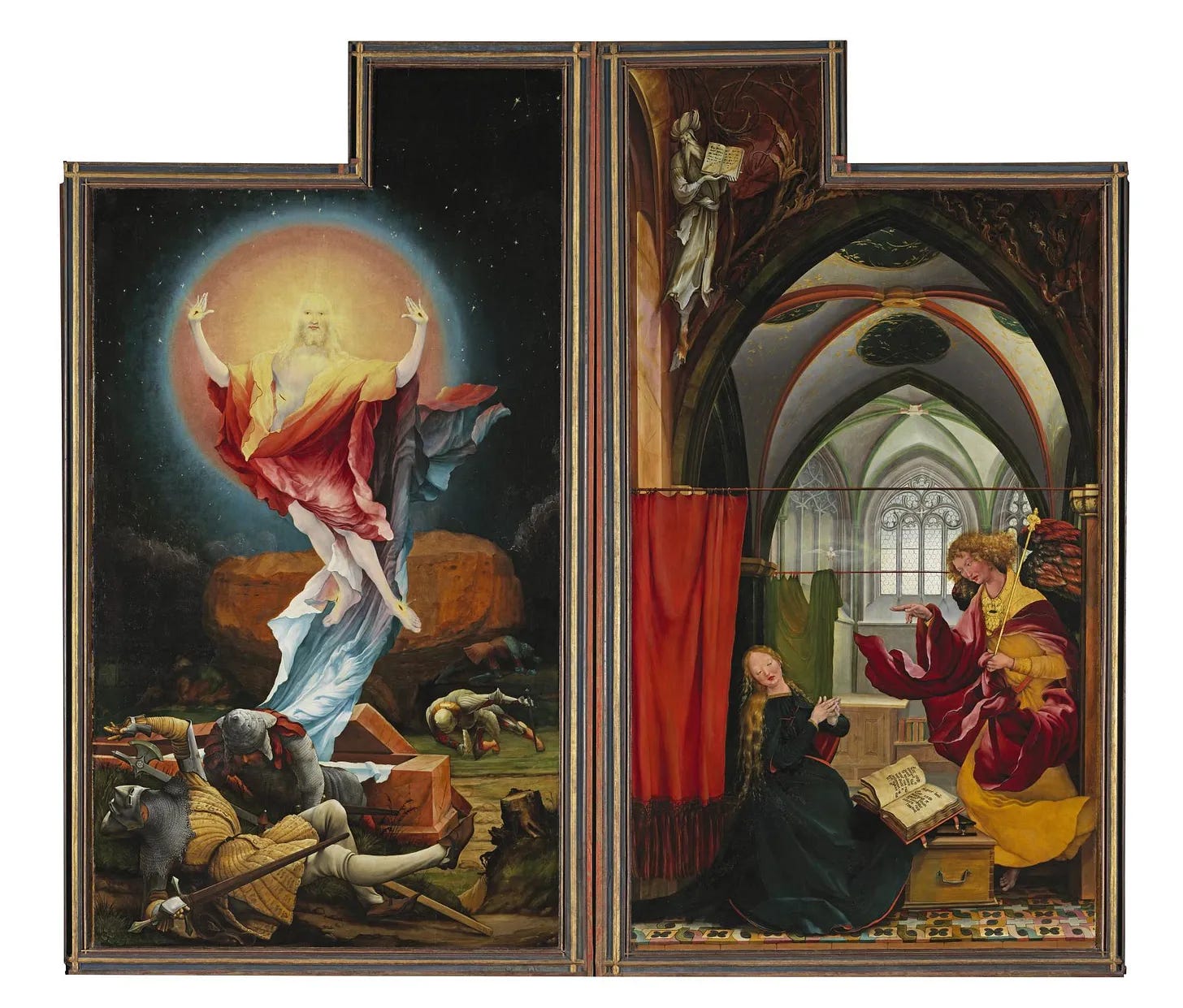
The great Rhenish mysticism of the 13th–14th centuries — Meister Eckhart, Johannes Tauler, Heinrich Suso, Ruusbroec — developed, from the Neoplatonic heritage and apophatic theology, a doctrine of the Grunt (the “ground of the soul”) that constitutes one of the most audacious non-dual formulations in Christianity. For Eckhart, the Grunt der Sele is not one region of the soul among others: it is the point where the soul and God share one single ground — Augustine’s abditus mentis. This is not a union acquired by spiritual effort — it is already there, primordial, permanent, but veiled by the agitation of discursive consciousness and the “images” (Bilder) that invade the mind until they hide the living God. Eckhart’s entire spiritual path aims at a single act: Abgeschiedenheit — detachment, stripping away — not first of exterior things, but of interior representations, the ego’s projections, even the images of God that clutter the soul to the point of hiding the living God from it. “The eye through which I see God is the same eye through which God sees me: my eye and the eye of God are one single eye.” This formula, which the Inquisition deemed heretical, is nonetheless the most precise description of what all traditions call the non-dual heart: not the meeting of two gazes, but the discovery that vision was one from the very beginning.
Convergence: this dissolution of images through Neoplatonic apophatic method will find an unexpected echo in Nāgārjuna’s method — though these two apophaticisms do not aim at the same horizon. Where Eckhart deconstructs to make room for an ineffable Presence that remains, Nāgārjuna deconstructs all the way to the end, without any positive residual ground. We will specify this divergence in the lines of fracture.
Hesychasm — from the Greek hēsychia, “inner silence,” “stillness” — is the great contemplative tradition of Eastern Christianity, of which Gregory Palamas (1296–1359), monk of Mount Athos and later Archbishop of Thessaloniki, is the most fully elaborated theologian. His path of the mind bears a precise name: theoria — a state of direct knowledge of God that the hesychast tradition considers accessible to the purified human being, not as an extraordinary experience reserved for a few, but as the natural goal of human life. Palamas’ spiritual psychology distinguishes two states of the noûs, the luminous center of human consciousness: dispersed outward, fragmented by sensory representations and the logismoï (thought-passions) that ceaselessly invade it; and restored to its natural state — gathered, concentrated in itself — capable of nepsis (sober watchfulness), of pure attention, free from images and discursive thoughts, and finally of accessing theoria, the vision of the Uncreated Light. Here, the intellect is not destroyed but transfigured: the noûs is restored, not annulled, in its vocation of contemplative knowledge of divine Reality.
Internal Divergence: where Eckhart dissolves all images of God through the apophatic path — all the way to the nameless Grunt, prior to any relation — Palamas carefully distinguishes the absolutely transcendent divine essence from the uncreated divine energies through which God genuinely communicates Himself to man. These are two non-dual Christianities that are not easily reconciled: in Eckhart, the Creator-creature distinction tends to dissolve in the common Grunt; in Palamas, it is maintained, but overcome through participation. This tension between dissolution and participation runs through all of Christian mysticism and foreshadows one of the major lines of fracture.
The heart: Thérèse and Ruusbroec, or the union that does not abolish
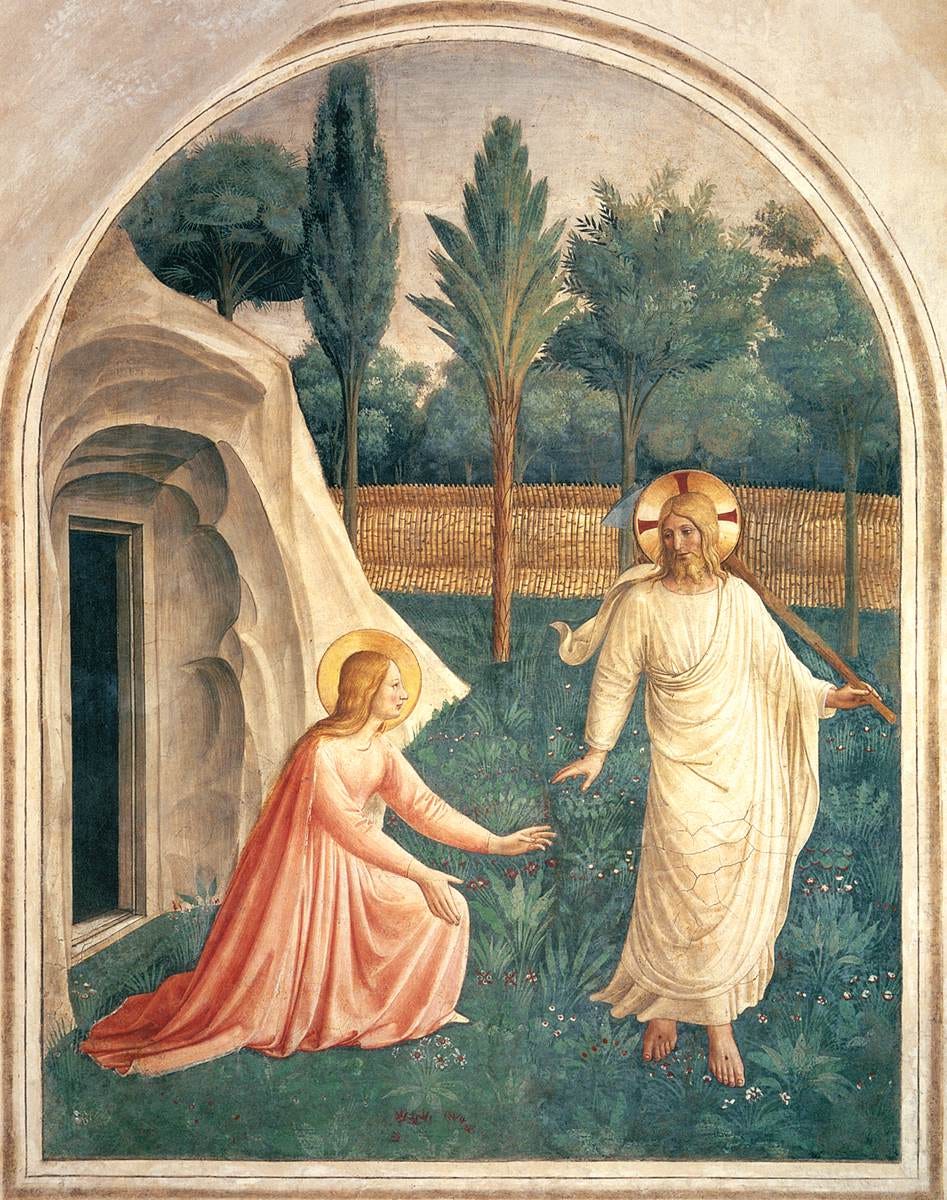
Saint Teresa of Ávila (1515–1582), in The Interior Castle, maps the human heart as a dwelling of seven concentric mansions, at the center of which God permanently resides — not as an outside guest, but as the flame at the heart of a candelabra, whose light illumines all the mansions.
What is striking is that this progression is described not as a mystical performance but as a love relationship that deepens: access to each mansion is not an achievement, but a deepening of trust, surrender, and love. The seventh mansion, the transforming union, is not the disappearance of the person but her full realization in relationship with the Divine: Teresa says she is, in that state, more herself than ever.
Ruusbroec, in the same vein, formulates this union through the image of the soul “as a flame in the fire”: inseparable but not merged, united but not dissolved. Union is not annihilation — it is an intensification of the person in relationship with God.
Divergence: this union that does not abolish the person stands in direct contrast with the Sufi fanāʾ in its most radical formulations, where the extinction of the individual self is the explicit horizon of the path. This is not a quarrel over words: it reveals a deep metaphysical divergence on the question of what becomes of the person in union with the Absolute — one of the major lines of fracture we will examine in the next section.
The body: the Jesus Prayer and the defense of the purified body
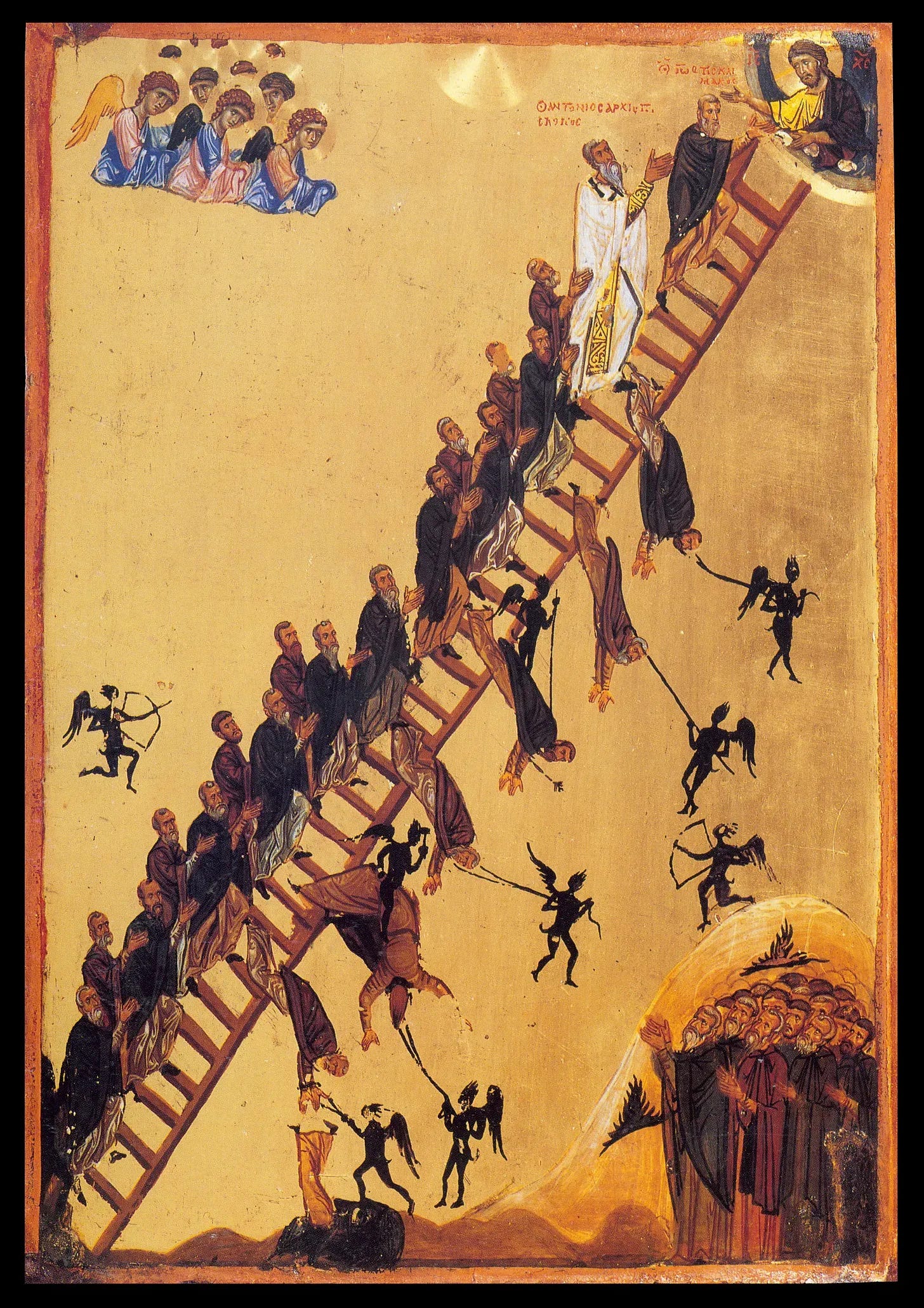
Hesychasm developed, within Eastern Christian tradition, a doctrine of the body in spiritual practice that constitutes one of its most original contributions to universal spiritual anthropology. Gregory Palamas defends, against the attacks of the Calabrian monk Barlaam, that the purified body can participate in deification — not as a spectator or passive instrument, but as a subject of transfiguration. The Light of Tabor, says Palamas, is not perceived by the physical eyes alone, nor by the intellect alone: it is perceived by the entire being, body included, when that body has been purified through years of practice.
The hesychast method involves a precise coordination between the Jesus Prayer — “Lord Jesus Christ, Son of God, have mercy on me, a sinner” — and the cardiac breath: inhalation accompanies the first part, exhalation the second. Transmitted from spiritual father to spiritual father in the monasteries of Mount Athos, this discipline aims to make the entire body — muscles, breath, posture, heart rhythm — a single instrument of presence to the divine Light. When the practice deepens, the prayer begins to recite itself on its own, from a level of being deeper than conscious will: the body itself prays, and not merely the mind.
Convergence: this fine coordination between breath and prayer that hesychasm elaborates finds a direct echo in the tantric prāṇāyāma of Kashmir Shaivism — where breath connects the physical body and the subtle bodies — and in the Mevlevi Sufi samāʿ, where the rotation of the body becomes the instrument of the ego’s extinction. Three traditions, three bodily paths, one shared intuition: breath and bodily movement are not insignificant adjuncts to spiritual life — they are among its most direct levers.
Action: an Intense interiority, but a poorly articulated social ethics
Medieval Christian mysticism — whether Rhenish or hesychast — did not develop an explicit theology of action in the world comparable to the kabbalistic Tiqqun Olam or the bodhisattva vow. This does not mean that just action is foreign to it: caritas, the service of the poor, care for the sick and excluded, remain at the heart of the Christian ethos — and many mystical figures lived a remarkably concrete heroic charity.
But this active dimension most often appears as an implicit consequence of inner union, rather than as a dimension reflected upon in itself, with its own language and an overall vision of the world’s transformation. The contemplative tradition seems to maintain an unresolved tension between withdrawal into interiority — where everything unfolds, at the level of the Grunt or theoria — and the inscription of this union in structures of justice, peace, or a reorganization of the social fabric.
This is not an accidental lacuna, but a historical and spiritual choice whose weight must be assessed. Placed alongside the total engagement proposed by Lurianic Kabbalah with the Tiqqun Olam, or — in modernity — the Revelation of Arès with its call to “change oneself for the good, to change the world,” this relative withdrawal of Christian mysticism on the question of collective action outlines one of the major gaps we will encounter in the lines of fracture: between spiritualities of interiority first, and spiritualities that make the transformation of history a constitutive element of the path.
C. Sufism
The mind: maʿrifa, or seeing through the world to its source
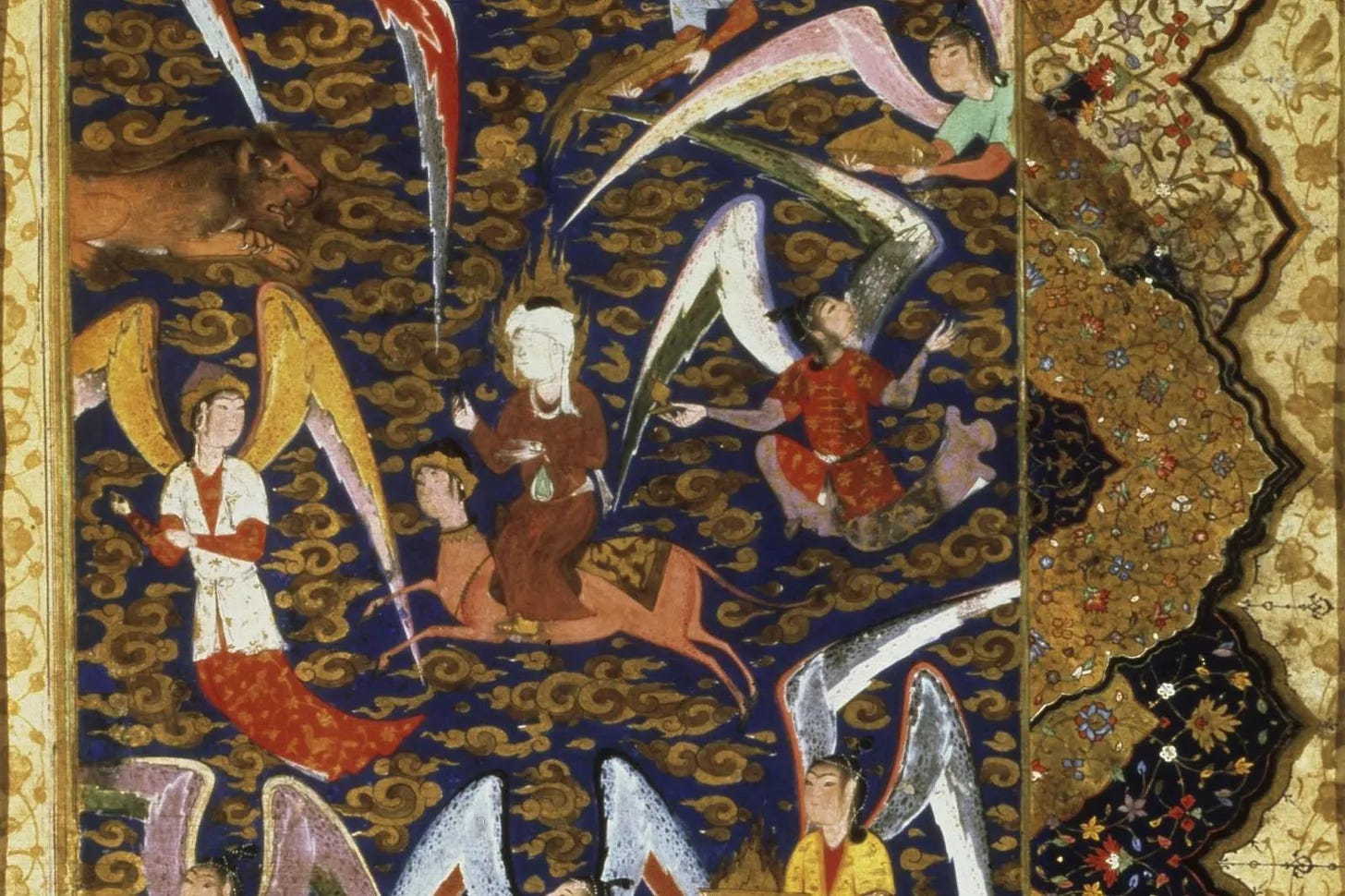
Sufism is not primarily a doctrine but a path of consciousness transformation, whose intellectual cornerstone is maʿrifa — direct, immediate, non-discursive knowledge of the Divine — which is not the fruit of theological study but of a purification of the inner gaze. Ibn Arabi (1165–1240), in his doctrine of Waḥdat al-Wujūd (the Unity of Being), provided the most systematic metaphysical framework: there exists only one real Being — that of Allah — and all of creation is nothing but His self-manifestation (tajallī), the epiphany of His Names and Attributes through the infinity of their combinations. Every existent is a mirror in which a divine Name is reflected, a face through which the Divine contemplates Itself from a particular angle. Maʿrifa consists in seeing through each thing to the divine Name that grounds it — not abstracting the Divine from the world, but recognizing the Divine in each detail of the world, like light in each fragment of a prism.
Divergence: this vision of the world as tajallī — a precious and irreplaceable epiphany of divine Being — directly contrasts with Shankara’s māyā, where the phenomenal world is an illusory superimposition onto the screen of the only real Brahman. One of the sharpest fractures between non-dual traditions: where Shankara says dissolve, Ibn Arabi says celebrate. Their metaphysics lead to radically different practical attitudes toward the world, which we will examine in detail in the lines of fracture.
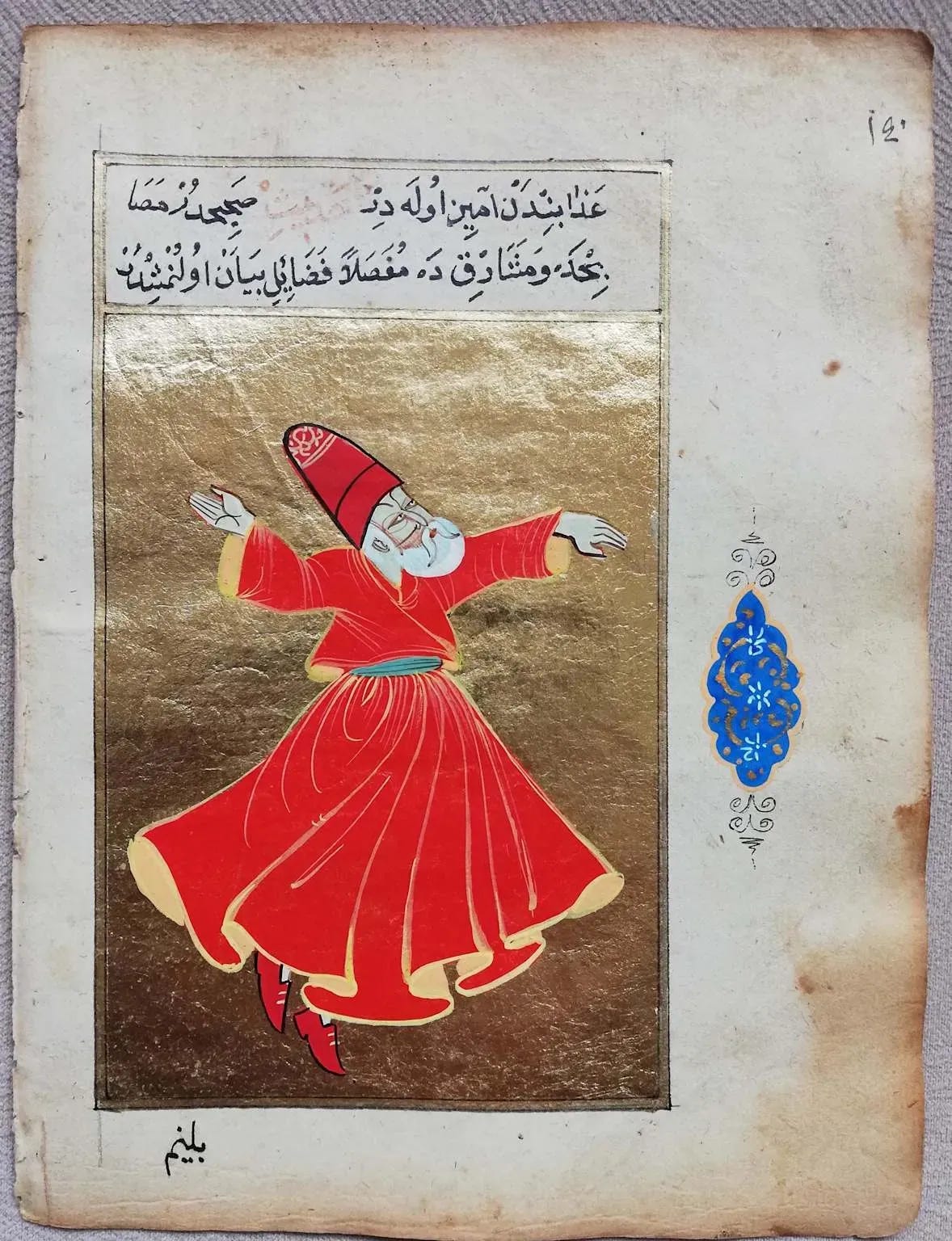
The heart: dhikr, or the three levels of remembrance
The central practice of Sufism is dhikr — literally “remembrance,” “recollection” — the rhythmic, intensive repetition of the divine Names until consciousness is saturated by the invoked Presence, to the point where the distance between the invoker and the Invoked begins to dissolve. The Quranic foundation is explicit: “Prayer keeps away indecency, but the remembrance of God is greater” (Quran 29:45). Ibn Arabi distinguishes three successive levels in the practice of dhikr. The first — dhikr al-lisān, the remembrance of the tongue — is the vocal repetition of the Name, accompanied by rhythm, breath, and bodily swaying: the entry into practice, where the physical repetition of the Name begins to imprint a reorientation of attention in the body. The second — dhikr al-qalb, the remembrance of the heart — is the state where the heart itself begins to invoke, independently of conscious will, as naturally as breathing. The third — dhikr as-sirr, the remembrance of the secret — is total transparency: it is no longer the human being who performs the dhikr, it is God who remembers Himself in the space the practitioner has become.
The fanāʾ — extinction — sought through this progression, is not an annihilation of the person but its transparency: al-Junayd of Baghdad (830–910), master of “sober” Sufism known for his silent dhikr, clarifies that the extinction of the self is always accompanied by a baqāʾ — a “subsistence in God” — where the person is restored, not annulled. Sufi love, as Rumi sings it in the Mathnawī, is therefore less a dissolution than a transfiguration: the reed cut from its original bed weeps — not in despair, but because the very separation is the condition of music. The lament of the ney is simultaneously the pain of separation and proof of the aspiration for return.
Convergence: the third level of dhikr — that level where “it is no longer the human being who invokes; it is God who remembers Himself” — joins what Shankara calls sākṣātkāra : the instant in which the knower, the known, and the act of knowing coincide in a recognition without remainder. Two traditions, two idioms, two profoundly different metaphysics — one single movement: the dissolution of the subject-object duality in knowledge itself.
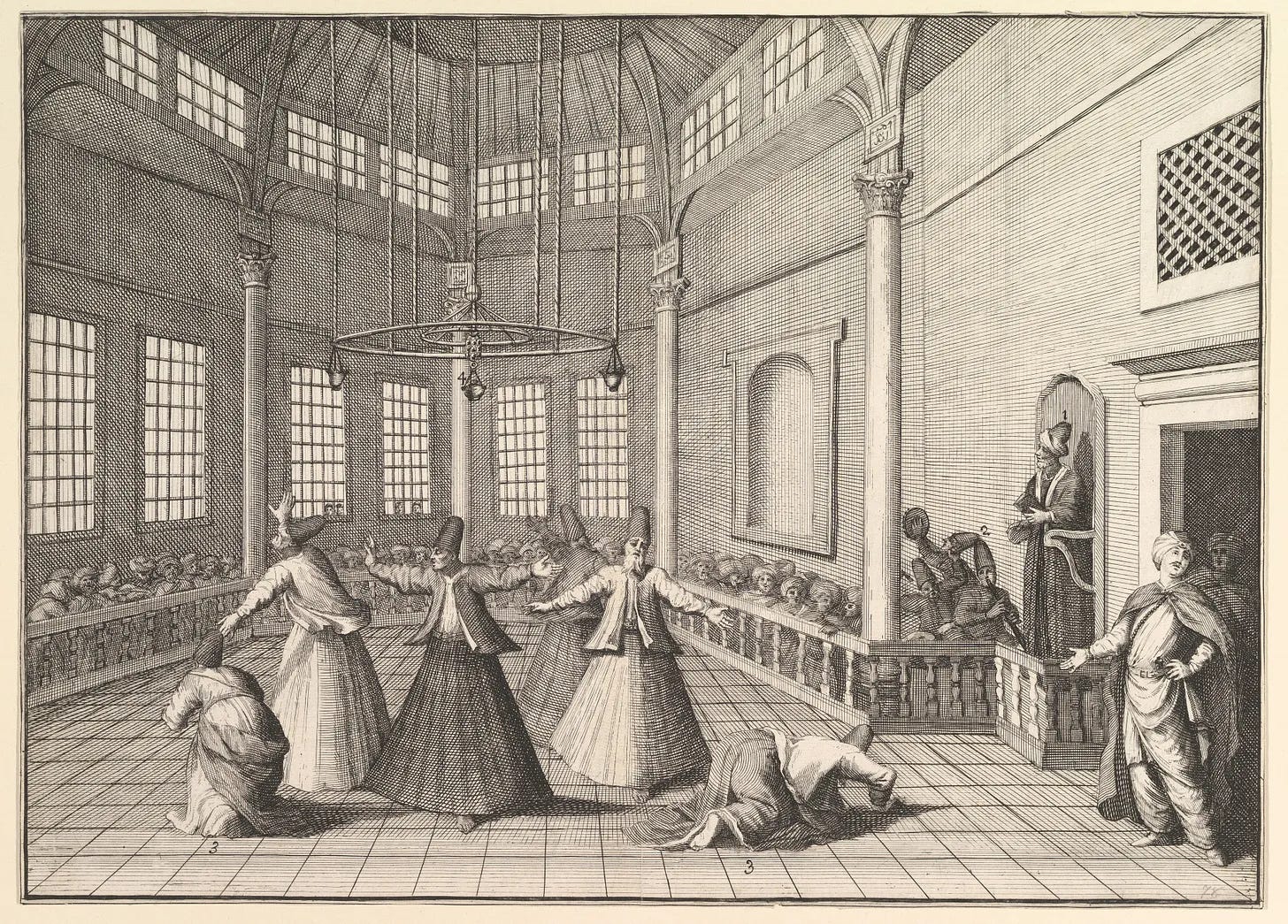
The body: the mevlevi samāʿ, or the pivot between heaven and earth
Jalāl ad-Dīn Rumi (1207–1273), Persian mystical poet and founder of the Mevlevi order, made the dance of rotation one of the most sublime expressions of the path of the body in Sufism. The samāʿ — literally “listening” — designates the musical and dance ceremony that forms the heart of Mevlevi practice. The symbolic structure of the rotation is of remarkable cosmological precision: the semāzen turns counterclockwise, right arm raised toward heaven, palm open in a position to receive, and left arm lowered toward the earth, palm facing downward in a position to transmit. He is the pivot between heaven and earth, the channel of divine Presence toward creation. The rotation gradually accelerates until a state is reached where the ego, unable to maintain its narrative coherence at that speed, lets go — and it is in this freed space that fanāʾ opens. The semāzen does not fall: he is carried by something that is no longer him but belongs to him more deeply than he himself does.
Convergence: this body as a pivot between heaven and earth in Mevlevi rotation resonates with a central intuition of the Dialogues with the Angel: “You are my denser equal.” In both cases, matter is not an obstacle to be overcome, but the irreplaceable place of manifestation and mediation: the angel needs human density to manifest in the world; the Divine needs the semāzen‘s body to dance in creation.
Action: a spiritual chivalry, but little thought given to collective transformation
Like Christian mysticism in this respect, classical Sufism did not develop a detailed theology of action in the world comparable to the kabbalistic Tiqqun Olam or the Buddhist bodhisattva vow. This does not mean that ethics are foreign to it: futuwwa (spiritual chivalry), unreserved hospitality, service of the master and the companions, care for the poor and wanderers — these are constant dimensions of Sufi brotherhoods, and many Sufi figures exercised real social influence in their contexts.
But this action remains above all the natural radiance of a transformed heart, rather than an explicit project of reshaping collective structures. The Sufi thinks of himself primarily as a traveler toward God within the world, more than as a conscious agent of a history to be redirected; the priority is the transparency of the soul, not the reconfiguration of the social fabric as such.
Placed alongside Lurianic Kabbalah or the prophetic modernity of the Revelation of Arès, this restraint draws a distinctive tonality: the world is received as a place of tajallī — epiphany of Being — more than as a worksite to transform. This is one of the major gaps we will encounter in the lines of fracture: between traditions for whom spiritual fulfillment necessarily involves explicit responsibility toward history, and others for whom transformation unfolds first in the quality of presence — leaving to God the care of the world’s overall architecture.
2. The non-dualism of Identity: the Hindu paths
If the Abrahamic traditions elaborate their non-dualism within a fundamental relationship between the human being and a God who stands before them — even in the most radical formulations of Sufism or Kabbalah — Hinduism enacts a break in register: non-duality is no longer the endpoint of a relationship; it is the very structure of reality. The human being does not rejoin Brahman — he discovers that he has never ceased to be Brahman. But Hinduism is not a monolithic tradition, and this non-dualism of identity unfolds there in two deep, contrasting tonalities: Shankara’s Advaita — austere and resolute — and Abhinavagupta’s Kashmir Shaivism — luminous and celebratory. These two voices respond to and contradict each other from within the same civilization; their tension is one of the most fertile in the entire spiritual history of humanity.
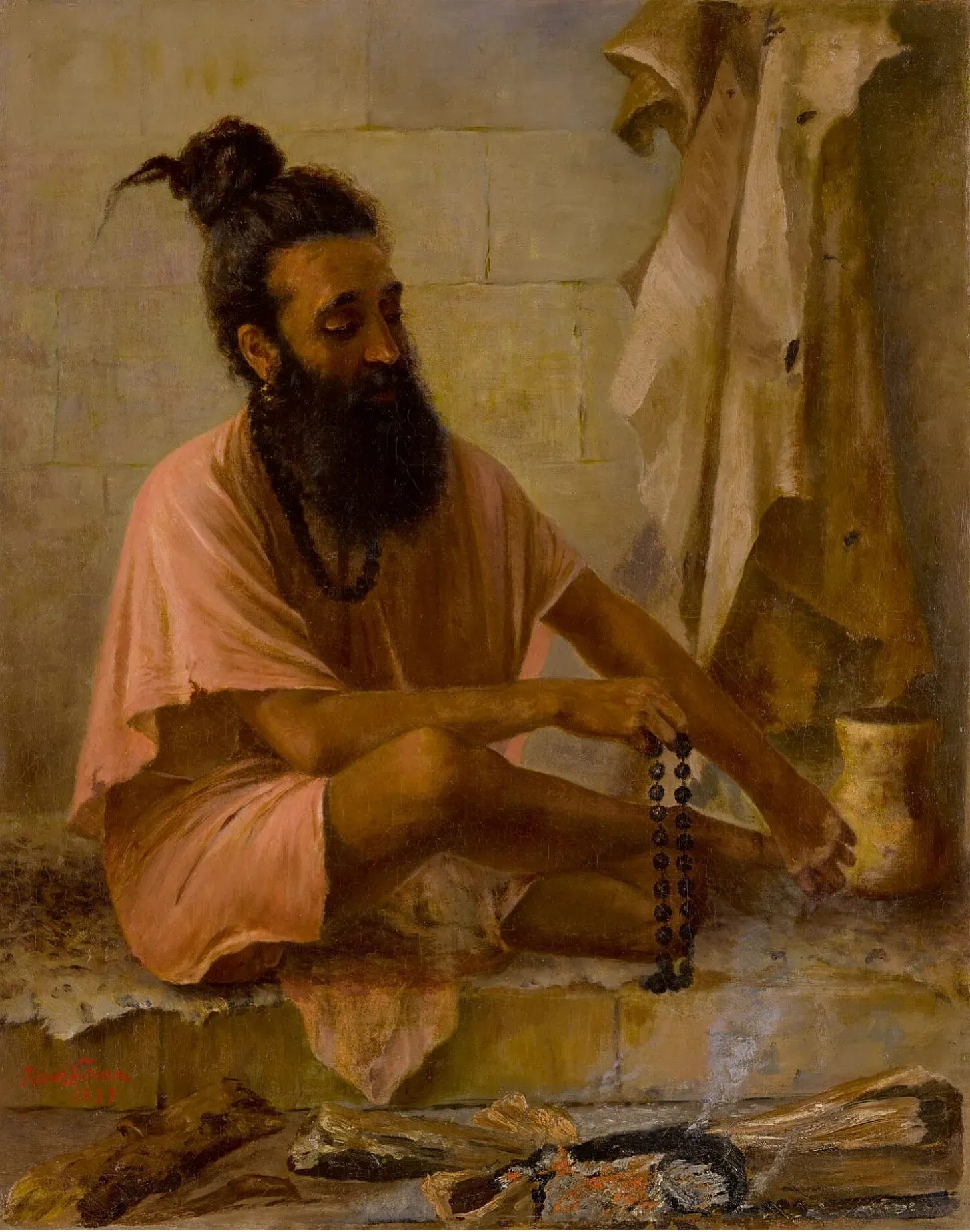
A. Shankara’s Advaita Vedānta
The mind: Jñāna-Mārga, or the intellect that devours itself to the Light
Shankara (788–820 CE) defines jñāna-mārga — the path of knowledge — as the royal road to moksha, liberation. If suffering arises from metaphysical ignorance (avidyā) — the misrecognition of one’s own nature — only direct knowledge can dissolve it at the root. Right action (karma-yoga), which purifies, and devotion (bhakti), which opens the heart, prepare the ground but do not by themselves uproot the illusion of separation.
Shankara’s pedagogy unfolds in three stages. The first, śravaṇa — “hearing” — designates the reception of truth revealed by the Upanishads and the qualified teacher: not passive listening but total attention oriented toward this single inquiry: what is Brahman, what is Ātman, and in what way are they identical? The second stage, manana — “reflecting, ruminating” — is the work of the intellect that turns this truth over in every direction, examining its implications, untying objections, eliminating misunderstandings, until it becomes a stable inner conviction. The third stage, nididhyāsana — “contemplating until deep integration” — is the uninterrupted contemplation of this truth until its incarnation in direct, immediate, non-conceptual awareness. This passage from concept to experience — this tipping from “I know Brahman,” which dissolves into “Brahman knows Itself in me” — is what the tradition calls sākṣātkāra, direct vision.
The Mahāvākyas — “Great Utterances” from the Upanishads, such as Aham Brahmāsmi (”I am Brahman”) or Tat tvam asi (”You are That”) — play here the role of tools of transformation more than doctrinal propositions. They must be actively meditated upon, confronted with every daily experience until the ego’s resistance crumbles and the subject-object duality in knowledge itself collapses. It is precisely this threshold-crossing that the entire jñāna-mārga aims at.
Convergence: Shankara’s three-stage structure presents a striking analogy with Rabbi Schneur Zalman’s hitbonenut: in both cases, the intellect is used as a bridge toward direct knowledge that surpasses it — not as a permanent dwelling. This rapprochement does not erase the deep divergence on the nature of the Absolute: it makes it more precise, and more instructive.
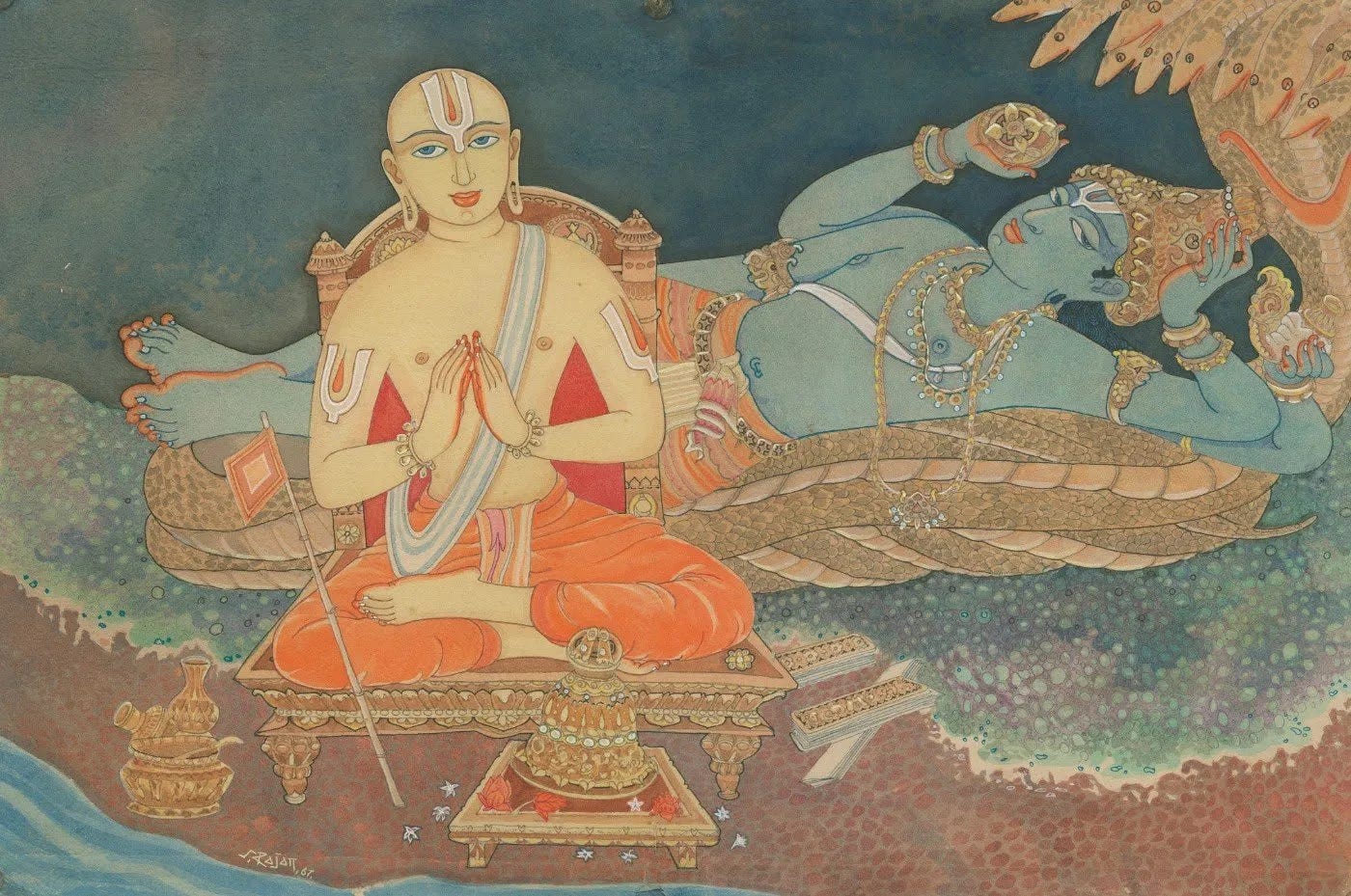
The heart: Shankara’s silence and Rāmānuja’s response
In Shankara’s pure Advaita, the path of the heart does not occupy a central place. Bhakti — loving devotion — is recognized as a valuable preparatory path, capable of purifying the emotions and orienting consciousness toward the Divine, but it remains structured by the duality of the devotee and the devoted-to — and therefore cannot, in this logic, accomplish the ultimate dissolution of separation.
It is precisely on this point that Rāmānuja (1017–1137), philosopher of Viśiṣṭādvaita (”qualified non-dualism”), opposes Shankara. For Rāmānuja, the love relationship between the soul and God is not a provisional stage destined to dissolve into a subjectless knowledge — it is ultimate reality itself, its crowning and its fullness. Devotion to Vishnu, total surrender (prapatti) to divine grace, are not crutches to be thrown away once knowledge is acquired: they are the highest form of spiritual life. The burning love poems of the Tamil Alvārs stand as living demonstration: the heart can reach directly what the long intellectual road seeks by other paths.
Divergence: a deep fracture between Shankara and Rāmānuja — absorption into the Absolute vs. accomplished relation with the Absolute — which we will encounter again in Section V under the question of the person’s destiny in union.
The body: silence and its reasons
Shankara’s Advaita does not develop its own path of the body. This silence is consistent with his metaphysics: if the phenomenal world is māyā — an illusory superimposition onto the screen of the only real Brahman — then the body belongs entirely to this relative order. The jīvanmukta, the living liberated being, continues to inhabit a body, but knows that this body is no more real than an image in a mirror; to make it an instrument of liberation would, in Shankara’s logic, amount to confusing ontological levels.
Divergence: this silence on the body will be one of the sharpest points of contrast with Kashmir Shaivism, which follows by a century and a half in the same civilization — and for which the body becomes instead a royal road of realization.
Action: structural tension and its modern resolutions
If the world is māyā, why engage in the mending of the world? Shankara responds through the distinction between two levels of truth: at the conventional level (vyāvahārika), ethical actions remain necessary and fully valid — the law of causality, the suffering of others, the obligation of just action are not denied; at the ultimate level (pāramārthika), only the knowledge of Brahman is liberating. The response is philosophically rigorous, but it leaves ethics in the order of the provisional, as if it were not rooted in the Absolute itself.
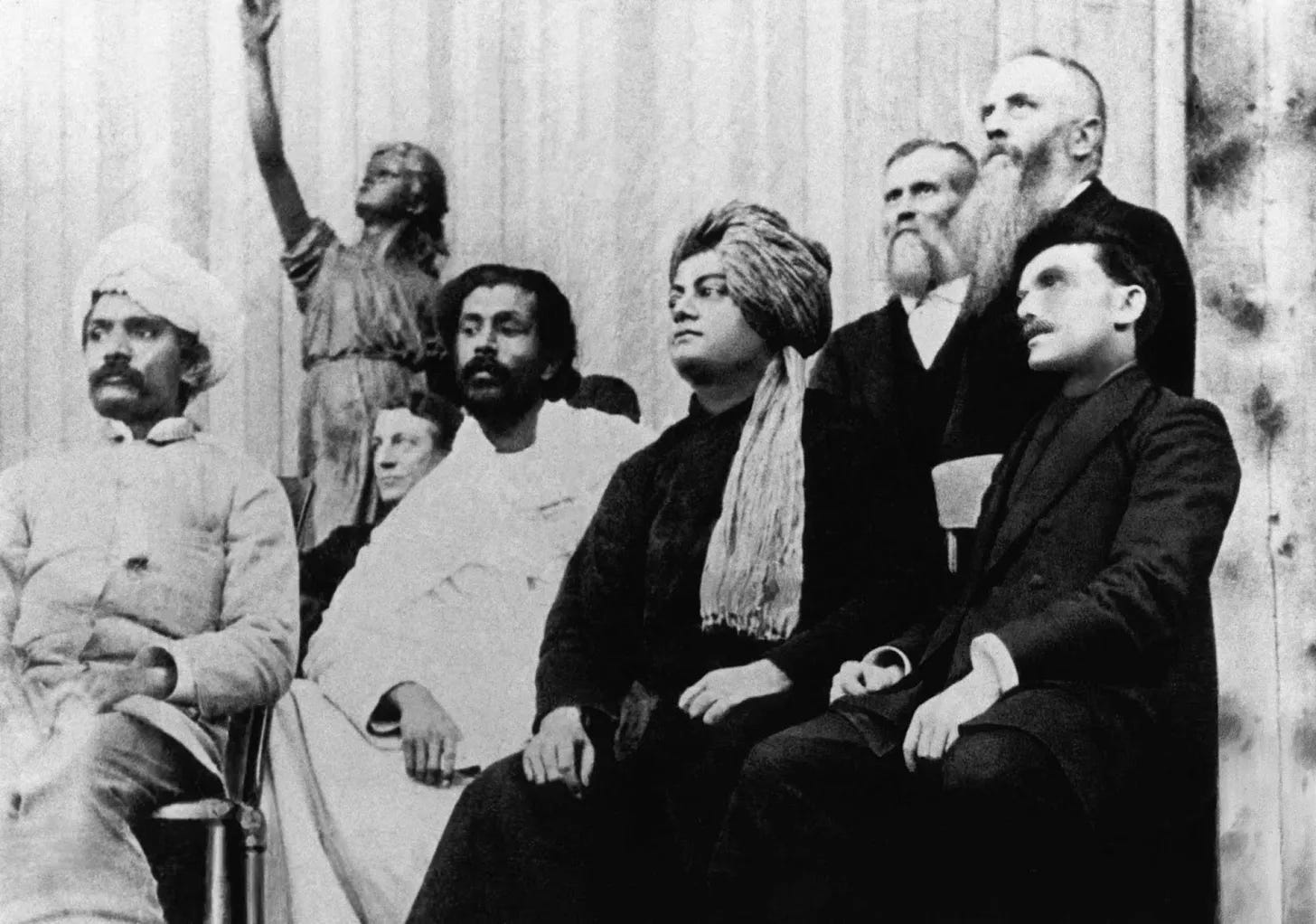
Vivekananda (1863–1902) and Gandhi (1869–1948) then made a decisive reinterpretation to extract from Advaita a robust foundation for action in the world. Vivekananda formulated a “Practical Vedanta”: if Brahman is the reality of every human being, serving the human being in distress is serving Brahman. Gandhi extended this logic in satyāgraha — resistance through truth: if the other is Brahman and so am I, any violence against them turns back against me; non-violence (ahiṃsā) becomes a metaphysical deduction from non-duality, not a mere moral ideal.
Convergence: where Mahāyāna Buddhism had from the outset articulated non-duality and compassion with the bodhisattva ideal, Hinduism had to rework Advaita from within to express its ethical consequences. The Revelation of Arès and the Dialogues with the Angel will formulate it differently still: their non-dualism is immediately ethical, because the unity of the Living is there the first word — not the last.
B. Abhinavagupta’s Kashmir Shaivism
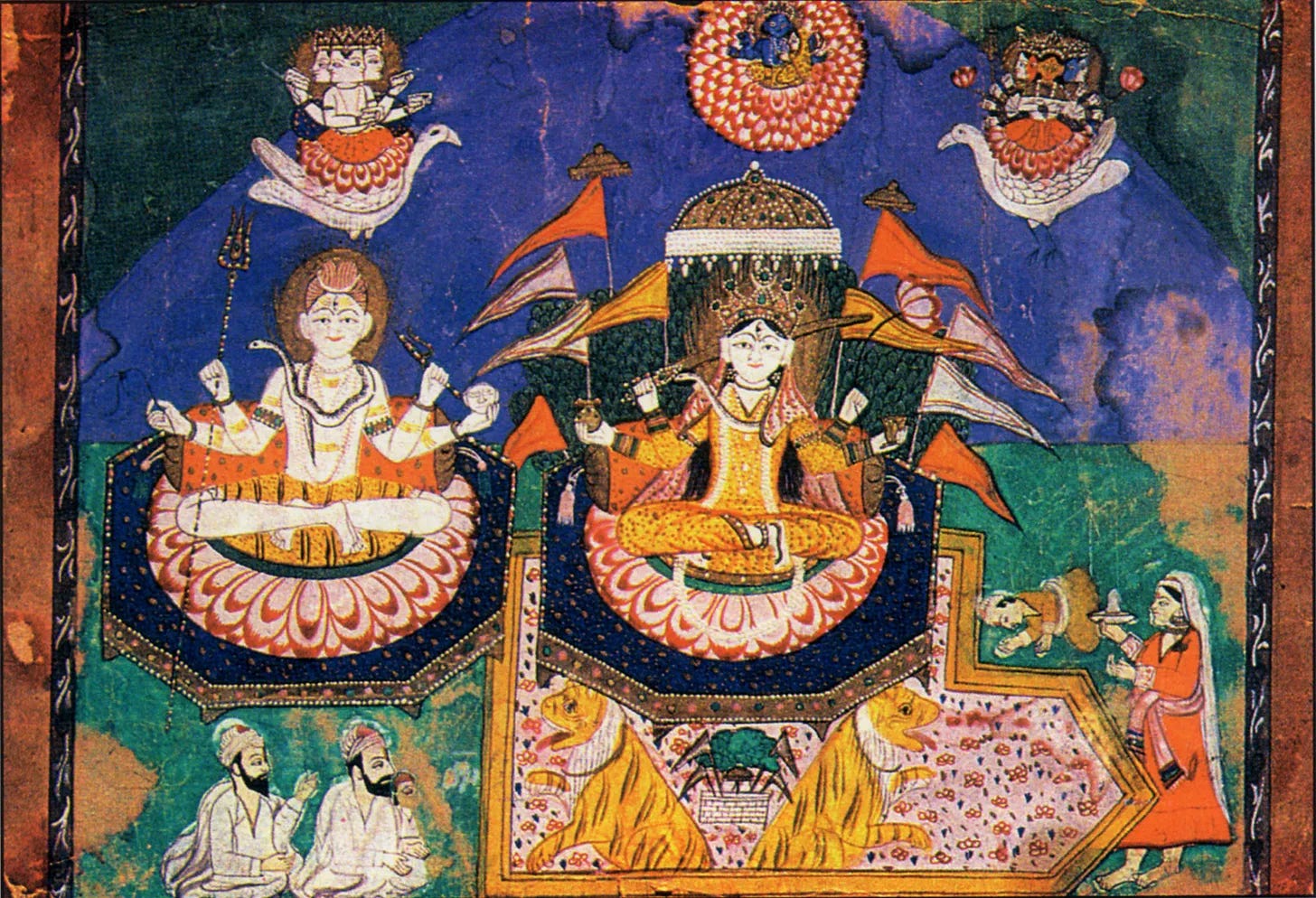
A century and a half after Shankara, in the tenth-century Kashmir of Abhinavagupta (c. 950–1016), a non-dualism of an entirely different tonality takes shape. Where Shankara is austere, Abhinavagupta celebrates; where Shankara devalues the world as māyā to be dissolved, Abhinavagupta declares it līlā — spontaneous play — and spanda — the living pulse of Shiva’s divine Consciousness. Nothing is excluded from divine reality: passion, suffering, sensory beauty, the diversity of forms — all of it is vibration of the one Consciousness that plays at hiding itself in multiplicity for the joy of finding itself again.
The mind: Pratyabhijñā, recognizing what was never lost
The path of the mind in Kashmir Shaivism bears a revealing name: pratyabhijñā, “re-cognition.” It is not about reaching a new reality or dissolving an illusion through prolonged effort, but about recognizing what has always been there — what only the contraction of consciousness upon itself (aṇava mala) prevented us from seeing. Liberation is not an acquisition: it is a return to oneself, to what one is at one’s most primordial depth.
The philosophy elaborated by Utpaladeva and systematized by Abhinavagupta in the Tantrāloka and the Īśvarapratyabhijñā-kārikā affirms that Shiva’s Consciousness — free and joyful — is the very substance of every human being, not as a potential to develop, but as the actual and permanent reality of every instant of consciousness. Ignorance is not primarily a cognitive error to correct through the intellect — it is an existential contraction to release.
Convergence: this logic of recognition rather than acquisition connects directly to Tibetan Buddhist Dzogchen: in both traditions, awakening is the primordial nature of the mind, not a state to be reached. And it resonates, even more surprisingly, with Huangbo’s formula in Chan — Chinese Zen: “The only mistake is seeking.” Three traditions separated geographically and culturally, one shared fundamental intuition: what we are seeking, we already have — and it is precisely this frantic searching that obscures it.
The heart: līlā, or the joy of being in lhis world
Kashmir Shaivism proposes a movement inverse to Shankara’s: not a break with the world, but a joyful reconciliation with it as an expression of līlā — the spontaneous play of divine Consciousness. The world is no longer a screen to cross or a problem to solve; it is the stage where Consciousness plays at losing and finding itself. Every form — beautiful or painful, sublime or trivial — is a mask of Shiva, and joy (ānanda) is not an emotion among others: it is the fundamental tonality of the Absolute.
Convergences: this joyful celebration of the world as the play of divine Consciousness stands closer to the Baal Shem Tov’s Hasidism — which teaches that joy is a central spiritual practice — and to Ibn Arabi, for whom the world is a precious and irreplaceable tajallī, than to Shankara. It also resonates with the creative vocation expressed in the Dialogues with the Angel: “The new world can only be built from beauty.” In all three cases, matter and sensory beauty are affirmed as authentic expressions of divine reality, not as its poor relations.
The body: Prāṇāyāma and Kuṇḍalinī, or the body as the royal path
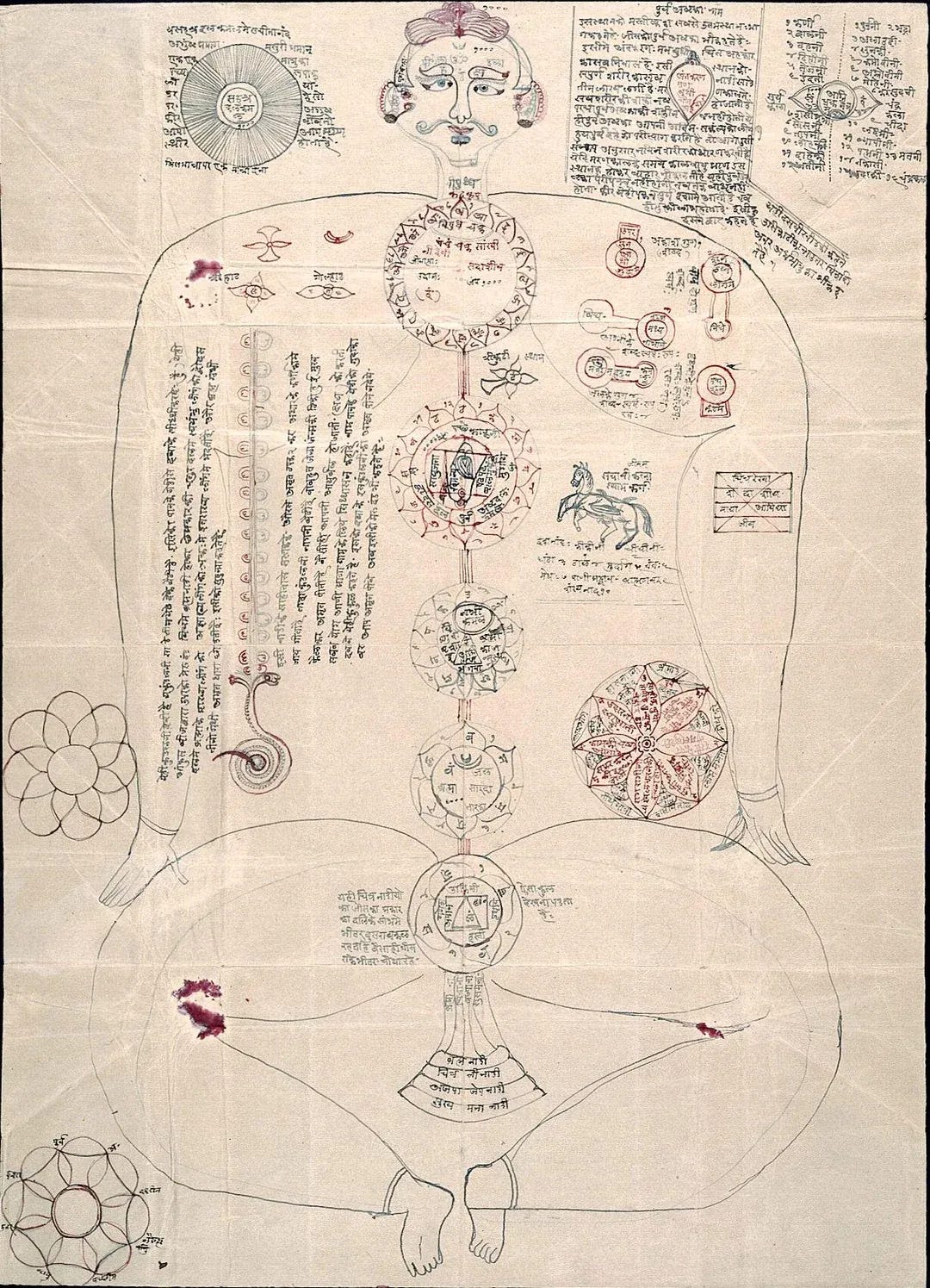
It is perhaps on the question of the body that Kashmir Shaivism most clearly departs from Advaita and delivers its most original intuition. Prāṇāyāma — mastery of the breath — rests here on a principle drawn from pratyabhijñā: this recognition of our deep nature as divine consciousness. If we are already this consciousness, prāṇa is no longer merely biological breath — it is the bridge between the physical body and the subtle bodies, between ordinary consciousness and expanded consciousness. The human body thus manifests the trace of śakti, the cosmic energy that animates all of reality. To act on the breath is therefore to transform far more than a bodily rhythm: it is to intervene at the very heart of cosmic consciousness.
The Shaivite tantric tradition describes kuṇḍalinī śakti — the dormant energy at the base of the spine — as a coiled serpent that adequate practice can awaken and guide through the chakras, our energetic centers, all the way to the crown of the skull (sahasrāra). The union of Shiva — pure and motionless Consciousness — with Shakti — dynamic manifested Energy — realized at the summit, is precisely the embodied non-dual realization: the body becomes the explicit place of union. The body is no longer a prison to transcend but a condensation of divine Consciousness in matter, whose transformation is simultaneously a transformation of individual consciousness.
Convergences: this ontological valorization of the body as the place and instrument of realization finds echoes in Palamas’ hesychasm — the purified body as the subject of deification — in Dōgen’s zazen — posture as awakening in act — and in the Dialogues with the Angel: “You are my denser equal.” In all these cases, material density is not an inferiority to compensate for — it is the necessary condition for a form of divine manifestation that pure light cannot accomplish alone.
Action: joyful engagement as expression of līlā
If all is play of divine Consciousness, if nothing lies outside Shiva, then engaging in the world — through creative action, loving relationship, or artistic realization — is not to leave the spiritual path, but on the contrary to fulfill it in full recognition of our divine nature. The human being who acts from pratyabhijñā acts neither to correct a cosmic error nor to obey an external law, but because Consciousness rejoices in manifesting Itself through him. Līlā invites him to participate in the play of creation with the lightness and precision of an accomplished artist.
Conclusive convergence for this section: this joyful, engaged non-dualism draws an unexpected line of continuity with the two contemporary voices. “The new world can only be built from beauty” (Dialogues with the Angel) and “the good accomplished” as the only law (Revelation of Arès) carry the same affirmation: right and beautiful action is the natural flowering of a consciousness that has recognized the fundamental unity of the Living.
3. Non-dualism without an absolute: the Buddhist paths
In the first installment, we had sketched the broad landscape of Buddhism: Theravāda — guardian of the Pāli canon — where the not-self of the subject does not yet open onto a non-dualism of ultimate realities; then Mahāyāna, with Nāgārjuna’s Mādhyamaka and its doctrine of śūnyatā — the emptiness of all dharmas — and the Yogācāra vein, closer to an “original pure consciousness”; and finally three great contemplative traditions of recognition — Chan/Zen, Dzogchen, Mahāmudrā — where awakening is no longer conceived as a state to construct, but as a nature to recognize.
This second installment does not seek to unfold all these schools exhaustively. It focuses on three nodes where non-duality without an Absolute condenses into very different but secretly convergent pathways: the radical deconstruction of Nāgārjuna and the Mādhyamaka — which empties the mind of all its conceptual supports; the bare sitting of Zen — where practice and awakening are identified; and the recognition of rigpa in Tibetan Dzogchen — where the natural state of the mind is held to be always already present, veiled rather than absent.
A. Nāgārjuna and the Mādhyamaka: the mind without support
The mind: the Middle Way, or deconstructing until there is nothing left to deconstruct
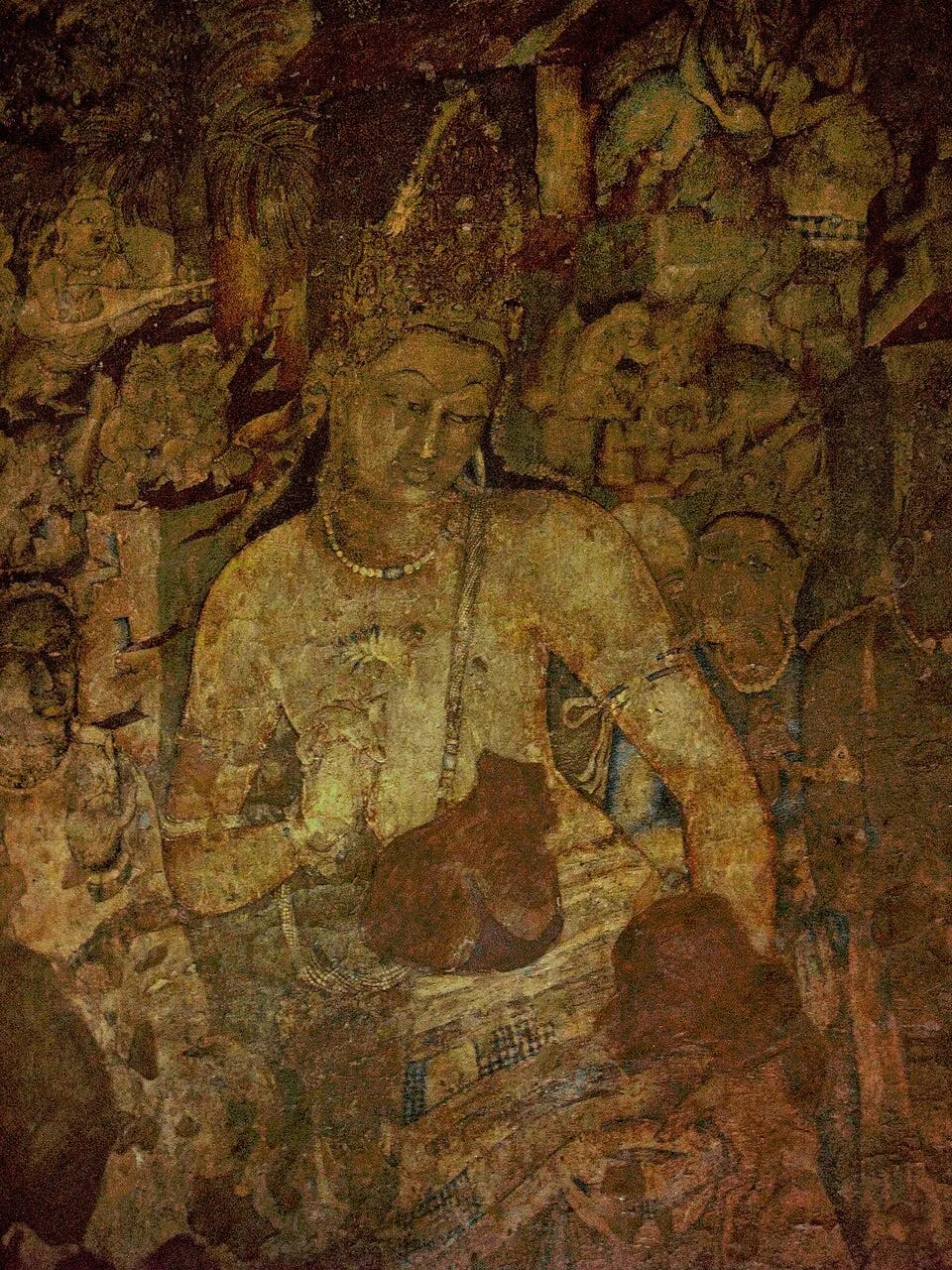
Nāgārjuna, the second-century Indian philosopher, is the great founding figure of the Mādhyamaka school — the “Middle Way.” His gesture consists in applying, without compromise, the Buddha’s central intuition — the absence of a substantial self — to all phenomena, including the concepts that spiritual thought tends to absolutize: existence and non-existence, being and nothingness, permanence and impermanence, nirvāṇa and saṃsāra. His method, laid out in the Mūlamadhyamakakārikā (”Fundamental Verses on the Middle Way”), is a dialectic of deconstruction: for every conceivable metaphysical thesis, he shows that it is untenable — and the same holds true for its antithesis. The mind, deprived of every point of support, is forced to let go.
What Nāgārjuna aims at is not a new system, but liberation from the very need for a system. Emptiness (śūnyatā) is not a new absolute: it is the character of every thing — nothing existing in and of itself, everything existing only in dependence on everything else (pratītya-samutpāda). Even emptiness is empty: “Emptiness, poorly understood, destroys the ignorant — like a snake badly seized or a spell badly recited.” The goal is not to think emptiness, but to directly see that nothing is worth grasping; this seeing is already anattā — non-self.
Convergence / Divergence: the structure of the Mādhyamaka resembles, from a distance, the Christian apophaticism of the Pseudo-Dionysian tradition and of Meister Eckhart — but where Eckhart deconstructs images to make room for an ineffable Presence that remains, Nāgārjuna deconstructs all the way to the end, leaving no positive residual ground. And where Shankara dissolves the world into Brahman, Nāgārjuna also dissolves Brahman: śūnyatā is not even a reality — it is the absence of all intrinsic existence, including its own.
The heart: bodhicitta and karuṇā — compassion as the natural flowering of emptiness
In Mahāyāna Buddhism — which developed directly in Nāgārjuna’s wake — the doctrine of śūnyatā opens onto a radical ethical consequence: emptiness is never separate from compassion (karuṇā). The bodhisattva — the being who renounces “entering” nirvāṇa, final liberation from the cycle of existences, as long as a single being remains to be freed — embodies this union: to understand that all phenomena are empty of inherent nature is to simultaneously see that no being possesses a “self” to defend against others, and that the boundary between “me” and “others” reveals itself as conventional. Compassion here is not a moral supplement — it is the natural mode of existence of a consciousness that has ceased to believe itself separate.
The Prajñāpāramitā Sūtras — “Perfection of Wisdom Sūtras” — hammer home this double demand: prajñā (wisdom) that sees emptiness, compassion that embraces all beings. The iconic formula of the Heart Sūtra condenses this movement: “Form is emptiness, emptiness is form; emptiness is not other than form, form is not other than emptiness.” Seeing the emptiness of all things does not lead to cold disengagement — it leads to a radical tenderness: nothing is to be possessed, everything is to be cared for.
Convergence: this intrinsic link between non-dual vision and responsibility toward all resonates with the kabbalistic Tiqqun Olam. In both cases, personal realization is considered incomplete as long as it has not been translated into effective responsibility toward all beings.
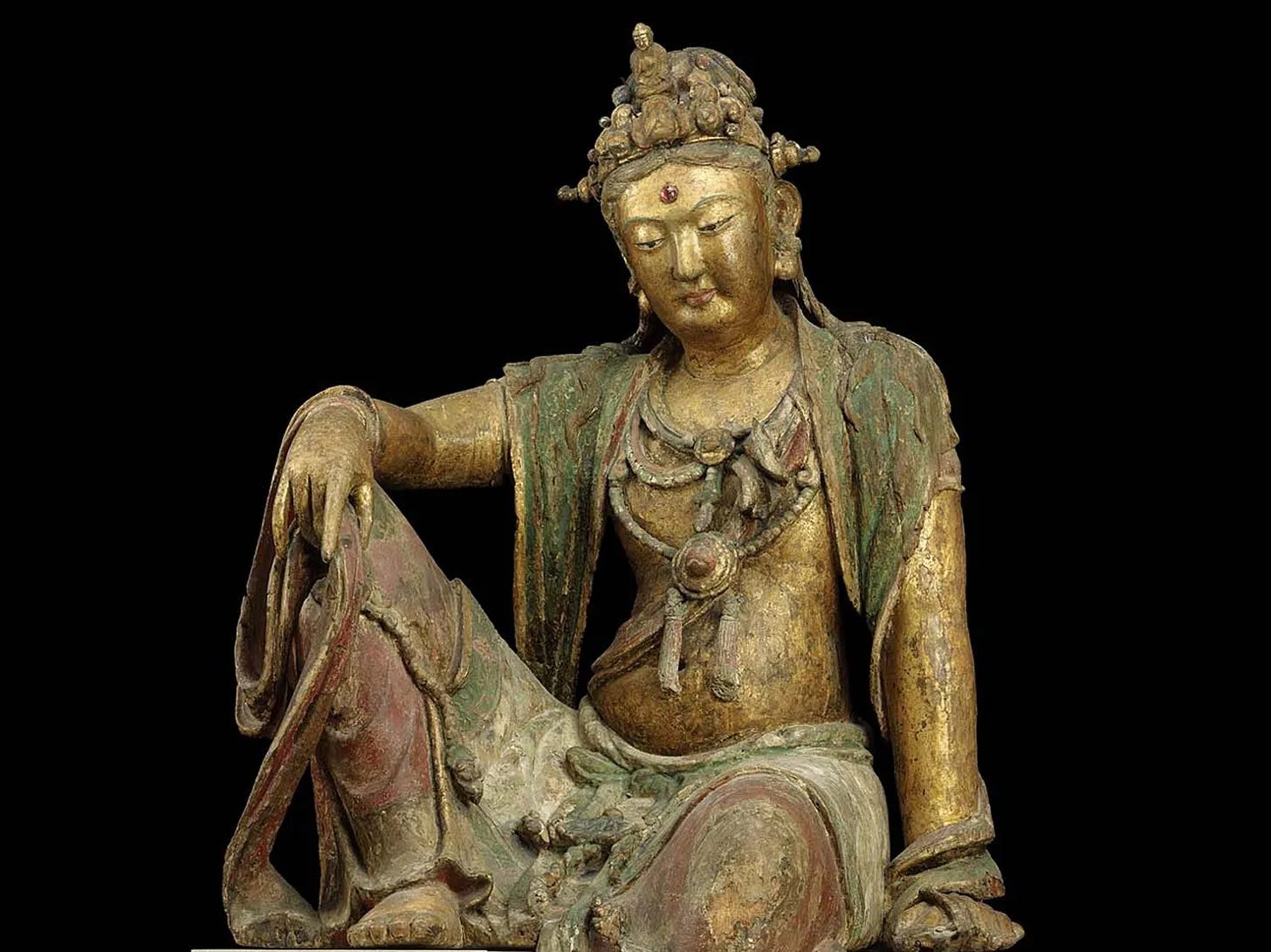
The body: seated meditation and walking, the body as a field of non-grasping
In the ancient sources, the path of the body is not theorized as in Tantrism — but the body is constantly the field of exercise for right view. The Noble Eightfold Path begins with right view (sammā-diṭṭhi), but it continues in attention to the breath, to postures, to movements, to sensations: the Satipaṭṭhāna Sutta (”Foundations of Mindfulness”) describes this patient work of observing the body, sensations, mental states, and phenomena as a school of non-grasping.
Seated meditation (śamatha-vipassanā) — which would later become zazen — aims less at “leaving the body” than at seeing that the body itself is nothing but a stream of sensations without an owner. To sit, to breathe, to walk with attention is not to sacralize matter — it is to see it as it is: impermanent, unseizable, without self. Satipaṭṭhāna — mindfulness founded on the body — is the first and most fundamental of the four foundations of mindfulness: before even turning attention to sensations, mental states, or phenomena, the practitioner learns to inhabit the body with total presence, to feel the breath as it is, to note each sensation without fleeing it or clinging to it. This work of the body is not a mere preliminary to spiritual life: it is already spiritual practice, because the body is the only place where one can truly meet the present moment.
Convergence: Dōgen’s zazen will develop this intuition to its most radical consequence: the correct bodily posture is itself awakening in act. We will return to this in the next section.
Action: the bodhisattva, or engagement until the last being
The ideal of the bodhisattva is without doubt one of the most radical figures of spiritual engagement humanity has ever produced. Its founding vow — not to “exit” saṃsāra, the cycle of existences, as long as the last sentient being has not been freed — immediately articulates non-duality and universal responsibility. Since there is no separate “self,” the liberation of one cannot be complete as long as others remain in ignorance.
This vow is not an external heroism — it is the logical consequence of a non-dual vision of emptiness. Where certain non-dual traditions can slide toward de facto detachment, the figure of the bodhisattva makes engagement in the world the criterion of the depth of realization.
Convergence: this grounding of ethics in the vision of interdependence — not in a divine commandment, not in natural law, but in the direct recognition that everything is connected to everything — resonates deeply with the logic of Gandhian non-violence: if the other is me in another mirror, to harm him is an act of self-mutilation. Practical conclusions converge even when metaphysical premises diverge radically.
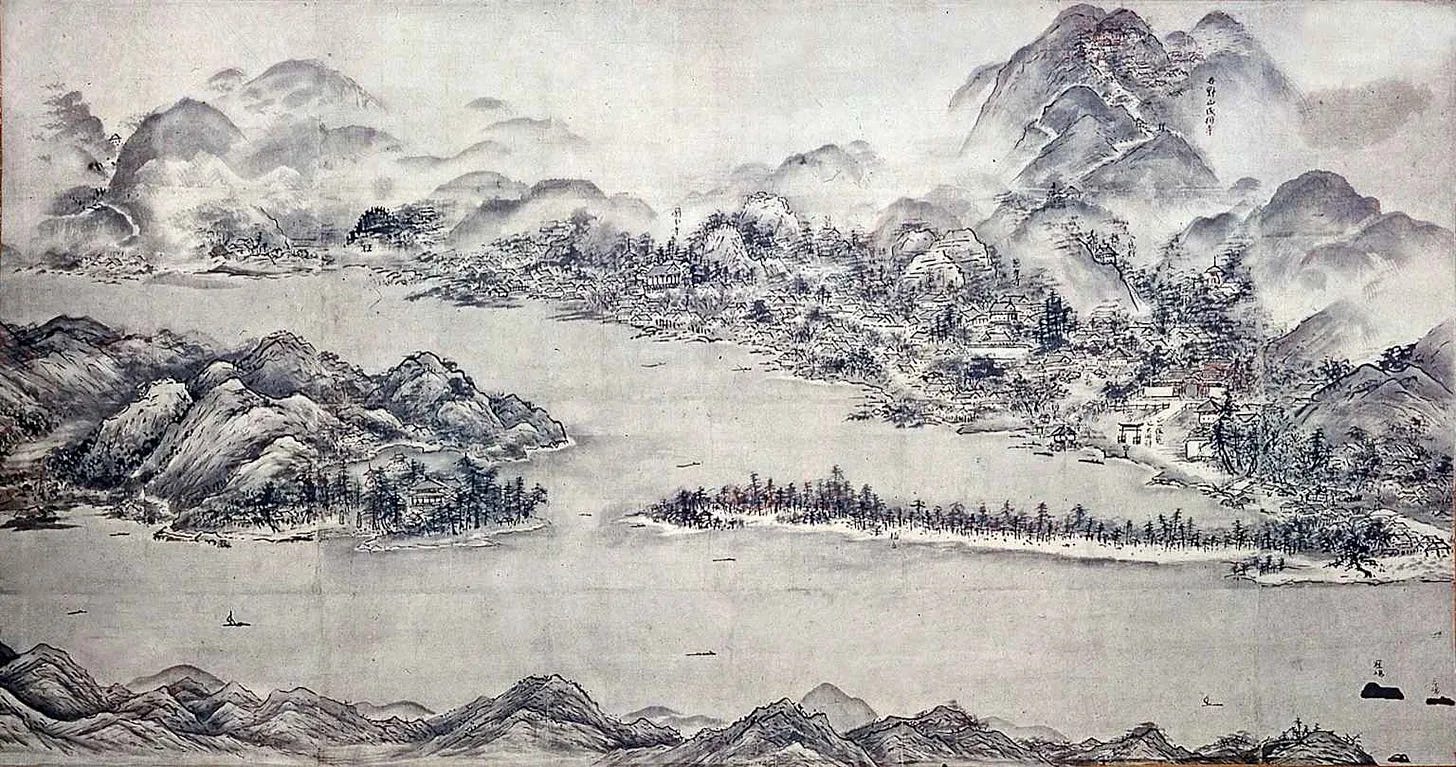
B. Dōgen and Zen
The mind: zazen, shikantaza, and kōan — two pathways to immediate awakening
With Dōgen (1200–1253) — founder of the Sōtō school in Japan and author of the Shōbōgenzō — Buddhist Zen formulates a radical intuition: practice is not a means to awakening; it is awakening in act. The formula shūshō ichinyo — “unity of practice and realization” — breaks the mental structure by which awakening would be a distant goal toward which the practitioner gradually progresses. As long as there is a “self” that practices in order to later obtain a superior state, the fundamental separation has not yet dissolved; practice remains inhabited by the logic of acquisition. Shikantaza — “just sitting” — is the concrete translation of this revolution: sitting without aiming at anything other than the very act of sitting itself, without seeking, without any project of elevation, in the total nakedness of the instant.
Yet Zen does not exhaust its pedagogy in Dōgen’s path alone. The Rinzai tradition has developed, with the kōan, a complementary strategy: not quietly stabilizing consciousness in the simple fact of being seated, but pushing the intellect to its breaking point. Questions like “What was your face before your parents were born?” do not call for a logical answer — they aim to saturate the discursive mind until it ceases to function as the center of gravity of being. In both cases, the target is the same: to drop the illusion that one more thought could finally deliver the truth.
Convergence: by different means, shikantaza and kōan both join the Mādhyamaka’s intuition: the mind does not awaken by accumulating ever subtler formulations, but by ceasing to seek support in what can be formulated. Zen distinguishes itself from Nāgārjuna, however, by its style: where the Mādhyamaka dismantles conceptual handholds through dialectic, Zen short-circuits them through bare practice or through the shock of a lived paradox.
The heart: satori, or the compassion that follows the falling of boundaries
In Zen, the transformation of the heart is not primarily conceived as the slow cultivation of elevated feelings, but as the spontaneous consequence of kenshō or satori: the lightning flash of direct vision where the ordinary separation between oneself and reality cracks open. When a being ceases, even for a moment, to experience itself as an isolated fortress facing the world, compassion no longer needs to be commanded — it flows of itself from a perception that has become less defensive and less possessive. The tenderness that results is not sentimentality, but a sobriety of gaze: the less the self intervenes, the more the other appears in their own nakedness.
This logic explains why Zen can seem so little moralistic while being of extreme ethical rigor. It does not begin by saying “be compassionate” — it works to dissolve what makes compassion difficult: identity rigidity, cognitive grasping, and separation. Goodness is not added on top of vision; it is vision’s natural breath when nothing thick interposes itself between oneself and other beings.
Convergence: This compassion born of awakening joins the structure already underlined elsewhere: authentic realization never leads to indifference, but to a more just presence to others. It can thus be placed alongside the Sufi baqāʾ as al-Junayd conceives it: not the sterile disappearance of the person, but their return in a truer, more sober, more available quality of being.
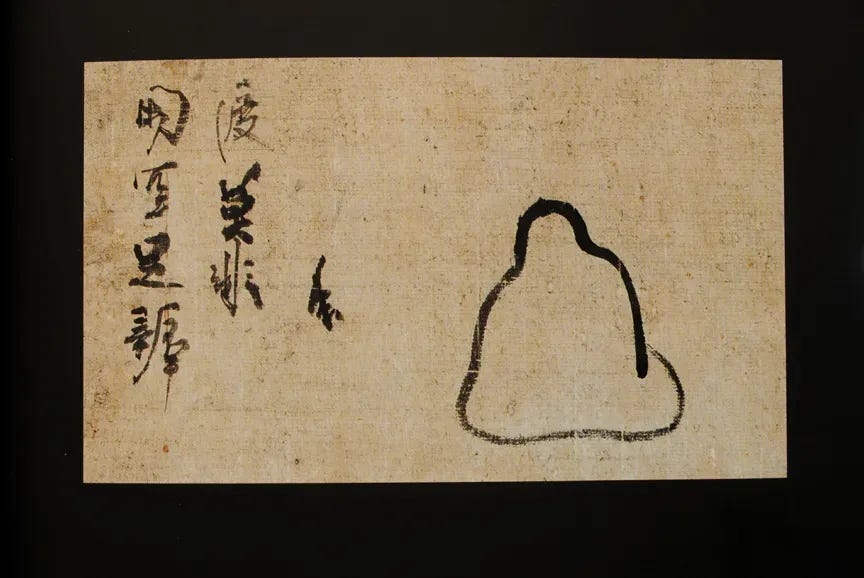
The body: Dōgen’s zazen, or posture as incarnate awakening
It is perhaps on the question of the body that Dōgen formulates his most unforgettable contribution. With shinjin datsuraku — “shedding body and mind” — he is by no means inviting us to leave the flesh, but to discover that the body, properly held, breathed, and inhabited, becomes the very place where the opposition between body and mind ceases to be operative. Posture is not a backdrop to meditation: it is awakening taking form in matter.
Hence the almost liturgical precision of zazen: pelvis slightly tilted forward, spine elongated, chin tucked in, hands in hokkai-join resting on the thighs, supported by the lower abdomen, eyes half-closed, deep breathing rooted in the kikai tanden — the “ocean of energy” located below the navel. Nothing here amounts to gratuitous formalism; each detail aims at a balance between tension and release, vigilance and surrender, presence and non-grasping. The long, silent exhalation brings consciousness back below the mental chatter, to that more naked, almost biological layer of presence. Dōgen — and later Taisen Deshimaru in his work of transmission in Europe — insisted on this point: the correct posture does not accompany awakening, it makes it immediately operative.
Convergence and Originality: Dōgen here joins Palamas — who makes the purified body a subject of deification — and Nāgārjuna — who sees in the body a royal path of realization. But he adds a distinctly Zen radicality: the body is not merely capable of participating in awakening — it is awakening when it is fully seated in rightness.
Action: ethics beyond the law
Zen inherits from Mahāyāna the idea that ethics does not need to be grounded in a transcendent commandment in order to be absolute in its scope. If the substantial separation between self and other is illusory, harming the other is not only a moral fault: it is an error of perception. Right action then arises from ontological clarity, not from obedience.
This is why the bodhisattva ideal remains fully active in Zen, even as Zen distrusts grand discourses. Generosity, restraint, non-violence, attention to concrete reality, humble and just work — these are not virtues plastered onto awakening; they are the daily form taken by a less-separated consciousness. Where some spiritualities of the Absolute risk sliding toward withdrawal, authentic Zen makes the ordinary — sweeping, serving, walking, cooking, speaking — the very field of verification of awakening.
Conclusive convergence: this ethics without commandment joins, from another slope, the intuition that will appear further on in the Dialogues with the Angel and the Revelation of Arès: when separation dissolves, the good no longer appears as an external obligation, but as the natural form of a consciousness re-attuned to reality.
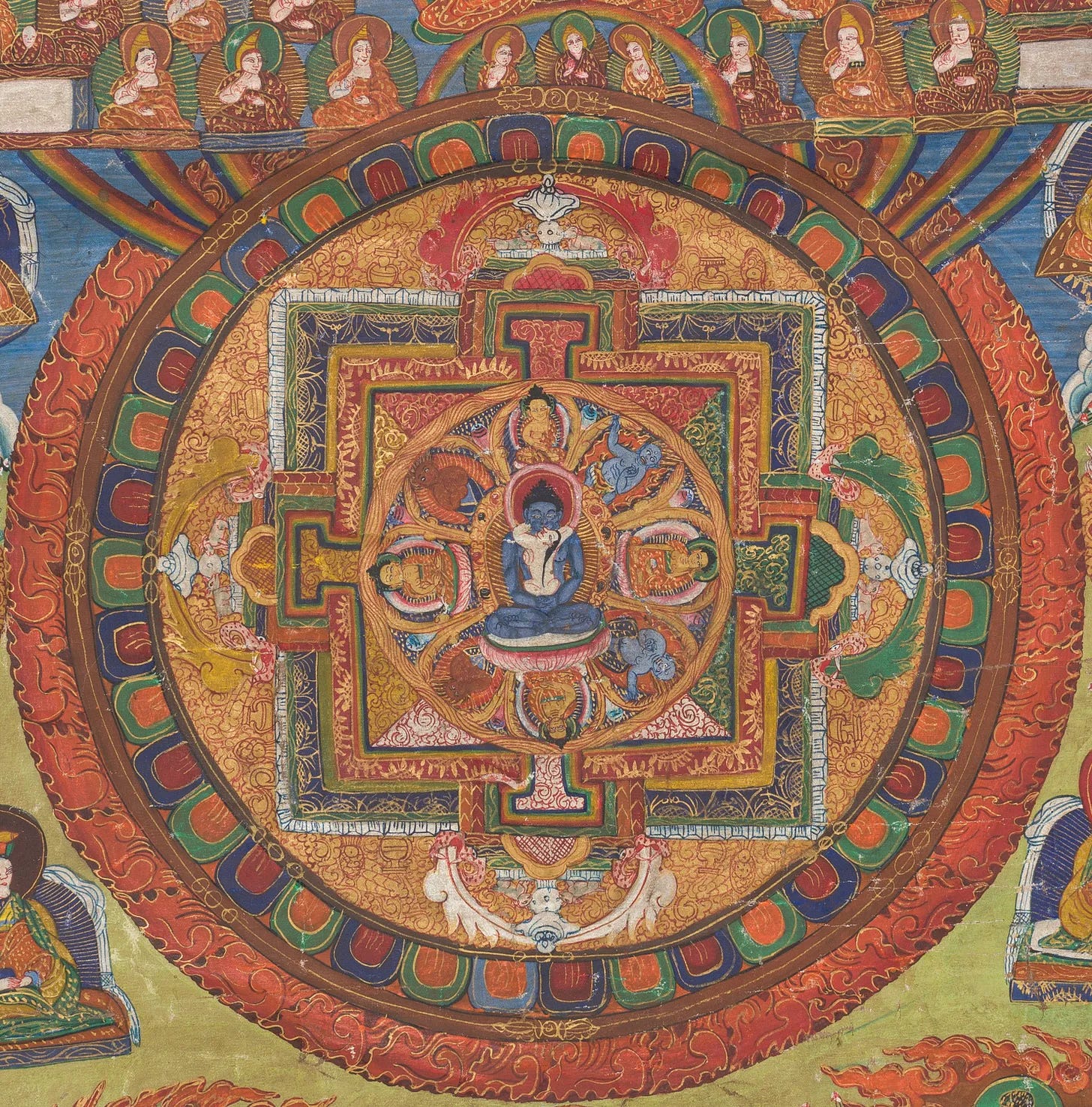
C. Tibetan Dzogchen: the recognition of primordial clarity
The mind: rigpa, or recognizing what has always been there
Tibetan Dzogchen — Atiyoga, “the Great Perfection” — pushes the Buddhist logic of recognition rather than acquisition to its extreme point. Rigpa — primordial awareness — is neither an elevated state to fabricate nor a distant summit to merit; it is the actual and permanent nature of the mind prior to any conceptual contraction. What we call the ordinary mind is nothing other than rigpa itself — but veiled, dispersed, covered by habitual mental constructs, as the sky remains present behind the clouds that conceal it. Thus, all of Dzogchen’s pedagogy aims less at building than at clearing away, less at producing a light than at letting appear a clarity already there.
It is here that the rapprochement with the pratyabhijñā of Kashmir Shaivism becomes particularly fruitful. In both cases, awakening does not consist in becoming other than oneself, but in recognizing what was never truly lost. The formula attributed to Huangbo — “The only mistake is seeking” — illuminates this logic well: not because no discipline would be necessary, but because tense searching nourishes precisely the illusion that awakening exists somewhere else.
The teachings of the Bardo Thödol extend this intuition to the threshold of death. They rest on the idea that at the moment when ordinary mental constructs dissolve, primordial consciousness can manifest in its most total nakedness; if the practitioner has recognized it during their lifetime, they can still recognize it at this decisive hour and be liberated within it. Death is therefore not conceived as an absolute rupture, but as a moment of truth where what has always been there — behind the theater of mental appearances — is revealed.
Convergence: where the Mādhyamaka empties the mind of all its supports, Dzogchen reveals what remains when no support is sought any longer. The emphases differ, but the shared aim remains the same: to let appear a space of freedom that ordinary consciousness masks from itself.
The heart: ultimate bodhicitta and relative bodhicitta
In Dzogchen, the dimension of the heart unfolds with remarkable subtlety through the distinction between ultimate bodhicitta and relative bodhicitta. The first designates the direct recognition of the primordial nature of the mind; the second, active compassion in the phenomenal world — the concrete concern for beings still caught in confusion and suffering. The one does not oppose the other: the first grounds the second, and gives it its rightness.
Knowing that all beings share the same veiled rigpa does not lead to indifference — it makes their suffering all the more poignant. To see the other in their deep nature, and to simultaneously see the thickness of the veils separating them from it, engenders a compassion of a particular kind: neither sentimental pity, nor confused fusion, nor moralism. It is a clear, lucid, stable compassion that accompanies without possessing and helps without substituting itself.
Convergence: this lucid compassion can be placed alongside the Sufi baqāʾ already invoked elsewhere: after the extinction of the separate self, what remains is not insensibility, but a more just, more sober, and vaster presence to the other. Two universes without direct historical debt arrive here at a strikingly similar human structure.
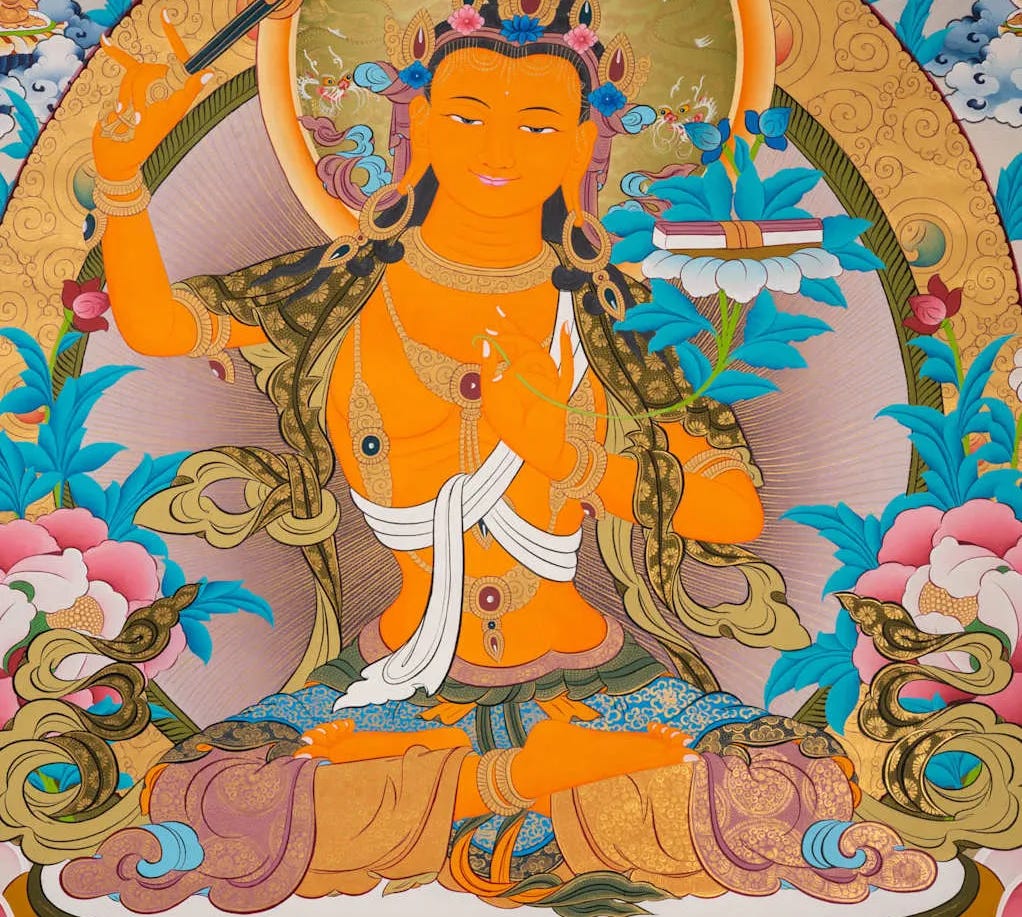
The body: breath, posture, and unfabricated presence
Dzogchen does not develop the same minute postural liturgy as Dōgen’s Zen — but it by no means disparages the body. As in Buddhism at large, breathing, posture, and attention remain indispensable places of stabilization; the key difference is that they are not valid as techniques for fabricating a superior state, but as means of ceasing to interfere with the natural state. The body then becomes not the object of heroic mastery, but the place of a just release — where the mind can finally cease contracting upon itself.
We find here, in a different tonality, the same fundamental trust encountered in Taoism and in certain aspects of Dzogchen already highlighted: the original nature of the human being — body and consciousness — is right, fluid, luminous. What causes the problem is not what must be added but what must be dissolved.
Convergence: where Zen makes the correct posture awakening in act, Dzogchen tends more to make just release the revelation of a clarity already present. Both converge, however, against any spirituality of fabrication: neither one conceives of awakening as the production of an artificial state.
Action: active compassion and right presence in the world
Dzogchen by no means abolishes the demand for action — it reformulates it from clarity. If all beings already participate in the same primordial nature, then engagement on their behalf does not come from an obligation imposed from outside, but from the recognition that their wandering and suffering are not truly separate from us. Right action therefore arises neither from guilt nor from moral heroism, but from lucid compassion.
It is in this that Dzogchen deeply converges with the bodhisattva ideal: not as a spectacular sacrificial figure, but as the natural consequence of a vision freed from separation. The being who sees more clearly does not leave others in their obscurity; they remain available — because the recognition of fundamental clarity makes compassion toward those who do not yet see it more urgent, not less.
Conclusive Convergence: from Zen to Dzogchen, late Buddhism thus shows two distinct but convergent ways of thinking a non-duality without Absolute: one insists on bare sitting, the exact gesture, and awakening as practice; the other on the recognition of primordial clarity and the lucid compassion that follows from it. In both cases, right action is not added to realization — it is realization’s natural flowering in the world.
4. The non-dualism of Fluidity: Taoism
The three great families of traditions we have just traversed — Abrahamic, Hindu, Buddhist — share, despite their divergences, a common structure: they aim at a state, a realization, a summit. The Taoist path enacts another fundamental break in register: it does not aim at a state to reach, because it does not begin from the premise that there is anything to reach. The Tao — elusive, unnameable, what precedes heaven and earth — is not a reality hidden behind the visible world that one must rejoin through spiritual effort. It is the very movement of reality, its natural flux, its inexhaustible spontaneity. The question is therefore not how to rejoin the Tao — it is how to stop opposing it.
The mind: The paradox as pedagogy
Laozi, who according to Taoist tradition composed the Tao Te Ching in the 6th century BCE — though his historicity remains debated — inaugurates a pedagogy of the mind that has no direct equivalent in any other tradition. He does not build a philosophical system, does not propose intellectual meditation. He places the reader before the impotence of their own thought through the deliberate use of paradox: “The Tao that can be spoken is not the eternal Tao” — first verse, first act of destabilization. “Non-being is useful,” “Silence is the greatest resonance,” “He who knows does not speak; he who speaks does not know” — each formula is a small bomb placed under the foundations of discursive thought, not to destroy it but to reveal its own limits from the inside.
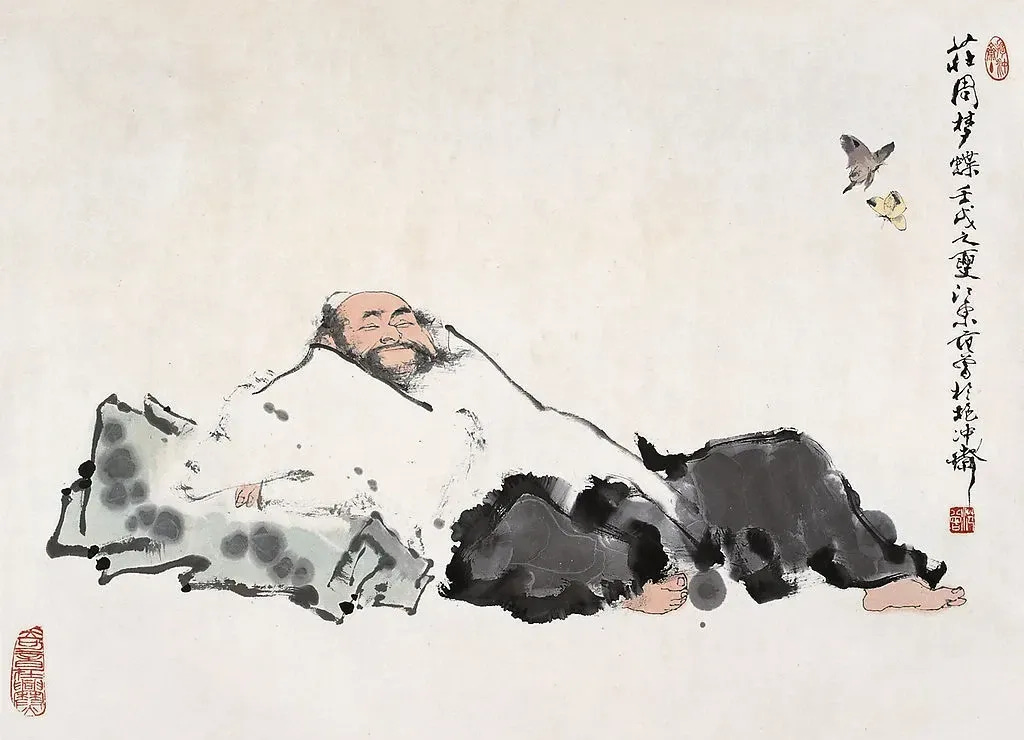
Zhuangzi, continuator and amplifier of Laozi, radicalizes this pedagogy still further through narrative, humor, dream, and absurdity: the cook who butchers the ox effortlessly because he follows the natural articulations of the animal; the butterfly who wonders whether it is a man dreaming or a man who is a butterfly; the King of Chaos whose emissaries pierce seven orifices to render him a service — and who dies from it. Each story is a Taoist kōan before the fact — an irruption of the unpredictable into ordinary logic.
Convergence and originality: the paradoxical pedagogy of Laozi and the narrative devices of Zhuangzi converge with the zen kōan — of which Taoism is historically one of the sources in China. Both use paradox not as a logical defect but as an instrument of transformation. But where the zen kōan aims at satori — a sudden awakening, a direct breakthrough out of discursive mind — Taoist pedagogy is more diffuse, more atmospheric: it does not seek a flash, but a progressive impregnation — like water that eventually passes through stone, not by force, but by constancy.
The heart: Wu Wei, or love without effort
Wu Wei — literally “non-action,” often translated as “acting without forcing” — is without doubt one of the most misunderstood Taoist concepts in the West, where it is readily reduced to a form of passivity. Yet it designates neither inaction nor withdrawal, but a way of acting that does not proceed from a tensed will seeking to bend reality to its own demands. It is an action attuned to the natural movement of things — like water descending to the sea with no apparent effort, finding its passage without violence. Wu Wei is therefore not resignation in the face of the world as it is, but the art of harmonizing with the Tao rather than pretending to constrain the course of things. This is why the image of water recurs ceaselessly in the Tao Te Ching: apparently soft and supple, yet capable of wearing away even the hardest stone.
Multiple convergences: Wu Wei resonates with the Baal Shem Tov’s Hasidic devekut — this adhesion to divine Presence in the most ordinary acts, without forcing or dramatizing. It resonates also with the līlā of Kashmir Shaivism, where right action is that which coincides with the spontaneous play of divine Consciousness. And it resonates finally with the structure of action in the Revelation of Arès: not political program nor social strategy, but the harvesting — that patient, repeated, humble gesture of the awakened one who does not seek to transform the world by force, but to embody a presence so just that others, by contagion, begin to move in turn. In both cases — Taoist and Arèsian — the transformation of the world passes through the transformation and radiance of the acting person, not through the imposition of a will upon reality.
The Body: Tai Chi and Qi Gong — the circulation of cosmic breath
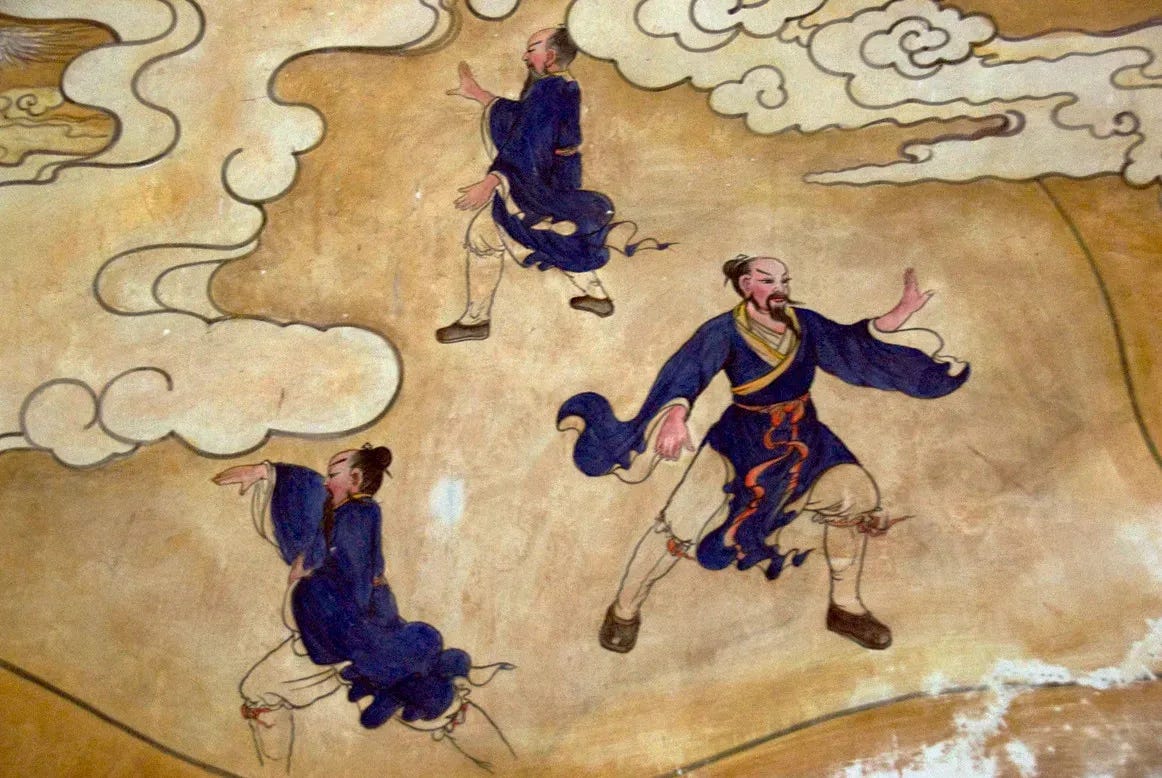
Taoism has developed, in its practical branches — Tai Chi Chuan, Qi Gong, the internal martial arts — a culture of the body founded on a central principle: qi — vital cosmic energy, analogous to the Indian prāṇa — circulates naturally through the body when the body ceases to oppose it through rigidity, contraction, or excessive tension. Physical health, emotional balance, and spiritual realization are, in the Taoist perspective, aspects of the same phenomenon: the fluidity of qi in the body and between the body and its environment.
Taoist bodily work is not, like tantric yoga, an activation of a dormant energy to be awakened and directed toward specific centers — it is a clearing of obstacles, a progressive release of everything that prevents qi from circulating according to its own nature. Tai Chi’s movements — slow, continuous, fluid, in gentle spirals — do not seek to impose a form on the body but to discover the form the body itself wants to take when it is no longer constrained. This is Wu Wei applied to flesh.
Convergence: the Taoist principle of clearing obstacles rather than forced activation connects directly with tibetan Dzogchen’s pedagogy — where the aim is not to construct awakened consciousness but to clear away what masks it. Two very different traditions share the same fundamental trust: the original nature of the human being — body and consciousness — is right, fluid, luminous. What causes the problem is not what must be added but what must be dissolved.
Action: the sage without intention, or governing like the valley
Taoist ethics of action is one of the most radically anti-authoritarian and anti-programmatic that exist. The Tao Te Ching affirms that the best government is the one whose people do not know they are being governed; that the best teacher is the one whose student believes they learned everything by themselves; that the best warrior does not fight. This is not political passivity — it is a metaphysics of non-violent efficacy that affirms that the greatest force is the one that accompanies the natural movement of things rather than opposing it. The image of the valley returns as the Taoist metaphor of the ideal sage: low, open, receptive — and for that reason, everything flows through it and nothing ever fills it.
Divergence: this ethics of non-interference enters, however, into direct tension with the ethics of active responsibility we encountered among the Kabbalists (Tiqqun Olam), among the bodhisattvas, and in Gandhi. Taoism affirms that forcing the repair of the world can produce exactly the opposite of what is sought — that any action dictated by a preconceived idea of the good is liable to reintroduce violence under the cover of virtue. There is in this caution a real wisdom that the “repairing” traditions would do well to take more seriously. The tension remains open and fertile — and it is one of the lines of fracture we will examine in the next section.
Provisional conclusion: the path is not yet Unity!
At this point in the crossing, a first truth emerges clearly: in the great spiritual traditions, non-duality is neither a disembodied speculation nor a luxury reserved for a few contemplatives withdrawn from the world. It always takes the form of a path, a discipline of being, a concrete transformation of the gaze, the heart, the body, and action. The languages differ, the metaphysics frequently oppose one another, the emphases range from austerity to celebration, from deconstruction to song — but all the traditions encountered so far agree at least on this: ordinary separation is not the ultimate horizon of the human being, and there are pathways for crossing through it and returning to Unity.
Yet this convergence must not deceive us. The further we advance, the clearer it becomes that these traditions are not simply saying the same thing in different words. They propose neither the same vision of the world, nor the same understanding of the person, nor the same relationship to the body, nor the same kind of engagement in history. The rapprochements we have been able to make are real; the fractures are equally so. It is perhaps in this double faithfulness — to the depth of the convergences and to the irreducibility of the divergences — that a spiritual approach worthy of the name becomes possible: one broad enough to listen, and rigorous enough not to conflate.
It now remains for us to cross a decisive threshold. The most pressing question is not only how the ancient traditions conceived the exit from duality — but what this question becomes in our late, fragmented, disenchanted world, saturated with information yet starving for Presence.
It is there that we will reconnect, in the final part, with the two contemporary voices already glimpsed — the Dialogues with the Angel and the Revelation of Arès — not as mere modern echoes of ancient wisdoms, but as singular, demanding, sometimes unsettling formulations of what a non-duality fully incarnate in historical urgency might look like today.
Next week, we will therefore resume from these two contemporary voices, before entering into the examination of the great lines of fracture that run through the whole of this inquiry: the destiny of the person in union, the value of the sensible world, the question of spiritual authority, and the status of time and history in the life of the spirit.
It is only by confronting these disagreements without artificially dissolving them that we can hope to discern, with a little more accuracy, what our era still expects from the traditions, what it can receive from the new voices of the twentieth century — and what it may perhaps need to learn to formulate by itself.
Read the third and final part: The Wound of Duality—and the Return (3/3). After exploring the paths of return, this final installment examines contemporary voices, the irreconcilable rifts between traditions, and the spiritual calling of our time.
© 2026 - Dialogues of the New World — Jérôme Nathanaël

To go further
Do you see, in our time, a spiritual or cultural heritage that remains active, for better, for worse, or in some ambiguous fashion? Share your reading in the comments to spark discussion.
And if you wish to share more broadly your reflection on the heritages that shape us, send me a contribution of roughly one page for the Waymakers section. It will be published under your initials, a pseudonym, or anonymously, as you prefer. Other readers will be able to respond and dialogue with you.
New here? The Opening page introduces the author, the project, how to take part, contact details, and the agenda.