
Article disponible en français
The World We Cross · Two quills · 40 min
Dialogues written in two voices, in the tradition of humanist exchange.

From a spark, a column
Writing is sometimes the occasion for particularly fertile encounters — those sparks that arise in the space of a comment, a reply, a thought that bounces off another and illuminates it by shifting it. It is in this precious interstice, at the confluence of two distinct voices, yet drawn to question together, that the idea for this column was born.
Two quills will gather dialogues written in two voices, in the tradition of humanist exchange — that of Erasmus and Thomas More, of Pico della Mirandola and Poliziano, and of all those who understood that certain encounters call neither for interview nor testimony, but for something of an altogether different nature: a space where two voices engage as equals, respond to one another, sometimes contradict one another, and journey together towards what neither would have reached alone. In an age when public debate has largely reduced itself to jousting and the parallel monologue of solitary opinion pieces or posts that pass one another without ever really touching, claiming the tradition of patient, constructed, written dialogue — where two minds consent to let themselves be transformed through contact with one another — is a gesture of civilisation as much as an editorial choice.
It is Alexander Djis — author of La Voix arc-en-ciel, a French-language publication — who gave me the joy of inaugurating this column. His contributions, of rare depth, left as comments on my texts from the Dialogues du Nouveau Monde — the French-language version of this publication — awakened in me the desire for a written dialogue in two voices, so that we might together extend and unfold what had until then only been sketched in the too-narrow space of our first resonances. I am profoundly grateful to him, for it is precisely this kind of encounter — a friendly confrontation conducted in the frame of mind of one who accepts being changed by the thought of the other — that these Dialogues have always sought, ultimately, to make possible. His voice, in this exchange, led me further than I could have gone alone, and the perspectives we opened together far exceed these pages, which may constitute only their first circle.
Jérôme Nathanaël
Two voices
The dialogue that follows took flight from the exchanges prompted by Jérôme Nathanaël's text (originally published in French): “Where I write from: legacies, inner freedom, and Words of Life”. It is there that the central question around which it is organised crystallised: “What are our universes of meaning responsible for?”
Universes of meaning — religious, political, ideological — do indeed act as symbolic frames of reference, more or less conscious, that configure our conduct, structure our societies, and render certain forms of coexistence possible or impossible. It thus becomes urgent to grow conscious of and interrogate the symbolic constructs that sustain us, in order to understand what they compel us to embody, what they authorise us to ignore, and what social consequences ensue.
We are pleased to share with you today the fruit of this long dialogue.
Jérôme Nathanaël and Alexander Djis
Our two quills in dialogue
Jérôme Nathanaël:
Alexander, following my text “Where I write from: legacies, inner freedom and Words of Life,” our exchanges — which readers will find in the comments of the French version of that text — gave rise to a line of questioning that appears today more necessary than ever: if we acknowledge by common accord that no symbolic frame of reference can exhaust the complexity of the reality it attempts to map in order to make its exploration possible, then the urgency will be not only to interrogate and confront our symbolic constructs, but above all to examine what choices they entail for our conduct and what concrete social effects they produce when they are extended to the collective level.
It is therefore from this first conclusion of our reflections that I undertake this new dialogue with you. I shall begin by laying out for our readers a kind of framework that will allow the various dimensions invoked here to be more readily grasped.
Let us recall first, as a simple but too-often neglected truth, that our inner lives never rest on a simple face-to-face between an isolated individual and a supposedly neutral reality: they unfold within universes of meaning — religious, political, ideological, cultural — that act as genuine symbolic constructs, orienting our perceptions, our judgements and our most everyday choices.
It then becomes clear that these symbolic frames of reference, whether explicitly professed or deeply unconscious, configure our personal ethical conduct; and that when these behaviours multiply and combine, they become the effective foundations of our societies, with very concrete effects on the way we organise power, justice, the place of the other, the legitimacy of violence, or even the very possibility of coexistence. This is why it becomes decisive to grow conscious of and interrogate the symbolic constructs that sustain us: to understand what they compel us to embody, what they authorise us to ignore, and what social consequences follow.
In this regard, the symbolic frames of reference of the three monotheisms offer a particularly illuminating field of observation: a limit-symbol open to the infinite in Judaism; a Christian universality centred on the call to perfection and unconditional openness; a closed Quranic text articulating, from its very origin, guidance, favour and the exclusion of the “errant ones.” Each of these universes of meaning produces a certain style of personal ethics and, aggregated at the collective level, a certain type of world — habitable, or sometimes barely habitable — for those who live within it and for those who attempt to coexist within it.
If we now examine the three Abrahamic monotheisms more closely, we perceive with particular clarity how distinct symbolic foundations produce divergent ethical and social trajectories.
In Judaism, the unpronounceable Tetragrammaton institutes a limit-symbol deployed on a field open to infinite interpretation: “I have set before you life and death, choose life” embraces both positivity and negativity without definitively assigning them to human groups. This fosters an ethic of creative tension, of wrestling with the divine, and a perpetual quest for meaning which, collectively, engenders societies attentive to hermeneutic nuance and to responsibility in the face of uncertainty.
Christianity, by contrast, brings God down upon the mediating figure of Jesus and his injunction “Be ye perfect, even as your Father in heaven is perfect,” orienting the individual towards a quest for perfection that can tip into narcissism, accompanied by an unconditional openness to the other — “turn the other cheek” — without a protective guardrail. At the collective level, this translates into expansive universalisms, culminating in the contemporary secular progressivism that absorbs otherness without questioning its own project, sometimes producing a strategic naivety in the face of competing dynamics.
Islam, finally, entrusts the total divine word to a closed text borne by Muhammad, with an inaugural dichotomy between “those upon whom Thou hast bestowed favour” and “the errant ones” applied directly to human beings, and the call to “establish the kingdom of Allah” articulated as a struggle against the unbeliever. This gives rise to an ethic of faithful application and a project of universal conquest which, aggregated socially, aims at the geographical and human totality of the globe, rendering coexistence with other frameworks particularly arduous as long as they remain unstated.
Obviously, it is indispensable in this process of reflection to insist on a clear distinction: on one side, the analysis of a symbolic construct, its internal logic and its fundamental messages (particularly when the object is a sacred text); on the other, the concrete individuals who refer to it, with very significant interindividual variation, differing degrees of adherence, and singular histories. To forget this would risk essentialising, even stigmatising, groups of individuals. The analysis of a symbolic frame of reference, of its texts, its dynamics and the signals it sends, does not imply that all who refer to it literally adhere to all its implications, nor that they are deprived of freedom in relation to it.
Yet these fundamental symbolic constructs allow us to understand decisive chains of consequence: from textual grounding to personal act, from act to the collective world, where each frame of reference compels us to embody certain virtues, authorises certain blind spots, and renders possible or impossible specific forms of living together.
Alexander Djis:
Dear Jérôme, thank you for this clear and rigorous introduction. It places us at once before a question that is not theoretical but vital: what are the symbolic universes we inhabit responsible for? Responsible for our gestures, our laws, the worlds we render possible.
Your reading of the three Abrahamic monotheisms shows with clarity that a symbolic frame of reference does not merely orient an interiority. It structures a shared horizon. It draws the contours of the permitted, the just, the thinkable. It shapes a manner of inhabiting the earth.
I would note, however, that we are speaking from a situated position: that of the matrices born around the Mediterranean basin. Other civilisations have forged other architectures of meaning — Hinduism, Buddhism, Taoism, Shinto. They structure the relationship to the divine, to the living and to the collective differently. Our perspective is partial, and this lucidity is necessary, as much for ourselves as for the reader.
You underline the dynamics of inclusion and exclusion specific to the monotheisms. But I believe we must go further: every symbolic universe traces a line. No human community lives without a symbolic border.
The question, therefore, is not whether there is exclusion — for there always is — but where the border lies. How is it justified? Is it permeable or locked? Is it ontological, moral, political? Does it allow coexistence or prepare confrontation?
The Abrahamic traditions built powerful, coherent worlds, traversed by clarity and violence. They produced solidarity, transcendence, fervour and also enduring fractures, including territorial tensions still unresolved. This is not a moral judgement but an observation: symbols are never neutral.
And these frames of reference are profoundly anthropocentric. The animal is rarely recognised there as a subject bearing intrinsic value comparable to that of the human. It is creation, resource, backdrop, sometimes sign, but rarely an ontological partner. This human centrality in tension with the divine profoundly structures ethics: salvation, the law, perfection, submission or the covenant concern above all the human being. This trait is not insignificant, for the modern world inherits this centrality, now secularised in most countries. We continue to organise the world as though the human were the sole bearer of intrinsic value. We speak of ecology, yet we still think in terms of resource management.
What if the ecological crisis were revealing the limit of an imaginary in which the human remains the sole bearer of intrinsic value?
And yet I do not believe that the symbol mechanically determines history.
Judaism transforms itself after the destruction of the Temple. Christianity changes when it becomes imperial. Islam is born in a tribal context that marks its initial dynamic.
A symbolic frame of reference is born of a history. Then, once crystallised, it in turn becomes a historical driver. And this interaction continues without end, particularly through the interpretation of texts, which widens or narrows borders.
If we accept this, then modernity must be interrogated with the same rigour.
Although it represents an exit from grand narratives, it nevertheless absolutises other principles — inclusion, the individual, the fluidity of borders, suspicion of any structuring transcendence.
We believed that a world without a shared matrix would be pacified. Yet we see fragmentation, polarisation, competing narratives, ideological conflicts emerging. Plurality without a centre can become a permanent struggle to impose one’s own vision. The symbolic void does not exist. If there is no longer a shared centre, there is competition to establish one.
And it is here that the dialogue you propose becomes decisive. If symbols shape worlds, then we cannot content ourselves with analysing them. We must ask ourselves what we wish to engender.
Must we rework the interpretations of existing matrices, in the hope that they still carry sufficient transformative power?
Or must we dare to think a new symbolic foundation — not as religion, not as dogma, but as a conscious architecture of the common world?
A matrix that would seek to: transcend narrow anthropocentrism; ground responsibility in the existence of a perfectible spiritual individuality; inscribe evolution within a Law that exceeds our cultural constructions; and propose a concrete path rather than a corpus to be believed.
Not to erase inheritances — which would be in vain — but to respond to an age that can no longer simply reproduce them.
The question is therefore no longer only: what worlds have the ancient symbols produced? But: what world do we wish to render possible now? And are we ready to assume the symbolic responsibility that this implies?
Jérôme Nathanaël:
Dear Alexander, your intervention opens up many perspectives that I shall explore in turn.
You observe that my reading of the three monotheisms renders our approach ‘situated’ and ‘partial’ if it does not integrate the great Eastern traditions. This situated position is, however, deliberate: it is that of the long history which leads to the globalised system that dominates the planet today, with its multiple crises — of which the deepest is the crisis of meaning. In the slow process that leads from the Greco-Roman world to Christendom, then from the Enlightenment to the industrial revolution and contemporary globalisation, the interaction between the Christian, Jewish and Muslim symbolic matrices remains central. Extra-European civilisations acquire significant influence over our representations only from the post-war period onwards, culminating in the vogue of the New Age in the 1970s and the growing place of Buddhism in Western space. But this becomes possible only because the internal inheritances — the Christian substratum transferred into Enlightenment universalism, then into the atheist messianisms that are socialism, communism and even a certain political ecology — had failed to contain the progressive dislocation of our societies under the blows of globalisation and the commodification of the world. Since our question is precisely ‘what are the symbolic universes we inhabit responsible for?’, it seems to me therefore decisive to interrogate first and foremost the frames of reference that ground our common history.
It is worth noting, moreover, that today, even as the East in its diversity maintains its own symbolic frames of reference, the mode of life it adopts or desires to adopt is of Western origin — but that is another debate.
On the question of the ‘dynamics of inclusion and exclusion specific to the monotheisms’ and, more broadly, on the fact that ‘every symbolic universe traces a line’: this line always delineates those who are within the frame of reference and those who are excluded from it. The central question then becomes: what is the nature of the cohabitation between two limited universes — fraternal or competitive?
History answers with clarity. The cohabitation of Pauline Christianity with Judaism is competitive from the outset: Christianity sets itself up as the ‘New Israel’ bearing the ‘New Covenant.’ From the Acts of the Apostles onwards, the dispute between Paul and James over the abolition of the Jewish Law is its inaugural sign — with, it should be noted in passing, a revealing slippage: Torah means teaching, not law. The Jews would subsequently be designated as the murderers of Christ — thereby erasing the fact that crucifixion is a Roman punishment, not a Jewish one, and that it was most likely a faction of Sadducean notables, allied with Rome, who handed Jesus over to the procurator. One had to wait for the Second Vatican Council, then for John Paul II, for this relationship to become fraternal.
The same gaze may be brought to bear on Islam. The notion of Dar al-Islam — the Muslim space — and that of Dar al-Harb — the space to be conquered — imply that a territory that has once been Muslim cannot revert to non-Muslim domination, particularly in its radical Islamist reading. This is, moreover, the unstated foundation of the impossibility, for a large section of the Palestinians — fallen under the influence of a radical Islam stemming from the Muslim Brotherhood — of accepting the existence of Israel.
Thus, if the symbol does not mechanically determine history, it creates conditions: through the representation it imposes of the other — especially of the one who stands beyond the limit — it sets in motion dynamics that become political and structural.
You evoke ‘the interpretation of texts which widens or narrows borders.’ It is particularly instructive to observe how Christian and Muslim hermeneutics have very often served not a free reading, but a justification of political expansionism and a delimitation of the boundaries of the thinkable. The distance between the message of Jesus as one may reconstruct it, liberated from doctrinal accretions, and what the Church has been able to justify and accomplish, is immense. The same work is called for in a renewed reading of the Quran — freed, in particular, from the juridical constructions surrounding the status of dhimmis — Christians and Jews theoretically protected — whose historical implementation was, at best, a regime of inferiority and humiliation.
On the Jewish side, the destruction of the Temple and the Dispersion created radically different conditions that compelled a concentration on study and fostered a remarkable capacity for adaptation. But that is yet another subject — and one may surmise that Judaism, had it survived as a continuous political reality, would not have been free from disparaging those beyond its borders: Jesus himself already denounced contempt for the Samaritans.
One would also need to evoke the ravages of distorting readings within the traditions themselves. Christianity long justified the worst social injustices, relegating to the world to come any reward for a servile obedience to the established order — until liberation theology in the twentieth century. Islam, in a different way, proceeded similarly. And Hinduism with its caste system, Tibetan Buddhism with its feudal order before the Communist invasion, show that the confiscation of the spiritual for the benefit of structural power is not the exclusive preserve of the monotheisms. Examples abound of an initial spiritual impulse transformed into an instituted religion, empowered to define definitively what is good, right and true.
This is why modernity constitutes an exit from grand narratives: these narratives — religious, then philosophical — all failed. The great political narratives — communism, socialism, and even liberalism, itself issuing from Protestantism, let us recall — likewise failed. Hence the profound crisis of meaning and the competition of narratives you describe. Viktor Frankl demonstrated it: human beings have a vital need for meaning — in the camps, those who survived were precisely those who still managed to find a reason to exist. My experience as a therapist bears witness to this, day after day.
When there is no longer a shared collective meaning, society fragments into infinite competitions, reinforced by a consumerism that offers the illusion of an existential purpose — the famous jouir sans entrave, enjoyment without restraint. This impasse feeds frustration, comparison, envy and violence, latent or expressed. I sometimes have the impression that this is, today, the substance of collective life.
I arrive therefore at the central question we share: how do we emerge from the void of meaning, from symbolic simulacra, from these attempts to impose a centre at the expense of others? What do we wish to engender?
You ask whether one must revisit the inheritances, reinterpret the founding texts in the hope that they still carry a dynamic of transformation. I think this is first and foremost a critical necessity. If one admits that these texts have been stripped of their spirit by those who interpreted them for other ends, and that the societies claiming them are not the fruit of the fulfilment of the original impulse but often of something very far removed from it, then it seems evident — first in order to understand the genesis of our world, then in order to nourish ourselves from the initial dynamism — that we must return to the sources and attempt to clear them of accumulated deviations. This is not a proposal for a return to religious and ritual adherence to any given tradition, but an attempt to recognise what, in each of them, has preserved something capable of grounding an ethic of the living and of opening paths towards a better world. This work requires first clearing away everything that traces a border and separates human beings, in favour of the common ground that can bring them closer and constitute a foundation for hope and peace. It then demands setting aside every interpretation that legitimises a politics of domination or hierarchisation — every system that divides societies between those who hold the truth and those who are summoned to abdicate their own powers of reflection. There can be no border between the human being and life. This does not mean the rejection of the wise and the competent, but placing them at the service of all, and refusing to allow knowledge to be converted into a power of domination.
One must equally extirpate every form of superstition — religious, cultural or scientistic. No adherence to a ritual or a practice automatically grants access to salvation, to reward, to the right to exist or to true life. Every form of ‘magical’ thinking — whether it drapes itself in religion, science or politics — must be called into question. Engaging with Krishnamurti’s thought seems to me here indispensable: it is at this price of a profound deculturation and a questioning of our most deeply-rooted certainties that we may hope to perceive once again the spiritual ground of the traditions — the originary ground. Only then can they recover a dynamism which, according to one’s origin or sensibility, resonates with one’s interiority, provides a compass for self-improvement and a clearer understanding of how to advance towards tomorrow.
This enterprise of returning to the sources by no means implies that it must be accomplished in a posture of superiority or contempt for those who live within these traditions. It is not a matter of rejecting human beings whose inheritance is nourished by a long chain of men and women who sought, each in his or her own manner, to advance towards the light. It is, on the contrary, a matter of engaging in dialogue with all those who are ready to assume the demanding responsibility of questioning and of a refoundation that preserves what is most authentic and most life-giving in each tradition — with, towards all, an unalterable gratitude and respect.
Finally, you end your text with a further question: must we dare to think a new symbolic foundation — not as religion, not as dogma, but as a conscious architecture of the common world? You touch there on a vast field of investigation. Personally, I think that two contemporary texts — The Dialogues with the Angel and The Sign or Revelation of Arès — can here bring precious illumination.
The Dialogues with the Angel teach that the relationship to oneself is above all a faithfulness: each being bears a unique form of being — one’s own Task — and the spiritual path consists in recognising it and then fulfilling it completely, without allowing oneself to be dictated to from outside as to what one must be. The relationship to others obeys a law of deep reciprocity: no one can improve and achieve fulfilment alone, and the authentic encounter is neither service nor domination, but a co-transformation where each elevates the other by the simple fact of being truly oneself. Action in the world, finally, is not a frontal struggle against darkness, but a resolute orientation towards what is good, true and new — for the obstacle itself is the Task, and not what prevents it. To build and to raise is therefore to radiate from within: ‘the new world can only be built of beauty.’
This book offers a kind of viaticum that allows a new path to be nourished, a renewed way of being in the world. It is moving to know that it comes to us from a historical moment when the Nazis were destroying entire societies and killing by the million in order to impose an ideology of absolute domination over humanity — an ideology of control that seems very much at work today in a great many political systems.
As for the Revelation of Arès, it reminds us that the spiritual relationship to oneself is an act of re-creation: each being carries within himself or herself a fragment of the Living and a direct link with the infinite, and the spiritual path consists in actively awakening and cultivating the inner Good — love, forgiveness, peace, intelligence of the heart, absolute freedom — in order to activate our sublimity. The relationship to others is directly nourished by this: here again, no one can fulfil himself or herself spiritually alone, for this personal re-creation cannot be dissociated from the transformation of the world, and it is love of one’s neighbour that constitutes the founding act of all collective transformation. Action in the world is therefore both inward and outward — not by way of politics or religion, but through the call addressed to other beings to enter into this dynamic of the Good; for it is the discreet radiation of goodness, accumulated from generation to generation by a small remnant of men and women, that will finally cause evil to recede and transfigure the world.
Kept at a distance from all media presence — so much does it overturn, in a dynamic sense, the very foundations of our current societies — underlining the inhumanity of deviations and calling each person to the responsibility of contributing to change through active goodness, this book seems to me likewise a significant contribution to our shared project of thinking a new symbolic foundation as the conscious architecture of a common world to be refounded, to borrow your expression.
Some will read these two books in an attitude of faith and surrender. As for myself, I think it matters little whether the origin of such works is divine or not: they count for what they bring as insurgence, as nourishment for a free and nomadic spirituality — as I like to call it. The problem is not whether one believes them or not, but whether one stands before them taking on the questions they raise — which are also the questions you pose in your own way, my dear Alexander. Yes: are we ready to assume the symbolic responsibility that this implies? Are we ready to bear and embody the human responsibility to which they call us, and to work collectively towards refounding a possible and happy future for humanity?
Whatever symbolic frame of reference we adopt to read and understand the world, it will always be ours without being everyone’s, and the problem of the limit and the plurality of frames of reference will immediately present itself — a plurality that seems to me inevitable, for it corresponds to what lies at the foundation of the human: diversity. But that this frame of reference no longer imply exclusion, that it allow coexistence and sharing — this will only be possible if human beings come to agree on the basis that renders the perpetuation of life possible: the full recognition that good and happiness reside in collective sharing and in the total respect for the integrity of the other in all his or her dimensions. This is the language of love, in the sense that Jesus understood it in the Sermon on the Mount. It is also the language of action that privileges the importance of what each person does over what he thinks — above all if he does so while thinking of the common good and happiness.
Alexander Djis:
Thank you for the depth and rigour of your reply. The critical work you evoke — returning to the sources, distinguishing the original impulse from its historical deformations, clearing the inheritances of their accumulated debris — seems to me indeed necessary for understanding the world that shaped us. It illuminates our symbolic genealogy and allows many simplifications to be avoided.
But perhaps we might return for a moment to the question that opened our exchange: ‘What are our universes of meaning responsible for?’
If they are responsible for what they compel us to embody — our gestures, our laws, our forms of coexistence — then their ontological structure becomes decisive. A universe centred exclusively on the human produces certain forms of exploitation or blindness. A universe structured around salvation can engender implicit hierarchies. A nihilistic universe favours fragmentation and the competition of wills.
In other words, the responsibility of a universe of meaning is not merely moral or political: it is structural. It silently shapes what the human being believes himself to be, and therefore what he allows himself to do.
It is here that I venture a slight displacement.
The spiritual impulse to which we refer does not seem to me to belong primarily to the past. It does not seem to me to depend on a return to the ancient matrices, even purified. It seems to me to surge up in the present, as a constitutive tension of human consciousness itself. Every age sees it reappear in new forms, independently of the texts that preceded it. The source may not be only behind us. It is active, here.
This being so, I ask myself: must the contemporary spiritual foundation necessarily immerse itself again in the monotheistic frames of reference in order to re-establish itself? Or do we have the possibility — and perhaps the responsibility — to formulate explicitly a coherent architecture for our time?
An architecture that:
- transcends narrow anthropocentrism;
- grounds responsibility in the existence of a perfectible spiritual individuality;
- inscribes evolution in a Law that exceeds our cultural constructions;
- and proposes a concrete path rather than a corpus to be believed.
The Way of the Wayfarers is, for my part, inscribed in this attempt. Not as a new religion, nor as a reaction against the traditions, but as a methodical proposal: to re-establish contact with one’s own foundation, to experiment with verticality, to attune oneself to the Law, to evolve consciously.
I do not formulate this as a break with the inheritances. Perhaps our approaches are complementary: yours explores and clarifies the sources, mine attempts to formulate a prospective architecture.
But I ask myself whether our age does not call us, beyond the necessary clearing, to assume a conscious foundation for the present.
Do we need more than a Law, a perfectible consciousness and a path by which to attune ourselves to it? I leave the question open.
I should be curious to hear you on this point: do you think a contemporary spiritual foundation can be autonomous, or must it necessarily be explicitly rooted in the great matrices of the past?
Jérôme Nathanaël:
Our universes of meaning are indeed prior to what we embody in our daily lives. They structure our reading of the world in which we live and determine the overall direction of our choices and our responses to the circumstances of existence. But let us not forget that they are often disturbed by our unconscious psychic life, which intervenes with authority in our inclinations and our daily reactions, as well as by the chain of circumstances that eludes us — to the point that many human beings struggle to be genuinely aligned, in their concrete lives, with their own convictions.
Now our frames of reference are first and foremost collective and inherited: we receive them from the society into which we are born, from our generational heritage and our family environment. It is the inner irruption of an additional demand for meaning — sometimes in adolescence, sometimes at the moment of a profound existential crisis — that pushes us to question and become conscious of them, sometimes to the point of radically calling them into question and changing them, often in order to adopt as a new frame of reference another collective frame of reference. This shows how difficult it is, at the individual level, to measure the real hold of a frame of reference on our lives. It therefore seems to me more fruitful to study them in their civilisational dimension: the great collective narratives, their articulation with one another, their trajectory between the original impulse and their current state — the individual always finding himself somewhere between inherited collective frames of reference and that call of meaning which can arise according to each person’s circumstances, for it is indeed, as you say, “a constitutive tension of human consciousness.” This tension reappears with particular force when the great collective narratives lose their capacity to carry people forward, because the civilisation they helped to found is disintegrating and generating new challenges for the human being, confronted with crises capable of calling into question even his very existence. We are there. I share your sense that we must face the necessity of founding a “coherent spiritual foundation for our time,” capable of avoiding the repetition of the errors that led our humanity to the edge of the abyss. One is forced to acknowledge that it is the West that, since the colonisations and then the industrial revolution, has for the most part shaped the great orientations that determined the global destiny of humanity. This is why I asked myself, at a very young age, the crucial question: how did we pass from the Ten Commandments and the Sermon on the Mount to the Shoah and Hiroshima — from those impulses of justice and love that infused our history to societies in which the human being is reified, reduced now to a producer-consumer under tutelage, with no future other than the augmented human wedded to the machine for the wealthiest, and a quasi-slavery nourished by Chinese-style social credit for the rest?
In seeking to answer this question, I studied the emergence of the great spiritual traditions that attempt to respond to the question of meaning. And I observed that it is almost invariably an irruption of the Elsewhere — for want of a better term — in very diverse forms of which we have multiple testimonies in all traditions, that brings down the pre-existing universes of meaning, making of the recipients of this irruption the initiators of a new current of thought and life. From Abraham to Moses, from Jesus to Muhammad, but also in the East, from the Vedic rishis to the Buddha, all the spiritual traditions that have left a legacy still living today — in developments sometimes very far removed from the initial impulse — begin with an event that radically breaks with the ordinary and comes to strike the life of whomever they claim as their founder. Even those whose legacy is less discernible today, such as Zarathustra or Akhenaten, first underwent a supernatural experience that founded their approach. Very few traditions escape this schema: one might perhaps cite Taoism and the shamanic traditions, which moreover remained highly localised — though we have too few elements to be certain.
It seems important to me to underline this aspect, for it brings an element of response to your question: “can a contemporary spiritual foundation be autonomous, or must it necessarily be explicitly rooted in the great matrices of the past?” I do not think it must be explicitly rooted in them. But I do believe that the great matrices of the past have authentic spiritual foundations, rooted in messages that exceed the human capacity for invention — and that, as such, if they have been diverted from spirituality towards instituted religion, as I believe, they still have much to tell us, provided one approaches them through a hermeneutics of freedom.
It is in this sense that the contemporary voices I spoke of in my previous contribution — The Dialogues with the Angel and the Revelation of Arès — seem to me particularly precious. They reach us through the same type of transmission as the great founding irruptions of the past, and have the advantage of integrating and illuminating those inheritances, thereby enabling transformation without rupture or violence. They recognise the value of all men and women of good will, whatever their tradition, and their capacity to contribute to the future. But their fruitfulness immediately raises a demanding question: how are they to be read and put into practice without falling back into the deviations that gradually stifled the authentic sources of the past? What do they tell us, concretely, towards refounding a possible future without losing an authentic direction of meaning? I shall have occasion to attempt to answer these fundamental questions later, for it does not lie at the heart of our present inquiry.
And yet I do not think this approach is incompatible with yours. Every human being bearing a message — even a wholly personal one — that grounds, to borrow your words, “responsibility in the existence of a perfectible spiritual individuality, that inscribes evolution in a Law exceeding our cultural constructions and proposes a concrete path rather than a corpus to be believed,” contributes to this same underlying movement that is rising slowly today as a natural response to the inner impulse towards meaning that is traversing an ever-growing number of people. I think there may exist multiple intellectual formulations of the Path leading towards renewal, all of genuine worth, if they are embodied in a genuine betterment of the human being rather than merely in a system to be adhered to. This is moreover why my approach is not centred on faith and the confrontation of certainties with those who hold to closed positions, but on dialogue with all men and women of goodwill and open mind who adopt as a basis the change of self as a starting point for changing the world — independently of the details of their personal convictions. The future will be possible if we manage to allow this diversity of approaches to flourish in mutual respect and complementarity, and if we transcend our divided mental structures and convictions in order to work together for the common good.
But I would nevertheless like to return to your idea of a Law — in the spiritual sense, naturally — that “would exceed our cultural constructions.” It is precisely because I am not persuaded that human beings are genuinely capable of transcending their cultural constructions of their own accord that I believe it is useful to remain attentive to the voices that come to us from the irruption of the Elsewhere, to help us define a bearing that is free of our mental functioning and capable of embracing a diversity of concrete applications open to the multitude of human talents. Even if they express themselves in human words — and you and I know the limits of language — these voices inhabit those words with a tension and an amplitude of meaning that exceed our human possibilities, as those that preceded them once did, before perhaps being obscured by the weight of the theologies that strayed from them. They contain a breadth of horizon concerning human lives, and a depth of resonance and analogy with the messages that preceded them, that reveal themselves only slowly and through sustained acquaintance. Now it is precisely this inexhaustible richness that distinguishes the Words of Life from all other discourse on meaning. Today as yesterday, we can nourish ourselves by meditating on certain passages of the Torah, the Gospels or the Vedas that have still not exhausted their meaning. No human word, however wise, allows for this.
This is why my approach to spiritual refoundation is illuminated by these new voices, which have engaged me in a genuine inner demand for work towards awakening, in order to translate them into inner life and into responsible engagement in the world. And under this illumination, I also explore the ancient sources in order to attempt to draw out their originary coherence and adapt it to the new perspectives we need. These contemporary voices, if they confirm the inheritances and surpass them, leave us a vast field of responsibility and innovative work for inventing the means, the alliances and the perspectives of their concrete realisation. It is, for example, in my work as a therapist that The Dialogues with the Angel prove to be a genuine enrichment in understanding persons going through existential difficulties. Reflecting on the horizons they illuminate in the articulation between our life-mission and the potentials at our disposal allows me to accompany these persons towards a personal realisation inscribed within the scope of this responsibility towards the future, while leaving them full freedom to choose or not the frame of reference of meaning that resonates with their sensibility or their search. The question of meaning then releases a dynamic that allows them, little by little, to reconnect with the deep spiritual essence that inhabits them, so that it may be freed in daily life and radiate beyond themselves.
There, my dear Alexander: this lengthy development which, I hope, will bring some elements of response to the fundamental questions that our dialogue and your concluding questions raise. Your response — of whose richness and openness I have no doubt — will allow us to go still further, and it is precisely this that I await from this exchange with the keenest interest.
Alexander Djis:
Dear Jérôme, I should like to pause for a moment on a point in your argument that seems to me both central and problematic: this notion of the ‘Elsewhere’ as the privileged source of spiritual foundations.
You recall with force that the great traditions are born of an irruption, a surge that exceeds the human. I do not deny the power of these events, nor the density of the texts they engendered. But I believe it is necessary to interrogate the prism through which we interpret them.
For this ‘Elsewhere that speaks’ is not a universal given. It is a situated form, historically and culturally marked. The Abrahamic traditions do indeed rest upon this structure of descending revelation. But other major paths — Buddhism, or Taoism — do not inscribe themselves within it. They do not receive a word. They discover a structure of reality.
A question thus imposes itself: why accord to the irruption of an ‘Elsewhere’ a superior value as the foundation of the true?
For if this Elsewhere is a unified source, then its expressions should converge. Yet that is not what we observe. We see instead a plurality of messages, often incompatible, almost always situated, and largely anthropocentric — always far too much so, to my mind.
Two hypotheses thus present themselves: either there exist several distinct transcendent sources, which would fragment the unity of reality; or these ‘words from the Elsewhere’ are inevitably filtered, interpreted, reconstructed by situated human structures.
In either case, the consequence is the same: these messages, while having nourished powerful impulses, have also contributed to structuring distinct symbolic communities, sometimes irreconcilable. And here, for me, lies a line of tension we cannot dissolve.
For if one continues to ground spiritual legitimacy on a supposedly non-human origin, one risks simultaneously legitimising contradictory systems, each bearing its own claim to the universal.
Conversely, it seems to me that another criterion must emerge: not where the message comes from, but what it renders possible.
In other words, the value of a universe of meaning resides not in its proclaimed origin, but in its capacity to produce a coherent, lucid and shareable transformation. This is where I locate my displacement.
What I call spiritual individuality is not the reception of an external message, but the emergence of an internal perfectible structure that one can explore, test, refine. Not to believe, but to experiment. Not to receive a Law, but to attune oneself to it.
I do not claim that this path invalidates the inheritances you explore. But it does not rest on the same foundation. And it seems to me important not to seek to fuse these two approaches too swiftly.
For they engage two relationships to the true: one founded on revelation, the other on structured experience.
Perhaps they are complementary, and perhaps they are irreducible.
But it is precisely in this tension that our dialogue takes on its full significance.
For if we return to our initial question — what are our universes of meaning responsible for? — then this divergence is not secondary.
A universe founded on a revealed word tends to structure communities of reference. A universe founded on inner experimentation tends to produce individual trajectories attuned to a common Law. And these two dynamics do not produce the same worlds.
This is why it seems essential to me not to seek to reconcile them too quickly, but on the contrary to expose their implications lucidly.
For at bottom, the question remains wholly open: what kind of human being do we wish to see emerge, and what kind of world do these foundations render possible?
Jérôme Nathanaël:
Dear Alexander, in re-reading your last intervention this morning, I became conscious of having left implicit a point that deserves to be stated clearly, for it conditions everything I have said about the irruption of the Elsewhere — and perhaps even the heart of our apparent divergence.
When I evoke this Elsewhere, I am not speaking exclusively of the Abrahamic traditions, nor of what is commonly called revelation — a term whose exact scope we cannot, in truth, measure, since language is structurally incapable of transmitting these lived experiences: it can at best designate their outer edge. I am speaking of something far wider: the irruption of everything that exceeds our mental and cultural constructions, every event or experience that wrests the human being from his ordinary limit in order to confront him with what surpasses the restricted ego. In this sense, the Vedic rishis do not receive a revelation in the Abrahamic sense — but they are seers, beings who have acceded to a direct perception of that subtle and metaphysical reality which overflows the common human condition. Siddhārtha Gautama, born into Vedic India, sets out from this inheritance and travels a path that leads him too beyond the limit — to that Elsewhere precisely signified by the word Buddha: the Awakened One. And it is because he lives the Vedic texts in deep experience, rather than simply believing them, that he contests their social application and opens a path of freedom that breaks free from them. The distinction between belief and experience that you formulate with precision in your argument, and which I had already posed in previous contributions, thus runs through all traditions without exception — including those you opposed to the revealed structure.
This first point established, your second hypothesis — that these messages are inevitably filtered, interpreted and reconstructed by the human structures that receive them — remains, as I said, irrefutable. And one must go still further in this acknowledgement: all these founding irruptions circulated for a long time in the fragility of oral transmission before being fixed in writing. What do we truly know of what Moses, Jesus, Muhammad, the rishis or the Buddha actually transmitted? In the texts that claim to bear their teachings, an authentic portion coexists with a portion — perhaps the greater — of additions, reworkings and adaptations carried out by those who received them, then by those who received those receptions, in a chain of mediations of which we never perceive more than the final link. It is ultimately the followers who progressively construct the symbolic frames of reference — and it would be vain to hope, between the reception of an impulse in a given culture and era and the evolution that its heirs impose upon it, that any tradition whatsoever has preserved an original unity intact.
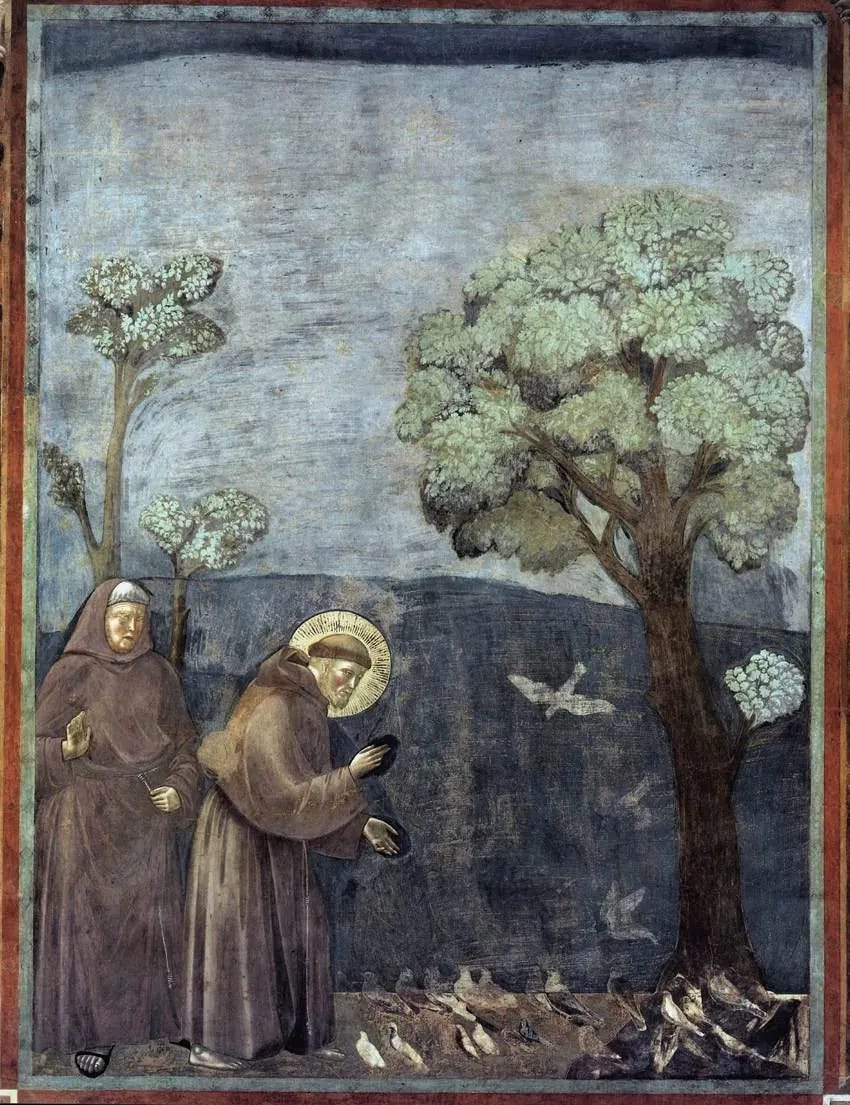
From this point, we converge towards a shared conclusion, which we formulate from different positions: what takes precedence, beyond texts, traditions and teachings, is what you call structured experience — the capacity to reach directly, in embodied life, what transmissions can only designate from afar. This is the criterion of the true transformers: Francis of Assisi, Rūmī, the Baal Shem Tov did not distinguish themselves by the purity of the channel they claimed, but by the quality of being they embodied and by the living transformation they rendered possible around them — because they lived the experience of their tradition rather than simply adopting its beliefs. And it is this same criterion of transformative fruitfulness that grounds my confidence in the contemporary voices I evoke — independently of any discussion as to their origin, which remains, in the last analysis, unverifiable.
As for the distinction you draw between a universe founded on revelation and a universe founded on inner experimentation, it is a stimulating one — but I maintain that it does not constitute the decisive cleavage you assign to it. As we have seen, the traditions that ground themselves in illumination or inner maturation have also engendered communities of reference, spiritual hierarchies and their own shadow-zones: Hindu castes, the domination of the Tibetan clergy, Buddhist nationalisms. The true line of fracture lies not in the type of original foundation, but in the dynamic of deviation that sets in almost invariably when a living impulse crystallises into an institution — the moment when the maieutic method gives way to the master who commands; when the community as laboratory of shared living becomes an obedient mass; when knowledge is converted into power and the force of life into the force of death. This drift is political in its essence, whatever the tradition that harbours it. And this is why every conscious symbolic architecture — the one you call for — will escape this destiny only if it integrates from the outset safeguards against its own institutionalisation: no longer the master who dictates what must be believed and done, but the companion who accompanies a genuine spiritual evolution.
All of this brings me to what seems to me the natural closing of our long and fertile dialogue. We have explored at length what our universes of meaning are responsible for — which worlds they render possible or impossible, which virtues they compel us to embody, which blind spots they authorise. But in tracing together the path that leads from the original impulse to its institutional deformations, in recognising that symbolic frames of reference are never more than approximate maps of a territory that each being must traverse for himself, we touch on something essential: responsibility does not only ascend from the frames of reference towards us. It descends also from us towards them. For a symbolic frame of reference, however powerful, never relieves the human being of freedom — nor of its inevitable corollary, the demand. No text has ever prevented a Francis of Assisi from living the Sermon on the Mount in its most exacting radicality. And the absence of any shared frame of reference has never prevented human beings from doing violence to one another in the name of ideological voids equally murderous.
This is why I would like to invert the question that opened our exchange, and reformulate it thus: what symbolic frames of reference are we responsible for? No longer only: what do our universes of meaning make of us? But: what do we make of our universes of meaning? What reading of them do we assume? What portion of them do we genuinely embody in our lives — and what portion do we leave to others to define in our place? This is perhaps the common ground I identify beneath the diversity of all traditions: not a shared doctrinal content, but a transversal demand — become what you are capable of being, and place it at the service of the whole. This injunction has no exclusive origin. It arises in the prophet as in the sage, in the one who receives and in the one who discovers. And it is precisely because it exceeds all the frames of reference that bear it that it can constitute, today, the basis of a symbolic responsibility that we are both called to assume — each from his own path, together in the horizon they share.
With all my friendship,
Jérôme Nathanaël
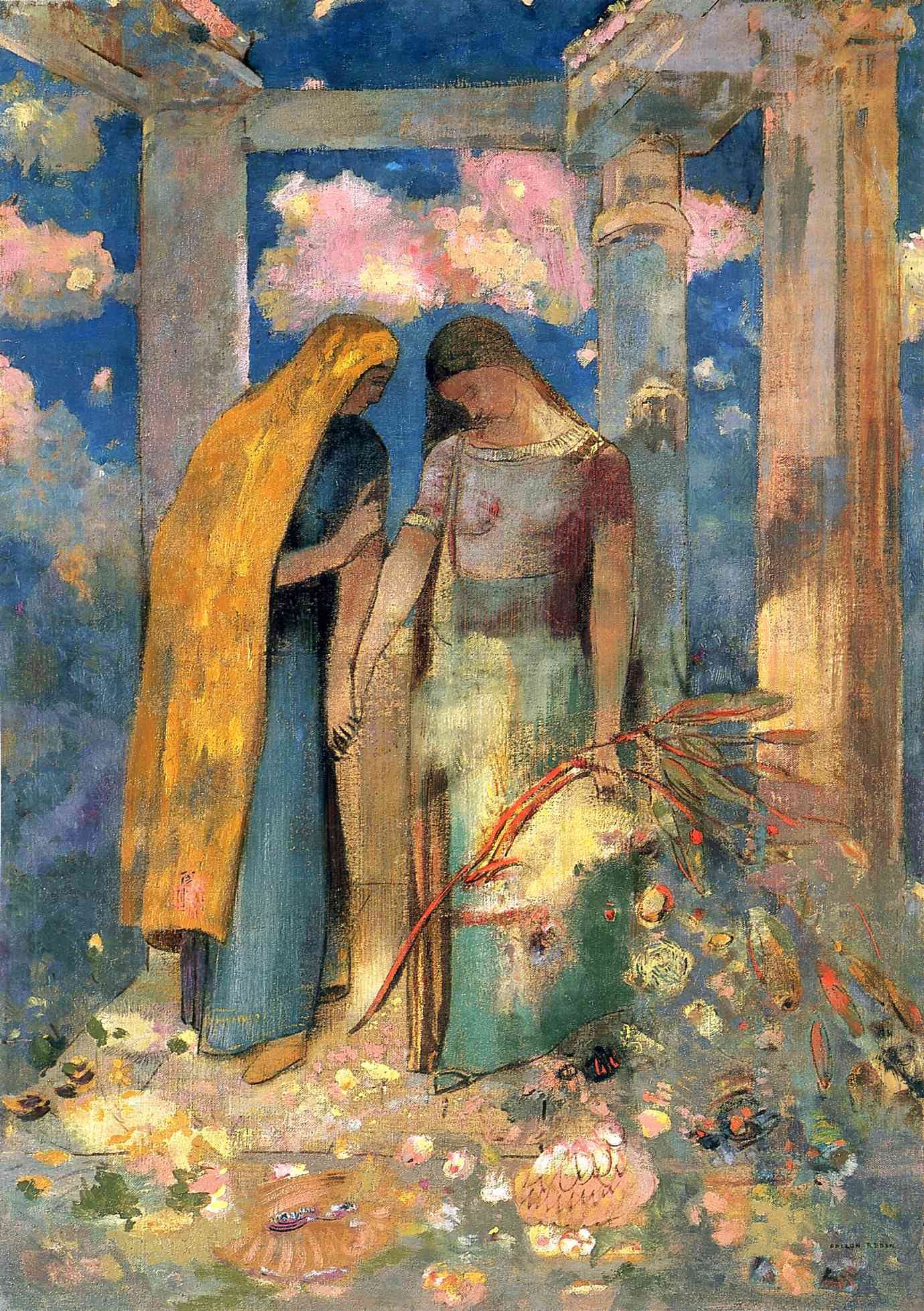
A closing note
This dialogue does not close upon an agreement. It stops where the questions remain open — and that is perhaps its most useful truth. What Alexander and I sought to do here was not to demonstrate a thesis, but to show that genuine encounter in difference is possible: to contradict one another without confrontation, to advance without merging, to point together — from distinct paths — towards a shared demand of responsibility and rectitude.
It is this demand that I invite each reader to practise, in his own exchanges, in his own questions, in the way he inhabits the universes of meaning that sustain him. If this dialogue has reached you, if you yourself carry questions about what our symbolic frames of reference are responsible for — and about what we, in turn, are responsible for towards them — I should be glad to explore them with you.
© 2026 - Dialogues of the New World — Jérôme Nathanaël

To go further
Does this exchange move you, challenge you, or resist you? The dialogue does not end here — share in the comments the reaction, the nuance or the question it awakens in you.
And if you wish to go further, send me a contribution of roughly one page for the Waymakers section. It will be published under your initials, a pseudonym, or anonymously, as you prefer. Other readers will be able to respond and dialogue with you.
New here? The Opening page introduces the author, the project, how to take part, contact details, and the agenda.