

Article disponible en français
The Eternal Present · Spiritual awakening · 25 min
To explore the concrete paths of inner transformation.

From the adaptation of the steam engine to the locomotives of the nineteenth century, through to high-speed trains and commercial aircraft, we have travelled ever more swiftly from one place to another; and today the internet even provides immediate access to information that once took several weeks to reach an individual. In our cities, the least object of our desires is often readily accessible, almost within arm’s reach. This acceleration and this ease have gradually rendered us eager for the immediate satisfaction of our expectations, making us ill-equipped to tolerate whatever requires time and patience. Yet a famous proverb tells us that patience is the mother of all virtues, and therefore its absence the source of a great many ills. Let us rediscover, then, a taste for slowness and for those things which demand that we have long awaited them!
In this article:
Impatience, that ordinary ill
When the desire to possess governs time
The tyranny of desires and the path towards oneself
The human being, shadow of the Living
Self-observation as the first discipline
Knowing oneself without judging oneself
The secret chamber and the river
Armed with a burning patience
Impatience, that ordinary ill
In the seventeenth century, a great French poet, whom we have all studied, already wrote, in his celebrated fable The Lion and the Rat, the following moral: “Patience and time do more than strength or rage.” He recounted the story of a lion caught in a net at the edge of a forest, roaring in vain to escape the trap, whilst that same rat, whom he had previously spared, by gnawing through a master mesh, undid the entire snare and succeeded in freeing him.
La Fontaine’s Fables remain remarkably relevant today, for they speak to us of our human nature and of our behaviours, which have evolved so little over the centuries, even as cultures and fashions have varied, and our scientific knowledge and our technical achievements have prodigiously grown. That brief phrase, contained within two octosyllabic lines, alerts us more acutely than many another to the gravity of one of the worst ills of our age: impatience, which often travels in the company of its companion anger — a frequent consequence of the same affliction.
We may find illustrations of this impatience around us every day, for instance in observing the risk of accidents caused by those irritable drivers who endanger their own lives and those of others in order to gain a few seconds in excessively congested urban traffic. High risk for a derisory outcome: here is a remarkable illustration of impatience, which in general resolves no problem whatsoever, yet risks subjecting the one who yields to it to manifold inconveniences — being swept away by it, thereby losing an inner stability that is often fragile enough, and then visiting one’s agitation upon others.
The faces that impatience may assume are manifold and arise in countless situations, so thoroughly is it the force underlying a great many impulsive behaviours, which deprive a man of his consciousness and deliver him to his lowest tendencies, or feed the most obscure stratagems for gaining the upper hand in a situation, or over a person, who obstructs his access to what he deems necessary.
When the desire to possess governs time
But like so many of our most powerful and least controllable tendencies, impatience is an almost visceral and in fact desperate response to the flight of time, which obsesses and terrifies us. When we have a crucial need that determines our pleasure or well-being in the short term, or the attainment of our more distant dreams and ideals, we come up against our own temporality and our finitude, in a manner conscious or unconscious according to the individual and the subjects that engage them.
Since our criteria of success in life belong to the domain of having — having pleasure, love, security, possessions, achievement, renown, and even for some, having being itself, that is to say a certain state of personal or spiritual development — and since to have means to reach the object of that having, to hold it with or within oneself, whatever it may be, as long as we fail to attain it, we experience a dissatisfaction that engenders impatience, together with all the ills that are its consequence.
Lao-Tzu, who lived in China from the middle of the sixth century before the Common Era to the middle of the fifth century before the Common Era, and to whom the Taoist tradition attributes the authorship of the Tao Tö King, the Book of the Way and of Virtue, noted therein: “The goal is not only the goal, but the path that leads to it.” In other words, what we seek to attain or obtain motivates us to make the effort to approach it, yet an equally important part of success lies in the path we take to reach it.
The Taoist concept of wu wei, literally “non-action”, but more precisely action without forcing — acting in accord with the natural movement of things — extends and deepens this intuition. The patience it designates is neither inertia nor withdrawal, but the refusal to violate reality through a will clenched about its object. It is an openness to the real that resembles more the attitude of the musician who listens before playing than that which forces a passage.
Whatever it is that we desire or seek, it is in the dimension of being — what I am, in movement towards what I wish to have — that a fundamental key to our spiritual and peaceful relationship with our temporality resides. It is from this awakening of awareness that our capacity to release the grip of impatience may arise, allowing us to accept the time necessary to every human undertaking, whatever its nature.
The tyranny of desires and the path towards oneself
Few beings are naturally inclined towards patience. We are more generally inhabited by the impatience generated by the power of our desires, which cause the waiting or effort required for their satisfaction to seem so painful. Like the child who importunes his parents by demanding their immediate attention, or who attempts, through a fit of tears, to obtain the object of his craving more swiftly, we seethe inwardly when the facts resist us, until we sometimes boil with anger, when this takes the form of a person or an object standing in the way of achieving our end.
This is because patience is learnt, and it requires a profound change in our relationship with ourselves and with reality. It is necessary to enter into the time of slowness and interiority, to learn, step by step, to embrace life and to become a friend to oneself. The task at hand, as I have begun to indicate, is to pass from the time of having to the time of being, by turning inward to escape gradually from the determinisms of the desires that sweep us along — not in order to attempt to cease desiring, but so as to make the desire to be primary within oneself in relation to the desires to have, and to begin to desire to become, as René Daumal expressed it in that poem of which I wrote in a previous article.
If we begin to observe the extent to which we are, as it were, acted upon by multiple desires — sometimes so contradictory that they seem like the desires of several different people within us — and that for each of these desires, we are ready to prove to ourselves, and to others if necessary, that they deserve to be satisfied, and that it will therefore be legitimate to suffer if they are not, perhaps then we shall aspire to free ourselves from these chains in order to gain access to freedom. I speak here not of freedom in the popular sense — the freedom to do whatever one pleases whenever one wishes, which is nothing more than the will to power of an ego reduced to animality, concerned with extending its hold over a territory, real or virtual — but of the freedom to determine who I am, to choose the quality of being I wish to cultivate within myself, starting from the initial givens with which life has endowed me: that mysterious assemblage of a unique body and a unique spirit, which no science will ever be able to map in its entirety, for it partly eludes mere materiality.
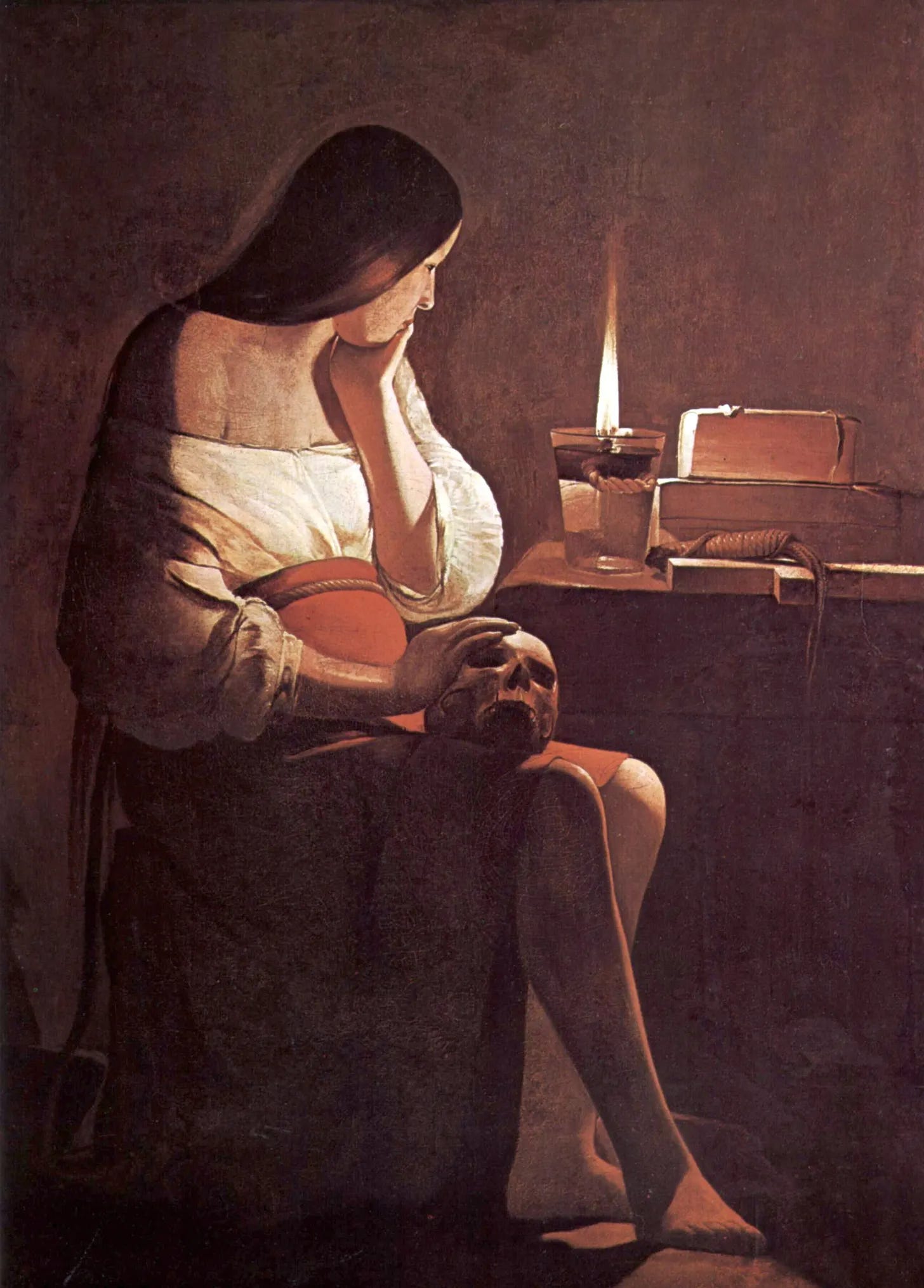
The human being, shadow of the Living
It is in approaching this dimension, which I call spiritual, that our perception of time and our manner of living it inwardly undergo change. We are no longer in the world to accumulate, delivered up to the imponderable of birth and circumstance, tormented by desires that carry us away, but to accomplish a work that depends upon ourselves alone — to raise ourselves from the torments of animality, preoccupied solely with its survival, to the luminous heights of integral humanity, awakened to all the dimensions of the living, intimately and consciously bound in a relationship of love to each of its expressions. Here again, it is not a matter of acquiring an inner state in exchange for the practice of techniques or the observance of religious rules, but of transcending even that notion itself, by understanding that the task is rather to render manifest within oneself the presence of a ray of the one and infinite Life, through a progressive transformation that gradually prunes away the superfluous and orients one’s entire being in an opening to love, than to be a closed ego attaining the desired object of its beatitude. Human language struggles to describe its subtleties; it stumbles against the absence of words that might carry the trace of a shared experience of this ascent towards the dimensions of the sacred. Here it confines us to dual relations between subject and object, and to recourse to spatial or temporal notions in order to express the inexpressible.
In attempting to convey to us, despite these linguistic limitations, these notions that invite us towards another understanding of our human condition, two geographically distant traditions — the Hebrew and the Buddhist — offer us two images that are in reality quite close. The first tells us that man was created in the image and likeness of that infinite Life which is called G-d, an almost unusable catch-all term, since it covers as many meanings as there are beliefs. The two Hebrew words employed indicate, for the one, tselem, from a root meaning shadow, that the human being is the projected shadow, within the space-time of the earth, of that boundless Life; the other, demout, speaks of a structural kinship or pattern between that infinite Life and the human being who is a part of it. Buddhism, for its part, reminds us that we all have within us the Buddha-nature, that is to say that our deepest nature is pure, unblemished, clear and omniscient, capable of love, compassion, and wisdom, freed from the shortcomings of our ego clenched upon its immediate needs.
The Mahāyāna Buddhist tradition has gone further still with the concept of kṣānti, one of the six perfections or pāramitā. Śāntideva, in his Bodhicaryāvatāra, devotes an entire chapter to it and distinguishes it in three dimensions: endurance in the face of suffering, the capacity not to be shaken by the pairs of opposites — praise and blame, pleasure and pain — and the ability to remain firm before the very depth of reality. Kṣānti is therefore not merely patience in the temporal sense of the term; it is an inner composure that sustains the whole of existence, extending far beyond a simple relationship with time.
The Sufi tradition converges with this demand through ṣabr — an Arabic term whose semantic richness far exceeds our notion of patience. Al-Ghazālī, in his Iḥyāʾ ʿulūm al-dīn, distinguishes it in three successive degrees: ṣabr in the face of affliction, ṣabr in the effort of orientation towards G-d, and ṣabr in the face of the incessant desires that solicit the human soul. This tripartition overlaps with remarkable precision the progression we seek to describe here, and recalls that patience, in all the great traditions, is not merely one virtue among others: it is the one that renders all the others practicable.
These presentations converge, if one is willing to consider G-d not as a punishing father or a God made man, but as the Living with all His qualities — His faces, as the Hebrew tradition tells us, of which love is not the least — and within whose unity we are each a part capable of being conscious of itself. Be that as it may, in seeking to liberate within ourselves our essential and initial nature, we gradually escape from the impatiences arising out of our appetites for having, in order to enter into a more vertical temporality, where each instant contains within itself its own potential riches, which our inner life shall unveil.
This mutation of our relationship with ourselves — whereby we come to desire to build ourselves, through the unfolding of our spiritual potentials and the fulfilment of our essential being, rather than through enslavement to all our transient and competing desires — is only possible if we discover therein the horizon of happiness and the consolation of our existential anxieties.
Man rarely changes through adventure or whim; he exerts effort, and still more commits to a sustained effort, only with the hope of a return on his investment. From generation to generation, we have grown accustomed to bargaining with life in relationships mingled with demand, disbelief, and mistrust. Our will is thus frequently nourished by a tacit negotiation with it, and enters into contract for defined and measurable gains. And, in our age tyrannised by the immediate, in which artificial intelligence can, within a few seconds, produce texts that are certainly intelligible yet wholly devoid of those stylistic asperities through which life transpires, this tacit contract will most often be made on a short-term basis.
To attempt to escape from the impatience that proceeds from the immaturity of the desire to have, in order to gain access to the time of interiority born of the desire to be, can therefore only arise from a lucid evaluation of a well-being made possible at the conclusion of this effort. One must then clearly discern within oneself how far impatience delivers us to feverish restlessness and threatens us with despondency if contentment is delayed, and then understand that the edifice of the self opens us to a density of life and experience that renders sustainable the long duration and the constancy of effort. This new orientation does not burden us with the necessity of renouncing our desires; on the contrary, it will enable us to dispose of an inner measure — a kind of gauge by means of which we shall be able to distinguish those desires whose expectations are legitimate and whose satisfaction may contribute to our progress, from those which encumber or enslave us.
Self-observation as the first discipline
It is through self-observation that we shall bring to light the diversity of the inner movements that pass through us, and the variability of the desires that animate us — provided that this observation is truly a perception simultaneous with what is being observed; that is to say, that we develop a presence to ourselves sufficiently stable as not to be drawn along and ultimately merged with what we observe. In other words, the task is to look inward as though we were spectators of a theatrical performance, whilst avoiding identifying ourselves in turn with each of the players. And if we wish to understand progressively the meaning of the play being staged — of which we are scarcely the director — let us beware of our permanent inclination to judge, comment upon, and criticise the actors who have taken possession of us, in relation to the image we would wish to have of ourselves, or to the favourable effects we would wish our theatre to produce beyond ourselves. Let us simply endeavour to be sincere with ourselves, which would already be a fine spiritual achievement.
This lucidity and this presence to oneself will persuade us that we live most often dragging the weight of the heavy luggage of our past — filled with dissatisfactions, resentments, regrets, doubts, and prejudices — our eyes fixed upon a future enjoined to be more radiant, onto which we have projected the imagined scenes of our happiness, towards which we are stretched in a painful and unhealthy waiting. And in this all too common attitude, our present slips through our fingers, without our being attentive enough to receive its liberating teachings, should they differ from our preconceived ideas, or to savour its richnesses and subtleties, should they not correspond to our expectations.
In this unfolding it will then appear to us, as something self-evident, that numerous are the desires we nourish through this manner of being in order to compensate for the inner insecurity it provokes. What happiness, other than fleeting and fragile, can we hope for if we are absent from the present life, torn between the ghosts of the past and the evanescent visions of the future, impatient solely for satisfactions that do not depend upon us, but upon aleatory and transient elements such as, for example, material comfort, social success, or the recognition of others?
We are now beginning to understand clearly that establishing within ourselves this quiet yet active patience — which would allow us to free ourselves from our agitation and our fevers — means orienting ourselves towards a form of wisdom that knows how to be lived through an attentiveness to the present, discerning the essential that elevates us from the incidental that enslaves us, and attaching itself more to the edification of our being and to its spiritual inscription in life than to our hold upon the world through power or wealth.
This does not preclude attaining a certain material ease or an influential position, provided it is possible to succeed therein without renouncing the dignity of our being and the uprightness of our conduct — those dimensions which ultimately give direction and meaning to any existence that aspires to be lived at the full measure of humanity. Abandoning this primary requirement encloses us in the condition of the man devoid of all greatness, reduced to the horizontal earth, upon which, bent under the weight of his narrowest inclinations, he produces, consumes, ensures his survival, and reproduces, awaiting death with dread, insensible to that latent force within him which he might cause to spring forth in order to bind himself to the infinite of the sky, and which once drove him to stand upright.
But to perceive the possibility of this connection, one must indeed cease yielding to the easy seductions of the appetites that dominate us and invade our mind — to the point sometimes of rendering us deaf to any somewhat deeper questioning — and refuse to renounce ourselves in order to obtain greater comfort or recognition. If we decide to direct ourselves towards this wisdom and this interiority, which give a sublime meaning to our destiny, we shall attach less importance to the material conditions of our existence, which will progressively free us from certain of our former expectations, and far greater importance to the way in which we live them, so as to know ourselves better and to evolve.
Knowing oneself without judging oneself
Our inclination towards impatience then risks being displaced onto a new demand: that of obtaining quickly signs of progress to reassure us of the validity of our choice, for at the outset of this process of progressive mutation, we are still encumbered with our habits of avidity and all our anxieties. We do not yet measure the profound consequences of these attitudes which have structured themselves within us over the long term, and from which we shall not be able to disengage ourselves without effort.
We have a frequent tendency to judge and evaluate ourselves by comparison with others, scarcely capable of considering ourselves according to our own interior criteria of lucidity and sincerity; and we also experience great difficulty in being present to the simple reality of what we are living, so thoroughly are we traversed by the regrets or the traumas of the past or our projections towards the future, which troubles our relationship to the present moment. These inner attitudes will long resist our will to escape them, for we must first draw up a kind of inventory of our inner domains before we can undertake any substantial change whatsoever.
The only change that is initially possible is a change of gaze upon oneself, which passes through the apprenticeship of sincerity — so as to know oneself in reality, that is to say to cease deceiving oneself in wanting to please oneself, like a Narcissus who could not bear his own face and would employ his talents to disguise it. No one can evolve without passing through the acceptance of seeing everything within oneself, without which all our effort results merely in the maintenance of illusions, for which we shall sooner or later pay the price in still greater suffering.
But for one who succeeds in ceasing to judge himself, it becomes possible to cease lying to himself, and there opens before him the possibility of beginning to accept himself as he is, of progressively entering into friendship with himself — yet a demanding friendship that requires the constancy of effort in working upon oneself, so as to acquire an inner composure upon which to lean in the building of the self.
Christian mysticism has named this posture ὑπομονή, hypomoné, a Greek term from the Pauline epistles often translated as “patience”, but which designates more precisely a perseverance under pressure that does not yield, an active endurance of the wayfarer who knows the path is long and does not turn aside from it. John of the Cross makes of it the virtue necessary for the traversal of the dark night of the soul — that inevitable passage in which all spiritual crutches give way and nothing remains but the sole force of the continuing will to carry on.
And, in this awakening spiritual dignity, there appears a new patience, born of the total acceptance of oneself and one’s present, whose density becomes that of a being in motion, reinvested with himself.
Through the attention we shall bring to bear upon our spiritual realisation, we shall begin to escape the power of those desires which previously drove us to seek outside ourselves something to compensate for our inner void and our secret anxieties. We shall thus be able to free ourselves from the many impatiences generated by so many cravings and covetings that encumber us, so as to accord importance only to legitimate needs — those that contribute to the equilibrium of our inner life, to our refinement, and to our maintenance.
But in thus orienting our existence towards personal progress, we are embarking upon a demanding path, which must first pass through a progressive disclosure of our actual state, which will require of us total sincerity and an effort of humility, to accept discovering ourselves in a less flattering light than the illusion we had hitherto maintained. Another form of impatience then risks overtaking us, for we should like to be able rapidly to reduce the flaws and failings we discover within ourselves. This impatience we can only transform into a positive force by accepting, little by little, no longer to judge or compare ourselves, but simply to regard ourselves as a being in the process of becoming, who applies himself each day to pursuing his work — the re-creation of himself.
If we succeed in observing ourselves with this benevolent gaze, whilst at the same time maintaining towards ourselves a firm attitude that incites us to surpass ourselves rather than to relapse into easy complacency, we shall manage to bring into being within us that quiet humility and that active patience which are the beginning of wisdom and serenity.
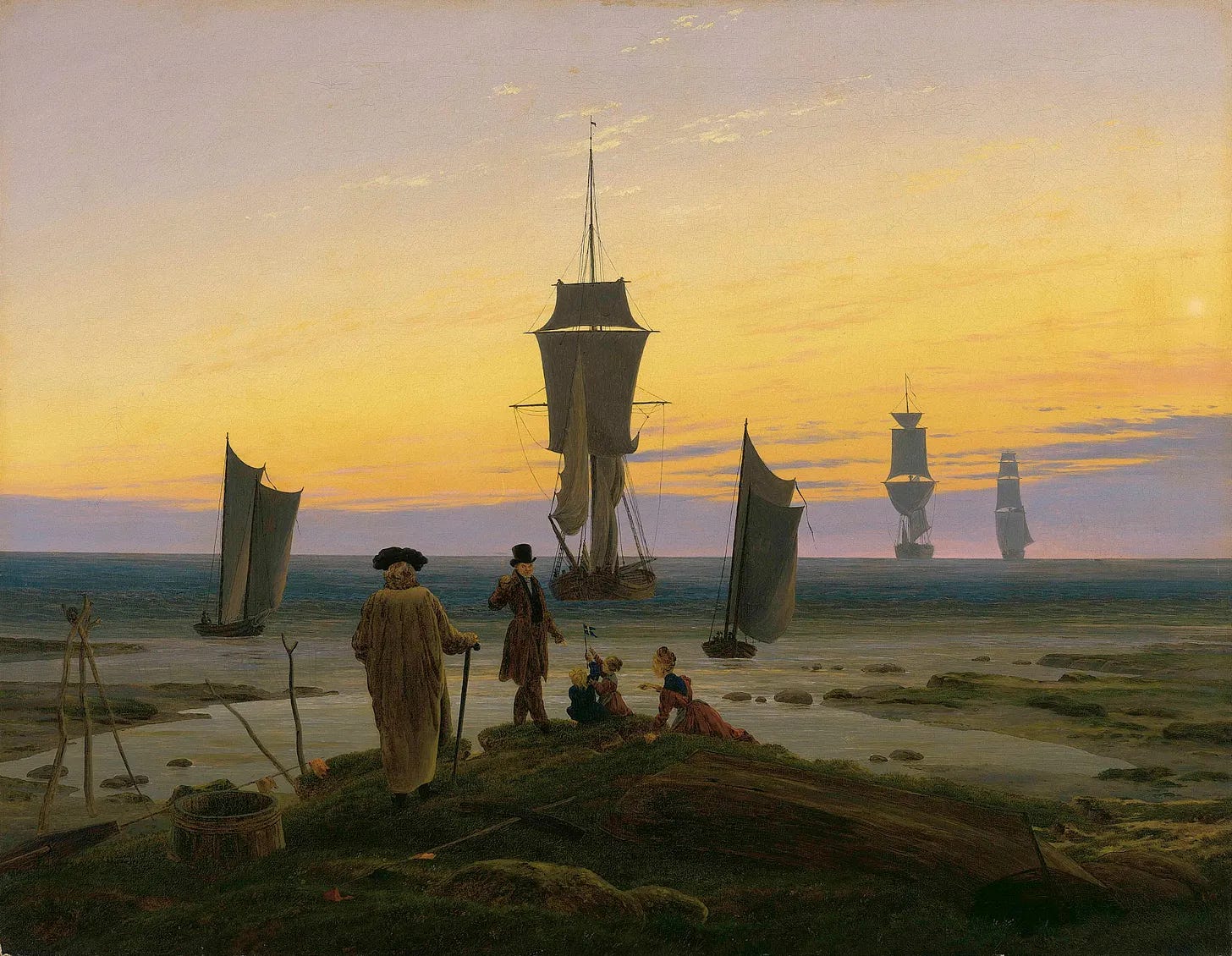
The secret chamber and the river
Our relationship to temporality then begins to change substantially, because at the deepest part of ourselves there gradually crystallises, a little more each day, a space of immobility and silence — like a secret chamber in which the agitation from without, the preoccupations of material life, and the gaze of others no longer hold any sway, because something more living, more dense, and yet more light unfolds therein, in a dimension that seems to elude the flight of time.
It is here that the tradition of Advaita Vedanta introduces the notion of titikṣā — one of the six preparatory disciplines that Śaṅkara names sādhana catuṣṭaya — which designates the capacity to remain serene in the face of opposites: heat and cold, pleasure and suffering, praise and blame, without being either indifferent or swept away. Not the refusal to feel, but the refusal to be governed by what one feels. This inner stability, cultivated through patient and regular practice, is precisely what renders habitable this secret chamber of which we speak, and what allows vertical temporality to open within it without being immediately reclosed by the first turbulence to arrive.
In this place within ourselves, we may receive other emotions, other thoughts, other intentions, for there we brush against the mystery of another presence. Is it that of my truest, most intact, most free self, escaping from the illusory identifications into which I habitually project myself? Is it some fragment of a greater presence — stardust, divine dust? What words to use to describe what can only be heard and shared by one who has lived the liberating experience?
But what matters is that from this place — different for each one, for even were it but a speck of near-nothingness, it would be unique to him whilst being born of the same infinite life — from this chamber, I may then diffuse myself into the world, and sense this presence in each person, so as to discern sometimes, upon certain faces, the fragile halo of light of which it is the trace, and thus give free rein to my love for my fellow human beings, my very nearest. For it is by virtue of this dynamic patience that I establish within myself, and the consciousness and humility that accompany it, that I cease to expect others to conform to my desires or my conceptions, and begin to accept them as they are — just as I practise for myself — without projecting upon them judgements that separate me from them, discovering them at last in their real humanity. Thus, beyond the appearances with which they adorn themselves, they become to me quite simply infinitely loveable, in their hopes and their sorrows, in their joys and their disappointments.
I also renounce seeking outside myself what might fill my void and my gaping insufficiencies, for in opening myself to this inner temporality so different from clock-time, I also sense what escapes the hold of the visible — which is measured in duration — and become responsive to richer and more fruitful treasures. As long as I succeed, even whilst active in my daily life, in maintaining myself in this quiet state — as long as my presence to myself does not yield before all that outside might draw me in its wake and cause me to fall back into a mindless torpor — I remain connected to this inner chamber through which life flows like a river. And I discover little by little that I am this river, and that I am Life itself.
Armed with a burning patience
As we have been able to elaborate throughout this article, we now understand that the patience born of our spiritual awakening is an active patience, engaged in daily life, and not a renunciation of existence and its joys. On the contrary, by freeing us from the painful subjection to those compensatory appetites for our various deficiencies, it enables us to enter into an ever more authentic dialogue with ourselves, to receive life in an openness devoid of avidity, and to go towards the other for his own sake.
Thus, attaining this dynamic patience is a first victory for one who walks towards his spiritual fulfilment — the victory of having succeeded in establishing within himself a kind of sanctuary that renders serenity possible: a place where he is free to replenish himself far from social agitation and human tensions, a place beyond the world whilst yet being in the world. For the point is indeed to remain in the world whilst managing to progress within it, to remain amongst men in order to assume fully our common condition, and to endeavour to breathe into it, in a loving and helpful presence, more hope and more fruitful questioning. Enriched by this inner life, nourished by this experience of a presence within oneself that bears the taste of eternity — binding us to the whole universe — how can one not sense the so frequent absence of light and love amongst one’s fellow human beings? How can one not see in this terrible atrophy the real and lasting cause of all the ignominies of our societies?
The Hebrew tradition has forged for this tenacious and inhabited waiting a word of rare precision. The root qvh (קוה), which one finds in the Psalms — qavéh el Adonaï, “hope in the Eternal” — does not designate a resigned patience, but a tension of the whole being towards a sensed horizon. The patience it names is inseparable from hope, and hope from action. This is perhaps the most just formulation of the gaze we need in order to continue — the very one evoked in the subtitle of this text: to have one’s gaze resting upon the horizon where the dawn shall rise.
“Let us receive all the influxes of vigour and of real tenderness. And at dawn, armed with a burning patience, we shall enter the splendid cities.” Thus wrote Arthur Rimbaud in 1873 in his Une Saison en enfer. It is indeed a burning patience that one must cultivate in order to enter, nourished by all those “influxes of vigour”, into those cities with their sometimes dazzling architectures, where so much wealth and artifice are displayed, yet where the stupefaction of men — reduced to supervised producer-consumers — and their inner misery, when not material, seems ever more intent upon gaining the upper hand over the intelligence of the heart and the beauty of self-giving, ceaselessly deferring the possibility of engaging in real changes that would liberate human genius.
And Pablo Neruda, that immense Chilean poet — committed, pacifist, anti-fascist — who fought for his convictions despite persecutions, added, addressing all men of goodwill in his Nobel Prize acceptance speech on the 13th of December 1971: “it is only with a burning patience that we shall conquer the splendid city which will give to all mankind the light, justice and dignity.” This tenacious patience can only come from an irreducible faith in man’s capacity to re-create himself as a spiritual being and to reactivate within himself love and wisdom — which will enable him to find at last the strength to realise, in harmony with all, that city for which Neruda hoped, or to bring to fruition the magnificent dream that inflamed Martin Luther King in Washington on the 28th of August 1963, before 250,000 people, during his celebrated speech I have a dream.
With one’s gaze resting upon the horizon where the dawn of this new world shall rise, armed with that burning patience which causes us to regard each instant as an invitation to the celebration of the best of ourselves and each human being as the unique and sublime place where the infinite of the living has deposited its mark and its potential of light, it remains for us to advance step by step in our personal transformation and to go towards our fellow human beings, attentive to every means of laying with them the first stones of the splendid city.
© 2026 - Dialogues of the New World — Jérôme Nathanaël

To go further
Have you encountered a practice, a discipline, an exercise, or an obstacle that has truly transformed you? Share your testimony in the comments — it will enrich every reader.
And if you wish to express yourself on a subject of spiritual awakening, send me a contribution of roughly one page for the Waymakers section. It will be published under your initials, a pseudonym, or anonymously, as you prefer. Other readers will be able to respond and dialogue with you.
New here? The Opening page introduces the author, the project, how to take part, contact details, and the agenda.