

Article disponible en français
The Eternal Present · Spiritual awakening · 16 min
To explore the concrete paths of inner transformation.

Series: Toward spiritual sovereignty | Step 3 – The radiance of Compassion
Previous article: The effort of Discipline
In this article :
The fruit of effort
Knowing oneself in order truly to see
True compassion or illusion?
The maternal face of compassion
All brothers and sisters in fragility
Opening one’s inner frontiers
Radiant compassion
One heart, a thousand faces
A few markers for the path
The fruit of effort
At the end of the first two steps of this journey, something has begun to be transformed. Love, first recognised as an infinite energy that sustains the universe and can pass through us, has gradually found within us a more attuned form thanks to that ardent discipline which has given it its riverbed and its banks. Whoever has truly worked on these first two qualities of the soul, abundant love and rigorous discipline, now discovers that he begins to see them converge towards a third reality, higher and more luminous: active and radiant compassion.
For compassion is not simply a mixture of love and discipline, it is the fruit of a deeper inner transmutation. It is by sincerely trying to embody love, by coming up against his own limitations, by supplying the effort that discipline requires in order to come closer to it, that the spiritual seeker naturally develops this widened empathy for the difficulties of others. He has groped his way through his own inner labyrinth, he has measured the weight of his heaviness, and this experience makes him open to the path of every human being.
Knowing oneself in order truly to see
It is by moving beyond our ego and its visceral fear of lack, born of our mortality, as well as our representations and behaviours acquired under the influence of education, imitation and culture, that we can gain access to a right vision of ourselves and of others. This lucidity allows us to discern more clearly our real personal needs as well as the expectations of those around us, and to find a just balance between the two, so that we behave in a way that is attuned and conscious rather than impulsive and reactive.
So long as we remain conditioned by the distortions of our acquired personality, which dominates our essential being, we are deprived of that spiritual gaze which would assess situations and people truthfully. Our compassion remains at best random and subject to our moods of the moment, now overflowing, now absent, depending on the emotional state in which we find ourselves rather than on the reality of the other. As we gradually gain a clear vision of our own functioning, through self‑observation and that sincerity which allows us to look at everything without flattering or condemning ourselves, we shall in the end decipher the deep springs of our attitudes and feelings, and we shall begin to be able to find lasting harmony between our inner demands and our capacity to love.
True compassion or illusion?
The more we learn to know ourselves and to understand the driving forces behind our motivations and our behaviours, the more capable we become of discerning whether our impulse of compassion is borne by a truly disinterested intention of dedication towards another, and whether we are really ready to put ourselves in his place in order to understand his point of view or his needs and to welcome these as they are. This distinction is essential, because compassion can very easily become one of the subtlest guises of the ego.
Is our compassion nothing more than a passing emotional reaction that soothes our conscience without our being in any way ready to embody it in concrete terms? Is it a ruse of the ego turned back upon itself, content to tell itself that it is sensitive and empathetic, without wishing to leave its habits in order to take the risk of truly caring for the one who is in distress? Or is it perhaps the result of a sense of guilt created by the imbalance between two human conditions, a selective compassion that we would not feel with the same intensity, for example, towards a wealthy person struck by great misfortune? These questions deserve to be asked honestly, for they reveal to what extent true compassion is a demanding fruit.
True compassion, which springs from a real opening of the heart to love, is that capacity to feel and to sense by empathy the sorrows and difficulties of every human being we meet, even if he is a stranger, and to be ready to support and accompany him without any form of judgement or condescension. It does not judge, does not compare, does not rank sufferings. It simply stands there, available, with the quiet nobility of one who has learnt to stand upright through his own trials.
The maternal face of compassion
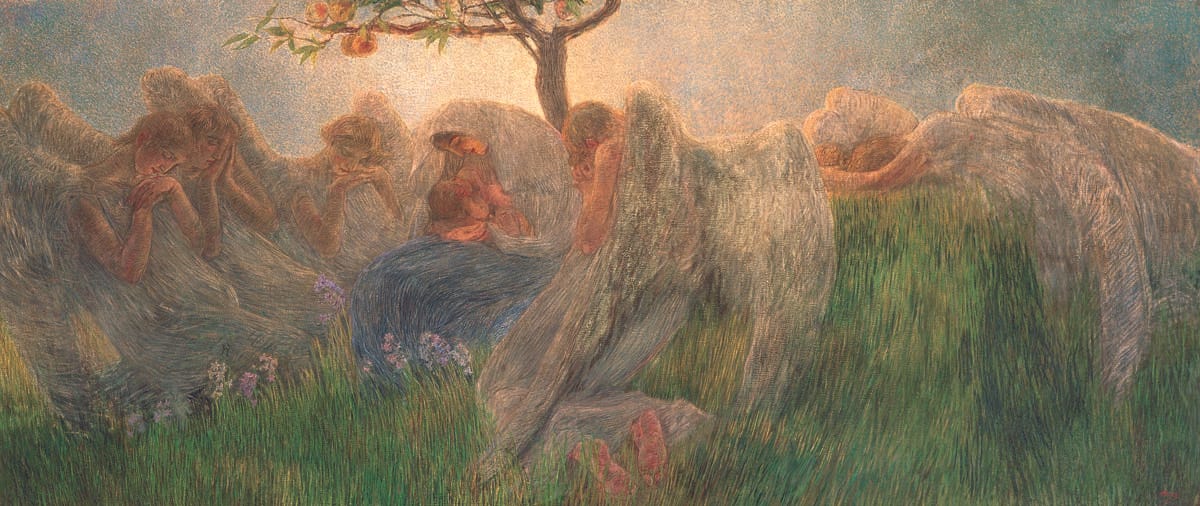
To picture this quality of soul that is compassion in all its depth, let us think of a mother’s love, attentive to the needs of her children, ready to comfort them when they face difficulties, naturally finding extenuating circumstances if they have acted badly. She watches to ensure that they may grow up surrounded by affection and safety, and she passes on everything she can to awaken them to life. This maternal love expects nothing in return, does not keep count, is not discouraged by setbacks: it holds fast.
Thus compassion bears this feminine aspect of tenderness and attentiveness to the other, and whoever develops it in himself gradually softens his character: he expects less from others for himself, and becomes towards them more generous and serene. Little by little he acquires a benevolent attitude towards everyone, which prompts him to lay aside any kind of prejudice as to another’s origin, social status or culture. He distrusts rumours and hasty judgements, and should he happen to hear some damaging information about someone, he suspends his opinion and takes the time to enquire from other sources. By practising active and concrete compassion, he becomes close to everyone and seeks to bring human beings closer to one another rather than to cultivate what separates them. Indeed, he feels intensely that common humanity which we share, that universal confrontation with the vicissitudes of an existence in which suffering and death constantly rub shoulders with the joys of everyday life.
All brothers and sisters in fragility
Thus compassion always goes to what is essential: recognising the other as my fellow man, my brother in humanity, without lingering over clothing, reputation, origin or social condition. For compassion, every being deserves consideration and love. Indeed, all alike, the poor vagrant as much as the illustrious figure, the cleaning lady as much as the head of state, share the same ontological reality, our human destiny, and the same metaphysical vocation: to bring their spiritual potentials to fulfilment, that is, to realise wisdom and love in concrete form and thus ennoble the world.
Compassion is therefore welcoming towards the stranger who comes to meet it, ready to share with him the best that is possible, disposed to learn from all in humility. It is concerned to lessen the suffering of humanity, not by becoming drunk on with fine ideas, but with the courage to act as far as possible in this direction, being first of all demanding with itself. In the midst of a world of injustice and violence, compassion resolutely traces the path of peace and reconciliation, and replaces condemnation and revenge with understanding and forgiveness. Since the one who develops active compassion has himself confronted the harmful tendencies that dwell in all human beings, he knows the real effort it takes to transmute our negative energies into forces of light and love.
Opening one’s inner frontiers
Establishing active compassion within oneself is the fruit of an effort to go beyond our limitations, by gradually escaping our atavistic reflexes of withdrawal and self‑protection. It is a matter of discovering that it is possible to love oneself differently and therefore to love the other in a totally new way, not by cultivating our fears and our guarded reserve, barricaded within our very limited field of life experience, but by giving ourselves the chance of an opening to the world that allows us to be enriched by every situation in existence and by every human encounter.
As we thus emerge from our inner confinement and open ourselves to the possibility of a bond of love with all living things, we also become more sensitive to the consubstantiality of all human beings. We enter a space in which reality, which we formerly perceived as fragmented and sometimes hostile, now appears to us as integrated and unified: an uninterrupted flow of energy and consciousness, of which every human being is a unique instance of freedom and individuality, not separated, however, from this shared abundance. The very idea of individuality becomes thinkable in a different way, since true compassion makes us feel that there is in us something of the other, just as there is in him something of ourselves. We then understand why both the Talmud and the Qur’an affirm that whoever saves a human being saves all humanity, and that whoever loves another with this true active compassion already loves all humankind.
Radiant compassion
My compassion becomes beautiful and radiant when it is spontaneous, humble and sincere. It is that gentle and tranquil energy which warms or consoles, that small delicate intention which underlines the happiness one hopes for the other, that attitude of non‑judgement and peace which allows the other to escape the disguise of falsehood or the urgency of flight. It is the friend who walks with you through dangers as through joys and helps you to journey in complete freedom.
It regards the other in his essential reality, beyond the contingencies of his condition, and welcomes him with all the respect due to his human dignity. It has the constancy of one who keeps his awareness and presence to himself awake, in order to stand with full nobility upon this passing earth, where the greatest riches are those of the heart. It is enduring in its love, because it knows how hard a man must toil in his inner labyrinth, cluttered with traps and distorting mirrors, before finding the exit and emerging again into daylight. This towpath, compassion has worn it away with its own laborious, obstinate steps, and how many times it has had to turn back in order to find again, back there at the last crossroads, the barely visible footpath. How could it do otherwise than blaze up in love for its unhappy human brothers and sisters, when it has needed, for itself, so much clemency, effort and patience in order to approach, slowly, the shores of freedom and light?
It is precisely this path travelled, this intimate experience of human fragility and of the grace that enables one to rise again, that gives compassion its particular beauty: it is lit from within. It is not the condescending pity of someone who watches suffering from some safe height, but the warmth of one who has himself trembled and who, from that trembling, has drawn the strength to hold another’s hand.
One heart, a thousand faces
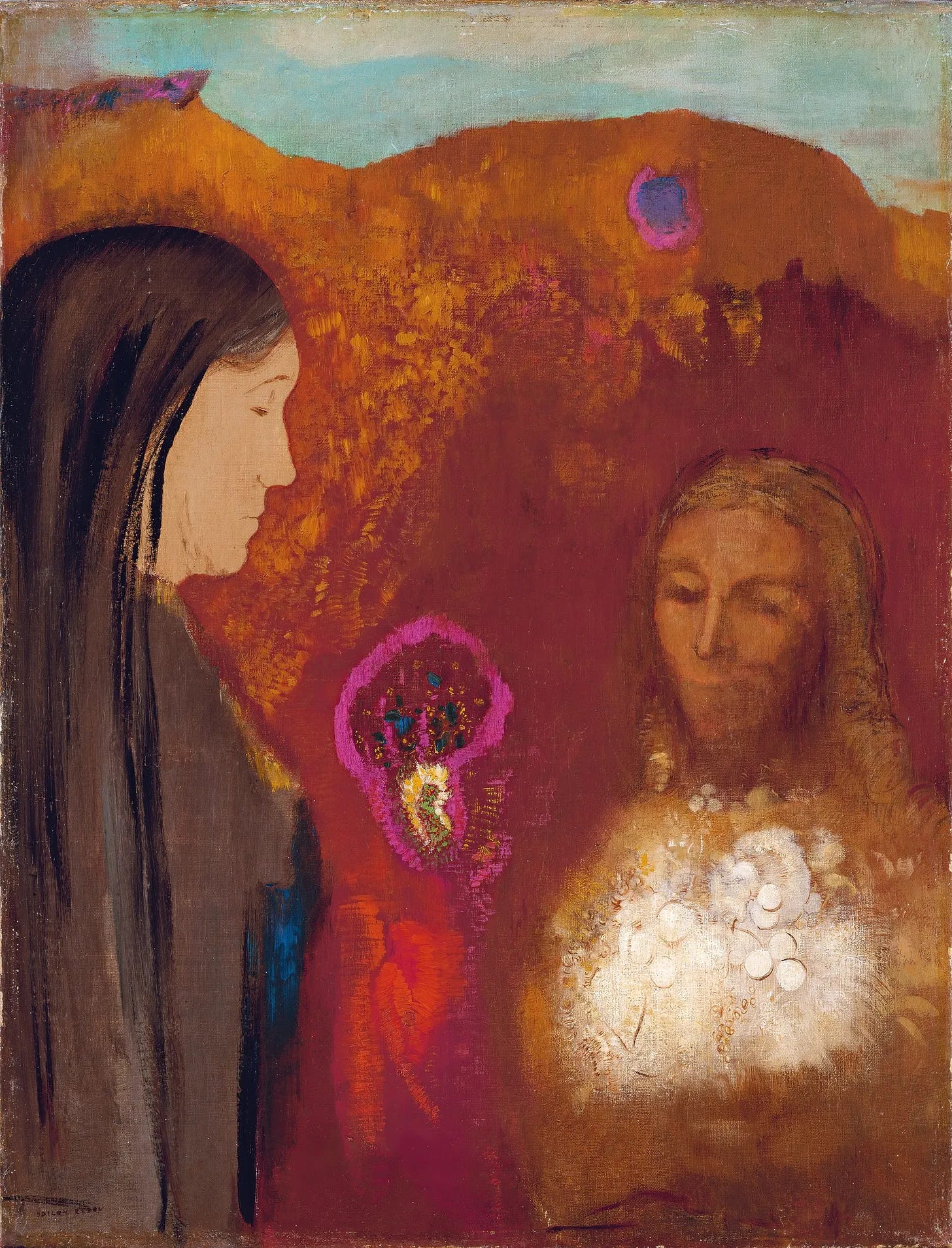
Within the constellation of humanity’s spiritual traditions, active compassion has been given different names according to languages and cultures. Yet its face is everywhere the same: the living junction between goodness and truth, between expansive love and the rigour that gives it form.
Hebrew Kabbalah situates this quality at the very heart of the Tree of Life, in the sefirah Tiferet, whose name means beauty and splendour. Tiferet is the central sefirah, the one that harmonises and transcends the two opposing pillars of Chesed, the expansive love of the first step, and Gevurah, the ardent discipline of the second. It introduces between them a third dimension, the truth of being, which is neither one nor the other and can therefore integrate them, giving them a shared and radiant countenance. The Zohar designates it as Rachamim, compassion, derived from the root rechem, the womb, underlining that compassion is not a feeling but an original warmth, a love that engenders and protects.
In the Christian tradition, the Gospels use, to describe the feeling of Jesus in the face of suffering, the Greek verb splanknizomai, to be moved in one’s very entrails, a physical and visceral compassion impossible to feign, which we find in the parable of the Prodigal Son to describe the father who runs towards his child as soon as he sees him in the distance. Meister Eckhart, in the Rhenish mystical tradition, speaks of Mitleid, co‑suffering, as the most immediate spiritual quality, that by which the divine itself is present in human suffering.
In Islam, the first two names of God that open each sura are Al Rahmân and Al Rahîm, the All‑Merciful and the Most‑Merciful, both derived from the same Arabic root rahma which, like rechem in Hebrew, evokes the womb. This convergence between the two Semitic traditions around a shared image is profoundly eloquent. Sufism prolongs this intuition with the notion of ithar, the preference granted to the other over oneself, which the masters regard as the highest degree of spiritual love.
In Hinduism, compassion is called Karunâ, a cardinal quality that the Bhagavad Gîtâ sees as an indispensable condition of Dharma, the realisation of the sacred duty of the incarnate being. It finds concrete expression in the principle of Ahimsâ, active non‑violence, not a mere abstention from harming but a vigilant attention to causing no avoidable suffering to any living being.
Buddhism makes Karunâ the second of the four Brahmavihâras, the sublime abodes of the awakened being, complementing Metta, loving‑kindness already evoked in the first step, but distinct from it through its specific orientation towards suffering. The figure of the Bodhisattva embodies this compassion at its highest degree: he renounces definitive nirvana in order to remain present to the world so long as a single being still suffers. In the Tibetan tradition, Avalokiteçvara, known as Chenrezig, is the Bodhisattva of universal compassion, whose mantra Om mani padme hum is regarded as the very vibration of this quality diffused throughout the cosmos.
Taoism places compassion among the three fundamental treasures of the sage. In chapter 67 of the Tao Te King, Laozi declares: “I have three treasures which I hold and cherish: the first is tenderness (ci)…”. Ci, tenderness‑compassion, is therefore the first of the founding virtues of the Taoist sage, the one that makes all the others possible. It is not an effort of will, but the natural course of the Tao in human existence, the gentleness of water which flows around obstacles without ever losing either its direction or its power.
All these traditions converge on a single conviction: compassion is not a feeling that one happens to experience or not according to circumstances, it is a quality of being that one develops, a dimension of consciousness one cultivates until it becomes the permanent tonality of our presence in the world. And everywhere it springs from the same source: the inner experience of one’s own fragility, traversed with honesty and sustained with dignity.
A few markers for the path
These reflections on compassion are not meant to turn you into some heroic figure with an infallible heart, but to help you recognise within yourself the seed of this quality and give it a little more space and light. If the love of the first step was the sap, and the discipline of the second the form that allows it to rise straight, compassion is the fruit: living, fleshy, offered.
As a complement, you may wish to reread the two previous steps of this journey, “The abundance of love” and “The effort of discipline”.
1. A few questions to let resonate
Sit down for a moment of quiet. Let each of these questions sink gently, without seeking an immediate answer. What rises up with a slight resistance is often the most precious.
On the nature of my compassion
Is my compassion tender and warm, or does it, without my noticing, take the form of pity, with all that pity can contain of condescension? Even if my intention is sincere, do those whom I help perceive it as an act from equal to equal, or as the gesture of one who bends down from above to below? Do I assess the real needs of the one whom I help, or do I give what relieves me of the pain of seeing him suffer?
On the truth of my compassion
Am I capable of truly placing myself in the other’s situation, of suspending my prejudices and projections in order to see him as he is? Does my compassion come from a guilt I am trying to dissolve, or from an authentic empathy? Am I more easily compassionate towards strangers than towards those close to me, because distance makes compassion less costly? Conversely, does my compassion for those close to me blind me to the needs of others?
On the constancy and humility of my compassion
Is my compassion reliable and enduring, or does it vanish as soon as I am caught up in my own concerns? Does my capacity to be compassionate give me, however slightly, a feeling of superiority over the one who receives? Am I aware that this ability to give of myself is itself a gift received, and not a distinction that places me above others?
On the dignity created by my compassion
Does my compassion strengthen the dignity of the one who receives it, or does it risk installing him in a dependence that ends by diminishing him? Do I help the other to stand up again and to find his own resources, or do I keep him in the position of one who receives? The highest compassion is that which renders itself unnecessary, by helping the other to reach the point of no longer needing it.
2. A few gestures for the week
Listening to the very end
Choose someone around you who is currently going through a difficulty. Offer him a moment of wholehearted listening, without interrupting, without trying to advise him, without bringing the conversation back to yourself. Simply listen with your whole being. Notice what is happening within him, and within you.
Helping according to real needs
Before you offer your help to someone, take a moment to ask yourself what he truly needs, not what you think would be useful to him. If you do not know, ask him. Then align your gesture with his answer, even if it takes you out of your usual ways of doing things.
An anonymous act
Perform, this week, an act of compassion which no one will know about, and from which you expect no recognition. Compassion that does not need to be seen is the purest of all.
Helping to rise, not to depend
Identify someone to whom you are in the habit of directly giving what he needs. Ask yourself whether you might help him differently: by strengthening his own resources, by showing him how to do something rather than doing it in his place, by encouraging him towards autonomy. The highest compassion is that which makes the one who receives it grow.
3. A celebration of this step
At the end of these seven days, or of whatever time you devote to this step, take a moment to identify a real act of compassion that you have carried out, however modest it may be. Not a fine intention left in your heart, but a concrete gesture that has touched someone else, strengthened his dignity, or created a truer bond between you. Note it down in a notebook, or say it out loud, with gratitude.
For compassion that is not acknowledged risks closing in on itself like a flower that finds no light. What we welcome with gratitude, we invite to grow. Through these accumulated acts of compassion, small and patient, the beauty of our being in the world is gradually built.
Next week, we shall explore how this radiant compassion, consolidated over time, becomes the constancy that holds, the silent victory of the one who does not let go.
A good journey to each and every one of you.
© 2026 - Dialogues of the New World — Jérôme Nathanaël
Next article : Stage 4 - The victory of Constancy

To go further
Have you encountered a practice, a discipline, an exercise, or an obstacle that has truly transformed you? Share your testimony in the comments — it will enrich every reader.
And if you wish to express yourself on a subject of spiritual awakening, send me a contribution of roughly one page for the Waymakers section. It will be published under your initials, a pseudonym, or anonymously, as you prefer. Other readers will be able to respond and dialogue with you.
New here? The Opening page introduces the author, the project, how to take part, contact details, and the agenda.