
Article disponible en français
Notebooks of life · Abecedary · 6 min
To clarify the words that orient the inner life.

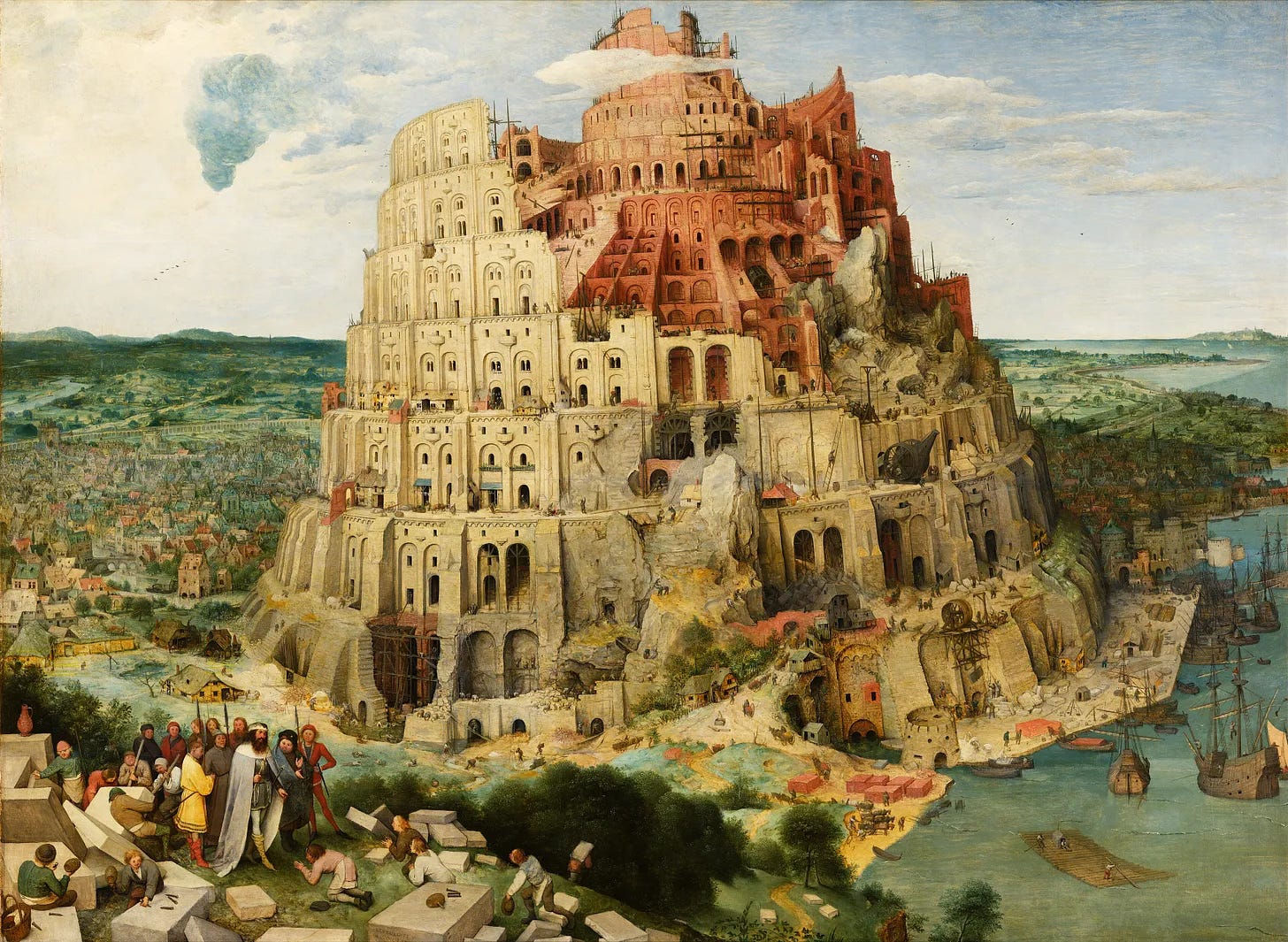
Pride : Old English knew a word, prūd, to describe someone valiant, capable, excellent — someone who stood out. At its origin, there was something right about it: the desire to reach toward the best in oneself, to refuse complacency. But in forging the word pride from this root — through Old French prud and ultimately Late Latin prōde, meaning advantageous, beneficial — the language recorded a silent shift: from rightful self-regard to excessive self-estimation, from aspiration to enclosure. For it takes very little for the feeling of being excellent to turn into the certainty of being superior, and for what sought to be an elevation to become a citadel.
I. Untangling the confusion
Pride suffers from a singular paradox: it is one of the most universally recognized flaws, and yet one of those that each person most readily spots in others and most rarely in themselves. That is because it knows how to dress itself in the garments of dignity, competence, even vocation. One must therefore first distinguish what it is not: pride is neither the legitimate satisfaction of work accomplished, nor confidence in one’s own abilities, nor the healthy self-regard that refuses humiliation. These states can coexist with openness and self-questioning. Pride, by contrast, is distinguished by its fundamental impermeability — that conviction, rarely conscious, of having already reached a sufficient vantage point on oneself and on the world. The proud person has become so full of himself that no space remains to receive anything new: no lesson from experience, no sincere gaze from another, no surprise from reality. And we only learn where we do not yet know.
II. Immobility at the heart of the path
For those engaged in a process of inner transformation, pride is not an obstacle among others: it is the one that renders all the others invisible. The proud person who enters this path without having recognized or measured their pride risks building a particularly solid illusion of progress. Depending on their temperament, they will accumulate esoteric knowledge, metaphysical reflections, or mystical experiences, perfecting the surface of their practice while remaining immobile in depth — their pursuit will remain merely intellectual. For this path demands precisely what pride forbids: opening oneself to something greater than oneself, making room for what exceeds us, and beginning, concretely, by opening oneself to the other. Let us have compassion for the proud person: the citadel they inhabit was often built as an urgent response to a visceral fear — fear of not being enough, fear of powerlessness, fear of being ordinary. Their deeper self suffers from this immobility, which gradually deprives them of life and of the enrichment it offers — until the moment when a bereavement, a failure, a rupture, an accident comes to shake the entire construction, and offers them, in the very collapse, the rare opportunity to find themselves again.
III. What the traditions say
The great spiritual traditions of humanity agree on one point: pride is the primary obstacle — the one that precedes and engenders all the others. In the Christian tradition, it stands at the head of the seven deadly sins — superbia — not as a mere moral failing, but as a fundamental refusal to acknowledge one’s own condition and one’s dependence on what surpasses it. In the Islamic tradition, kibr — arrogance — is described as the veil that separates the heart from G-d and from other beings. In Greek philosophy, hubris designates that excess by which a person believes themselves the equal of the gods, inevitably calling forth nemesis, the return of reality. The Jewish tradition, for its part, has coined for the opposite movement a word of remarkable precision: bitul — literally the annulment of self, or more exactly the bracketing of one’s own sufficiency — designates that inner act by which one consents to empty oneself of certainties in order to become capable of receiving what exceeds our ordinary measure. Everywhere, the same deep intuition: pride does not merely hinder inner progress — it renders it structurally impossible, closing precisely the doors through which light enters. One begins to receive only after having first lightened oneself of one’s sufficiency, having practiced, however clumsily, something that resembles bitul — that consent to not already know everything.
IV. A difficult lucidity in the age of the performing ego
Our era makes the recognition of one’s own pride particularly difficult. Digital platforms have transformed each individual into a personal brand to be permanently optimized, performance cultures reward displayed certainty over hesitant honesty, and the algorithm consecrates those who speak loudly rather than those who are still searching. In this context, pride no longer resembles an archaic flaw: it resembles a survival strategy, even a virtue. Self-questioning reads as weakness, the admission of ignorance as a confession of failure — and the inner citadel ends up being mistaken for solidity. This cultural inversion makes the recognition of one’s own pride both more difficult and more precious: for those who manage to observe it in themselves, without defending against it or being crushed by it, have already begun to loosen its grip — and that first movement, however discreet, may be the most courageous of all.
© 2026 - Dialogues of the New World — Jérôme Nathanaël

And you?
I invite you to share in the comments your own experience of this notion — not as an abstract idea, but as a lived reality, at times luminous, at times difficult. A situation, an encounter, a stage of life, a nuance, a question: anything that may deepen our common conversation has its place here.
And if you wish to express yourself on a word that carries weight in your thinking, send me a contribution of roughly one page for the Waymakers section. It will be published under your initials, a pseudonym, or anonymously, as you prefer. Other readers will be able to respond and dialogue with you.
New here? The Opening page introduces the author, the project, how to take part, contact details, and the agenda.