
An introduction to the author, the project of the Dialogues of the New World and the Waymakers community — for those who wish to understand before stepping in.
Ce texte est disponible en français.
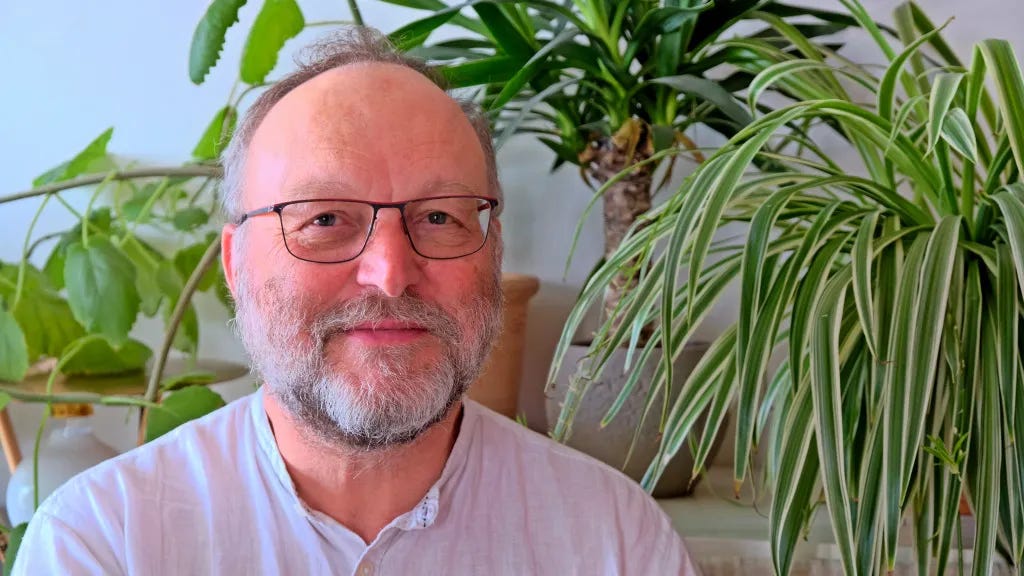
Who I am
My name is Jérôme Nathanaël. I am a holistic therapist, spiritual researcher, musician and photographer, and for many years a software engineer before the inner path became the absolute priority. I live in Paris, I travel when the world calls to me, and I write from this unstable and fertile place where thought meets Mystery.
I come not with certainties to impose. I come with questions and reflections alive enough that we may search together, and with bearings towards a more just and fraternal world, because a compass is not a dogma.
A more poetic way to introduce myself, borrowed from my artist’s website:
“A nomadic Jew, brother to all men, a Hassid inhabited by all memories, all languages, all signs invented by those who have sought the True from generation to generation, companion to all those who wish to establish here below the reign of Love, Justice and Peace, whether they be believers or not — and may the age of dominations and lies come to an end — a little Franciscan, a little Sufi, a little Buddhist, a little anarchist, but an anarchist of Love.”
Reading landmarks
A stance: I dialogue, therefore I am
What these Dialogues are
A work unfolding
What you will find here
Taking part in the Dialogues
Meeting
An invitation to become together
A stance: I dialogue, therefore I am
There is a fundamental attitude that precedes and informs everything that takes place here. I call it the dialogic stance — not a communication technique nor a salon philosophy, but a way of being in the world that engages the whole being: the way one comes to know oneself, encounters the other, reads the traditions, moves through places, understands the age, invents tomorrow.
In an era that has elevated division into the dominant mode of thought, where social media rewards outrage and certainty, where identity is built through the adversary rather than through encounter, dialogue itself has become an act of resistance. Not limp politeness nor risk-free openness — but the demanding dialogue, the kind that requires one to be transformed by what one hears, that accepts not emerging from the encounter as one entered it.
This stance is exercised concretely in seven directions, seven circles moving from the most intimate to the most expansive:
With myself — knowing oneself not through sterile introspection but through a permanent inner dialogue, between who I am and who I am called to become.
With the other — in a maieutic posture, inherited from Socrates and nourished by years of therapeutic practice: the other is not an object to be convinced but a being carrying what has not yet been brought to birth — and it is this birth that is to be served, not directed.
With the Traditions — Kabbalah, Christian mysticism, Sufism, Buddhism, Hindu wisdom and many others: reading and meditating upon them to draw from them open and free guidance for today, not to merge them or set them against one another.
With the masters of wisdom, thinkers and artists — those singular figures who embodied in a life, a work, a particular language, something greater than themselves. Witnesses of the impossible, companions on the way, not authorities to be cited.
With sacred places — certain spaces carry within them millennia of accumulated prayer and hope. They speak to the traveller who arrives with mind and senses open, and what they say can only be heard by going there.
With society and the age — understanding contemporary crises without succumbing to them or denying them, from a form of lucid love for the present: naming the fractures, opening perspectives, refusing despair as much as naïveté.
With people of good will — inventing together what does not yet exist, because certain scattered human beings carry complementary fragments of a more habitable world, and their encounter can produce what none of them could have formulated alone.
What these Dialogues are
The Dialogues of the New World are the written expression of this stance: a bilingual French-English space for conversing with oneself, dialoguing in fraternity, discussing the age, meditating on sacred teachings and celebrating the mystery of the Living.
The conviction that animates them can be stated in a single phrase: to change oneself for the better in order to change the world. Neither the activism that neglects the inner work, nor the contemplation that abandons the world, but the movement of the two together — personal transformation as political act in the deepest sense.
These pages set the great spiritual traditions in dialogue with the present time. They also bring in less well-known contemporary voices — the Dialogues with the Angel transmitted by Gitta Mallasz, or the Revelation of Arès transmitted by Michel Potay —, because the word of the Spirit is not sealed, and revelation continues, beyond institutions and bygone centuries.
What these Dialogues are not deserves to be stated with equal clarity. This is neither a publication organised around a doctrine to be disseminated, nor a circle of initiates gathered around a master dispensing certainties. My approach is explicitly maieutic — Socratic in its method: helping each person to bring to birth what is already carried within, without creating dependency, without claiming to hold the truth.
A work unfolding
I am currently transcribing and reworking for publication the six lectures from my cycle The Waymakers of the New World, given in public over recent years, divided into self-contained series and enriched with references. It is the living heart of my work finding its way into writing, in parallel with the lectures that continue, the unforeseen encounters and the gatherings in preparation for those who will wish to deepen over time what these pages prepare.
This publication and my lectures are not two parallel projects. They are two modalities of a single commitment: to contribute, from the inside, to the transformation of the world.
What you will find here
These Dialogues are not a collection of isolated articles: they embody a matured architecture of thought, which unfolds in time according to a living, ritualised, freely habitable rhythm. They are organised into four major Sections, each with its registers, its features, its publication days and its rules of engagement.
🟣 The Eternal Present · published Sunday morning — a weekly appointment with depth.
The space of long memory and the spiritual timeless, where the eternal and the present are revealed to be one.
Three features:
Spiritual awakening, the concrete inner path, the lived mutation of consciousness, not the taught one;
Words of Life, the great spiritual texts of humanity, reread in the light of the present to draw forth their still-living power;
Heritages, millennial traditions, masters of wisdom, sacred geographies and the lives of those who devoted their existence to what they sought.
🟫 The World We Cross · published Friday morning — bringing the world of today into perspective.
The space where the great fractures and deep mutations of our age are read in the light of what they summon at the spiritual and civilisational level, always from a foundational perspective, never in the immediacy of the event.
Three features:
The age under strain, the lines of rupture and the dangers they carry, what current events reveal but cannot suffice to explain;
New World, a concrete reflection on new forms of society, culture and common life that are seeking to emerge;
Voices of the time, exchanges with researchers, living spiritual figures, practitioners on the ground and committed witnesses: what analysis alone cannot give.
Two quills, dialogues written in two voices, in the tradition of humanist exchanges: a space where they journey together towards what neither would have reached alone
🟡 Notebooks of life · published on certain Tuesday mornings — a free, intimate and irregular space.
The most personal space of these Dialogues: brief forms, intimate fragments, a creative gesture more than a transmission of knowledge. It is I who speak here, in the first person, without the distance that the other sections impose upon themselves.
Several forms:
Abecedary, a living, personal dictionary of the concepts that inform my thinking;
Current glances, micro-readings of events, impressionistic and without any claim to exhaustiveness;
Poems and free texts, fragments of interiority that invite reading with something other than intelligence alone;
Photographs and travels, places as I inhabited them in passing.
🔵 The Waymakers · occasional dispatches, according to needs and content received — moments of shared life.
This is not an editorial space like the others: it is the living space of dialogue between all those whom this approach attracts or engages. Not subscribers brought together by an algorithm, but people united by a shared sensibility or vocation.
This section welcomes readers' contributions, announcements, summaries of video-conferences, and progressively, in reserved access, the concrete traces of a fraternity in the making.
The Waymakers of the New World, in the formulation of my lecture cycle, are those beings who have not lost faith in humanity's capacity to repair the world, and who have understood that repairing the world begins with transforming oneself — activating within oneself creativity, freedom and unconditional love. Men and women of peace and covenant, free from all fear and all subjection, they carry within them this New World whose first signs they already glimpse beyond the upheavals of the age.
To be a Waymaker is therefore not an affiliation one chooses by adhering to a programme: it is a recognition — that of already carrying within oneself something that this framework at last makes it possible to name and to bring into relation with others.
Choosing Your Rhythm
These four Sections are also four distinct e-mail channels: you may subscribe to all of them, or freely choose those that suit you best, at any time, from your subscription preferences. To do so, log in to the Dialogues website with your subscription e-mail — no password required; a login code will be sent to you directly.
Taking part in the Dialogues
Your participation is one of the primary motivations that led me to launch this publication. It unfolds according to several levels of involvement, all legitimate, each real in its own way.
Reading, commenting, sharing: reacting, sharing articles, signalling an encounter or a resource — these gestures help a rare voice reach circles where it can resonate and fertilise other paths.
Contributing a text: submitting a text for publication in the Waymakers section — an experience, a reflection, a singular journey through experience that enriches the architecture already built.
Becoming an active supporting member: a subscription of $6 per month gives access to community video-conferences, replays, chats and the collective life of the nascent community. If this amount constitutes an obstacle, let me know — access may be granted free of charge after a simple video conversation. A patron subscription of $140 per year opens access to exchanges on editorial development and named acknowledgement within the publication.
Taking part in governance: the Dialogues are supported by the Institut Francilien de Formation et de Développement (I2FD), which collectively manages in France the fund sustained by your contributions, intended to finance encounters, seminars and public actions, co-decided by the members. Any paying subscriber may join the I2FD and access its detailed financial accounts. You will not simply be subscribers, but potentially the joint decision-makers of a collective action.
The Dialogues’ articles, podcasts and videos are and will remain entirely free, for everyone, without exception.
→ Become an active supporter of the Dialogues of the New World
Meeting
If something in these Dialogues has spoken to you, if you carry a reflection, an experience or a voice that could join them, I invite you to book a free 45-minute video exchange — not a consultation, but a generous encounter between people who seek and feel responsible for our shared future; one that might lead to a two-voiced article, an interview for Voices of the time, a participation in the Waymakers community, or simply the rare pleasure of a conversation that matters.
For any written exchange or suggestion, I reply to all correspondence:
📧 dialoguesen@jnd.mailer.me
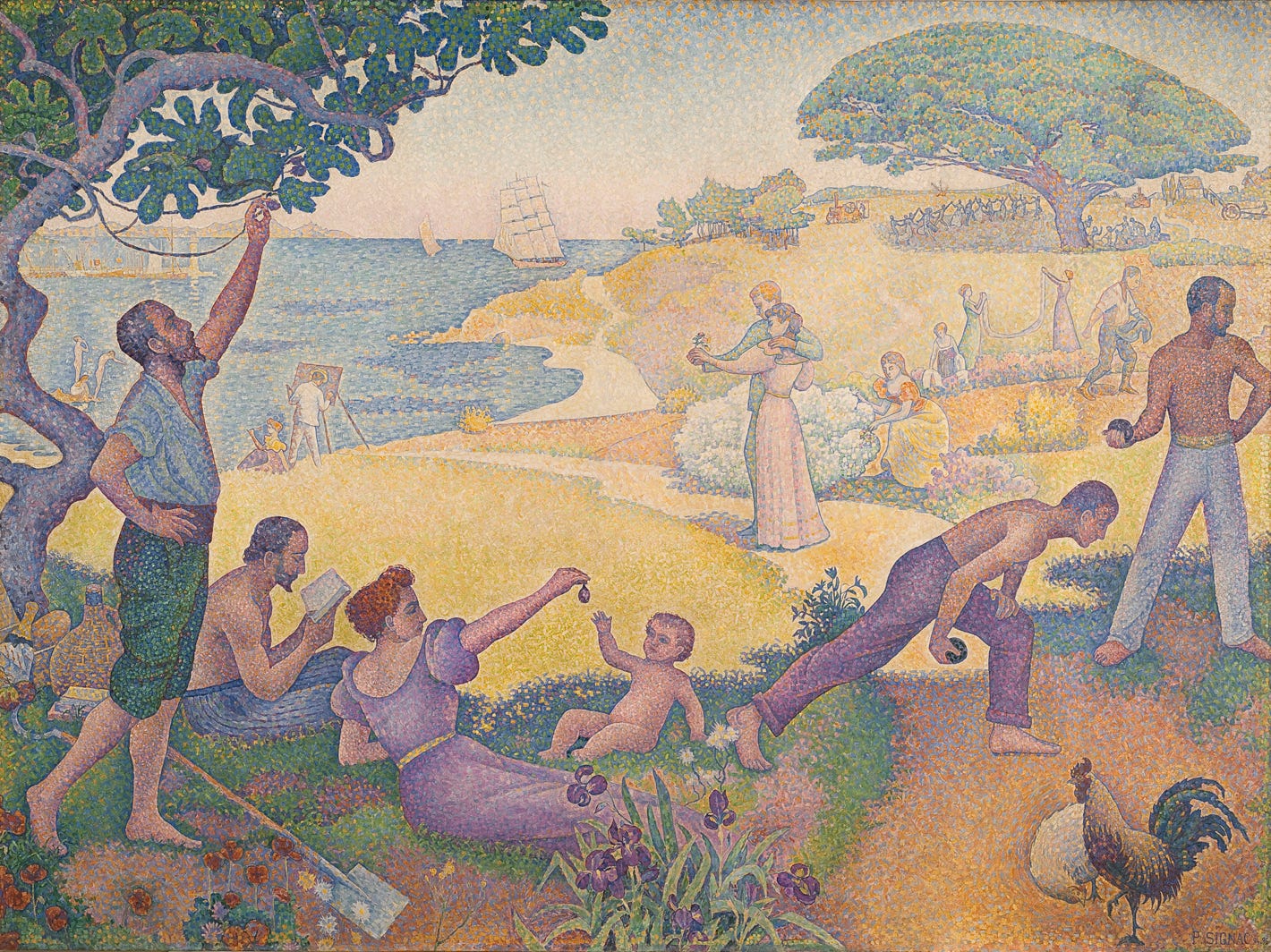
An invitation to become together
This project is addressed to people who need no convincing of the necessity of a profound change in our societies, nor of the crucial relationship between personal transformation and the transformation of the world — because they already know this, already live it, sometimes in a solitude of which this nascent community may constitute a genuine relief.
What I propose is a space in which this shared conviction can first be articulated, nourished by multiple and complementary references, and then progressively embodied in exchanges, encounters, bonds woven between people that nothing else would have brought together.
For it is there, in that crossing from text to face, that the Waymakers might become something other than a community of readers: a living prefiguration of this New World that we perceive not as a utopia to be defended from on high, but as a reality already gestating in the very flesh of our lives, which waits simply to be recognised, named, and inhabited by others who are already its bearers without yet knowing it.
If you recognise yourself in these words, you are already one of them. The next step is yours.
Thank you for your presence by my side, whatever form it may take,
With all my heart.
Jérôme Nathanaël
The French version of these Dialogues is accessible here → Dialogues du Nouveau Monde
My poetry, photographs and music: jeronath.net (in French only)