

Article disponible en français
The Eternal Present · Spiritual awakening · 14 min
To explore the concrete paths of inner transformation.

Series: Towards spiritual sovereignty | Step 2 – The effort of Discipline
Previous article: The abundance of Love
In this article :
When our essence claims its sovereignty
From good intentions to small victories
Standing still in the maelstrom
Awakening and its demands
One who seeks to free himself from the sole grip of his ego, which confines him to surviving and keeping up appearances, begins to feel his spiritual essence awakening, that dimension of his being which belongs to the Infinite. He opens himself to that living energy of Love that nourishes the universe and begins to discover that it can move through him.
By choosing to make it the driving force of his existence, letting this energy spread within him and radiate through him into the world, he quickly runs up against the limits of his capacity for transcendence, as well as the diversity of situations and people.
He then discovers the necessity of channelling his will to love into a discipline that allows him to refine its concrete embodiment and give it a form suited to the constraints of reality. Through this effort, he experiences genuine inner transmutation and a profound transformation of his relationship with others.
When our essence claims its sovereignty
By developing a conscious presence to ourselves, we gradually learn to decentre from our habitual mode of functioning in order to begin observing it. This newfound inner freedom allows us to glimpse dimensions of our being that exceed the limits of our ego, that personality shaped since childhood by the necessities of social existence.
Our spiritual essence, long deprived of space and attention in favour of this instrument of embodiment, can then reawaken and seek to reclaim its rightful sovereignty over our existence. In trying to give concrete expression to this openness in our lives, through a renewed form of love for ourselves and for others, we collide with our inner agitation, our scattered attention, our fragilities, as well as the constraints of circumstance and the complexity of people.
It is therefore through an effort of discipline and personal rigour that we shall gradually learn to love ourselves better and to finely calibrate the way we express love within the ever-changing circumstances of daily life.
Discipline and self-love
In our modern societies, we are constantly at risk of being swept away by the prevailing current of ambient agitation and stress. Without a sustained effort of discipline and constant self-recollection, it is impossible to remain connected to our innermost being and to progress in our spiritual realisation. Every change in our life, in how we function as well as in the details of our daily routine, first requires a quality of self-presence that allows us to step back and preserve a space of inner calm.
It is there that we can find the resources needed to activate the best within ourselves: all those talents and qualities tied to our spiritual essence, which forms the foundation of our deepest human nature, our acquired personality being merely an instrument of embodiment called to serve its active expression in the world. And the driving force that enables this nature to flourish and find concrete expression in existence is none other than love, whose development is the primary intention of any authentic discipline of wisdom.
Thus, learning to love ourselves rightly means, first of all, accepting to make choices that restore our spiritual dimension to first place in our lives, sometimes renouncing common habits in favour of our inner awakening and our transformation. It also means loving others as they are, with the humility of one who knows his own limits, avoids judging the weaknesses of his neighbour, and stands ready to welcome them with an open heart, to share with them all that is possible.
From good intentions to small victories
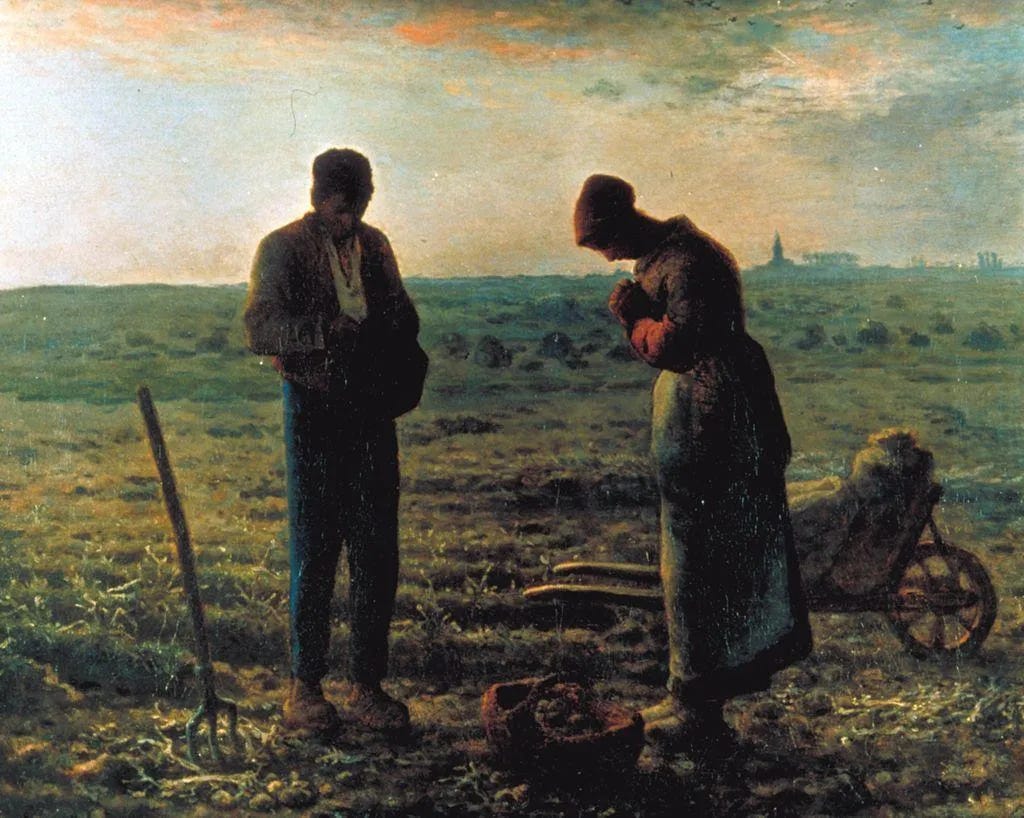
How difficult it is to move beyond the good intentions that pass through all of us, and to become truly more open to others, more empathetic towards their concerns, more tolerant towards their ways of being, sometimes so different from our own. And what can be said of our capacity to truly love them as they are, with that compassion that dissolves obstacles and distances, and demonstrates that love is not an empty word but an active force capable of transforming situations?
How do we become ourselves the example that hints that love might, in the end, be the only solution left to try, to step back from the ferocity that threatens whenever human beings are crushed by injustice, fear, and frustration? Through discipline, always discipline, rigour and self-abnegation, but in the joy of feeling within oneself a larger, broader life growing, rich with so many precious discoveries to share!
Human beings have an incredible capacity to transform their existence in depth, to become the creators of themselves and to escape the limits that their visible condition seems to impose upon them. After every stumbling block, after every moment of weakness, it is enough to renew the effort, to better gauge one’s step, and to keep moving forward, gaining a little something here, a little something there. Those brief moments when we sense that a fragment of our frightened ego releases its grip and once again lets the loving life of the Infinite flow through us. Upon these small victories, slowly won over our inner heaviness and coarseness, the radiance of our spiritual sovereignty will ultimately rise.
Standing still in the maelstrom
The more we aspire to transform ourselves inwardly, once freed from the artificial models that drive consumerism and the performance of appearances, and the more we become aware that activating our potentials of wisdom and love will draw us closer to our true nature, the more we also run up against our inner weights and roughness, because they become more visible to us.
To these inner burdens are added the heaviness and fatigue generated by city life, for in our modern societies, crushed under noise and agitation, we often lack the time and space to catch our breath and find some relief. This is why it is so important to gradually cultivate great patience and to accept that the only guarantee of our success lies in the steadiness of one who moves forward resolutely, step by step.
The more we succeed in stepping back and remaining present to ourselves, attentive to our inner workings whatever the circumstances, the more we can hold ourselves like still points within the surrounding maelstrom and consciously choose what we integrate into our inner life. We shall also discover that we can consciously measure the concrete energy we invest in the present moment, according to the inner attitude we adopt. In a sense, it is like learning to optimise the settings of our being, the relationship between our body, our emotions, and our thoughts, so as to promote, as much as possible, our progress towards our goal: to become ourselves.
The craftsman and the Great Work
Just as the apprentice craftsman must practise for a long time, with modest materials and imperfect tools, before acquiring the skill and concentration needed to create the masterpiece that marks the completion of his apprenticeship, so the spiritual seeker engaged in the Great Work of his inner transmutation must accept working with both his strengths and his weaknesses, his blind spots as much as his moments of light, without seeking refuge in easy illusions about his condition.
But if he keeps his initial intention clearly in mind, to realise his true nature and to access wisdom and love, if he maintains an active discipline made of self-attentiveness (to see his real functioning) and measured effort (to change step by step), then his inner strength will grow and amplify; something of another state of consciousness will begin to crystallise within him.
The inner practice of sincerity and humility will gradually reveal dimensions of his being that had remained hidden, and potentialities he had been wholly unaware of. He will discover what self-love truly is, not the love of a false friend who leads one to doubt one’s possibilities and justify one’s retreats, but the demanding love of one who leads him towards the full light of his human dignity. It is upon this foundation of truth that genuine inner stability can develop, one that enables steady progress and the beginning of mastery over the tools of spiritual development.

Ardent discipline
This inner discipline, this art of containing and directing vital energy rather than dissipating it, is what the Hebrew tradition calls Gevurah, ardent discipline, the second quality of the soul, whose cultivation begins in the second week of the counting of the Omer. Paradoxically, Gevurah does not oppose Chesed: it is the condition of its fruitfulness, for love without form or banks spreads thin and evaporates, whilst discipline gives it a riverbed and transforms it into a river capable of carrying ships. The Indian tradition of yoga calls this effort tapas, the inner heat generated by voluntary ascesis, which burns away the impurities of character as fire refines raw metal to liberate the gold. Sufism speaks of mujahada, the spiritual combat against the ego’s dispersing tendencies, which Ibn Arabi teaches is the ‘great jihad,’ far more demanding than any external battle, since it confronts the forces that resist within ourselves. In the tradition of the Desert Fathers, nepsis, sober watchfulness, that alert and tranquil attention that lets no distraction pass unrecognised, is the keystone of all authentic spiritual life. As for Taoism, which is sometimes mistakenly seen as a mere invitation to passivity, it in fact teaches wu wei not as the abandonment of all effort, but as right and economical action that does not oppose its force to that of things but joins it with precision, the supreme discipline of one who acts in perfect accord with the deep nature of reality. From all these paths emanates the same conviction: inner freedom is not received as a gift; it is built, patiently, through consented effort and benevolent rigour.
The inner temple
Having freed ourselves from our fears, which had tended to push us towards external models rather than daring to follow the call of our innermost being, we had found ourselves facing the difficulty of overcoming our inner burdens and the fear that it might be nearly impossible to move forward. But through the practice of intelligent and measured discipline, maintained with constancy, we shall gradually succeed in developing sufficient stability to no longer make our entire inner life dependent on the slightest unforeseen circumstance.
We then become capable of preserving within ourselves a deep space of serenity, one whose path we can find again without difficulty, from which we can observe the world and ourselves with benevolence and without judgement. We begin to catch a glimpse of what our spiritual sovereignty might be, of which this inner space is a kind of prefiguration.
It is in this secret hermitage that the spiritual energies circulate which can awaken our intuition; and it is in this inner temple that we can engage intelligently with humanity’s great sacred texts and find within them nourishment and guidance free from all dogmatism. It is from this still and tranquil place, that of genuine self-presence, that we can begin to think, feel, and act differently, and to express the very best of ourselves.
All the effort now consists in dwelling there as often as possible, even amid the surrounding agitation, so as to let wisdom and love grow within us.
A few guideposts for the path
These reflections on inner discipline are not meant to turn you into an unyielding ascetic, but to make you a more lucid craftsman of yourself. If the expansive love of the previous week is the sap that nourishes the tree, discipline is the form that allows it to grow straight and direct its growth towards the light. A ray of sunlight illuminates; a laser beam, concentrated at a single point, can pierce steel. Discipline is that beam. It does not punish: it orients, concentrates, and gives love its rightful measure and its full effectiveness in the real world.
As a complement, you may wish to reread the article Glossary: D for Discipline.
1. A few questions to let resonate
Sit in a moment of quiet. Let each of these questions descend gently, without seeking an immediate answer. What surfaces with a slight resistance is often the most precious.
On my relationship to discipline
Do I truly have discipline in my life, or do I often surrender to improvisation and distraction? Do I use my energies intelligently, concentrating them on what truly matters, or do I scatter them in all directions? Are there areas where I lack structure, and others where I am excessively rigid?
On the quality of my self-discipline
Is my discipline itself measured and respectful of my limits, or is it sometimes tyrannical, demanding the impossible and punishing imperfection? Do I regularly take a moment to take stock of my commitments and shortcomings, with clarity but without unnecessary harshness? Is my discipline driven by the desire to become, or by the fear of not being enough?
On discipline in my relationships
When I correct or criticise someone, a child, a loved one, a colleague, is it truly out of concern for them, or is there in my impulse a hint of concealed satisfaction or irritation? Does the way I set a boundary or make a remark leave the other person standing in their dignity, or does it diminish them?
On constancy and connection
Is my commitment to my inner practices regular, or does it only survive in good times? Do my demands on those I accompany help them to discover themselves and grow, or do they freeze them in fear? Does my discipline nourish in me and in others a growing sense of dignity and sovereignty?
2. A few practices for the week
Making a plan and observing it
Before beginning your day tomorrow, take ten minutes to write down three or four real priorities, not an endless list. At the end of the day, review them honestly: neither excessive satisfaction nor harshness, just the lucid eye of a craftsman on his work. Extend this practice over several days, gradually adding a longer-term horizon.
Before criticising, run it through the filter
Each time you feel a criticism rising towards someone, ask yourself one simple question before speaking: am I doing this out of love for this person, or to satisfy something within myself? If the honest answer is the second, wait for a more fitting moment. If it is the first, find the gentlest way to say it.
Repairing a past act of discipline
Think of someone you recently corrected, perhaps with too much harshness. Go to that person this week with a gesture of gentleness and recognition. Discipline is stronger when it also knows how to make amends.
Building a space of constancy
Choose one modest practice you wish to maintain regularly between now and the end of this journey: five minutes of silence in the morning, a few lines in a notebook, a mindful walk. Place it in your daily life not as an additional obligation, but as a space you offer yourself to return to yourself.
3. Celebrating this stage
At the end of these seven days, or the time you devote to this stage, take a moment to name one quality of discipline that you have strengthened or discovered within yourself this week. Not an achievement, but a small real movement: a priority held, a criticism held back at the right moment, a practice resumed after abandonment. Write it in a notebook, or say it out loud.
For discipline left unacknowledged withers like a plant without water. What we welcome with gratitude — even in its imperfection — takes root and grows. It is from these accumulated constancies that the solid ground of our inner sovereignty is built.
Next week, we shall explore how active compassion transforms discipline into radiance and love into concrete presence in the world.
May your journey be fruitful — to all of you.
© 2026 - Dialogues of the New World — Jérôme Nathanaël
Next article: Stage 3 - The radiance of Compassion

To go further
Have you encountered a practice, a discipline, an exercise, or an obstacle that has truly transformed you? Share your testimony in the comments — it will enrich every reader.
And if you wish to express yourself on a subject of spiritual awakening, send me a contribution of roughly one page for the Waymakers section. It will be published under your initials, a pseudonym, or anonymously, as you prefer. Other readers will be able to respond and dialogue with you.
New here? The Opening page introduces the author, the project, how to take part, contact details, and the agenda.