
Article disponible en français
Notebooks of life · Current glances · 5 min
To read current events as a mirror of our spiritual and collective states.

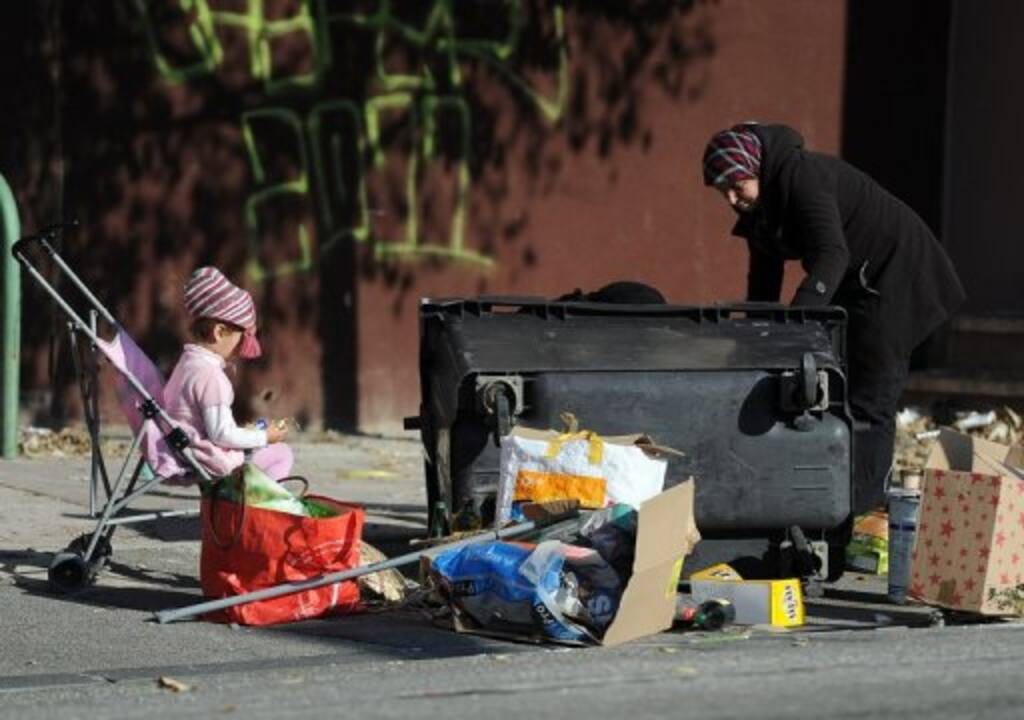
This morning, while doing some background research, I came across a study released in July 2025 by INSEE, France’s national statistics agency, based on 2023 tax data. It shows that 9.8 million people in France — about 15.4% of the population — now live below the poverty line, set at €1,288 ($1,390) per month for a single adult. That’s the highest rate since the data series began in 1996. In just one year, another 650,000 people have fallen into poverty.
The study paints a stark picture: the bottom 20% of French households share just 8.5% of the national income, while the top 20% control 40% — 4.5 times more. This gap has been widening steadily since 2017, and only the wealthy have seen their incomes continue to rise. France, the world’s seventh-largest economy, is quietly slipping into a level of hardship that can no longer be dismissed as marginal: one in six people can no longer meet basic needs. The growing crowds in discount grocery chains tell the story more vividly than statistics ever could.
A global system running out of steam
While France’s decline has accelerated recently, it’s part of a much broader and longer trend. Across many nations, the poor are getting poorer and the gap between rich and poor keeps widening. The reality is that our global economic model no longer meets people’s fundamental needs. Western societies, long convinced of their progress, are generating deeper and deeper injustices. These divides push entire segments of the population into identity withdrawal — a reflex of self-protection in the face of abandonment — or into simmering anger looking for an outlet.
This growing fragmentation is already fueling multiple forms of violence. Confronted with it, institutions tend to oscillate between denial and increasing control and surveillance. But these strategies won’t hold forever. The explosion of discontent can’t be suppressed indefinitely, even by force. The crisis we face is no longer only social or political — it’s spiritual.
The spiritual call we can’t ignore
Faced with the limits of both political and religious institutions, a genuine spiritual awakening has become essential. We need to restore meaning to our shared existence and reawaken hope for a more humane world. This isn’t about escaping inward or seeking a comforting spirituality. It’s about something more radical: realizing that we are one humanity. Real social peace requires broad participation in collective life — and fairer distribution of wealth can only happen if we recognize love not as a vague sentiment, but as a living force for rebuilding our relationships and shared decisions.
That kind of love isn’t abstract. It’s revealed in the simple ability to see others not as rivals or threats, but as fellow travelers in the same mystery of life. It demands that we move beyond the consumer-driven, materialistic mindset shaping our imagination — to rediscover generosity, chosen simplicity, and mutual dependence. The great spiritual traditions of the world — Christian, Muslim, Buddhist, Jewish, and others — all teach the same truth in their own way: personal fulfillment cannot come at the expense of the common good.
Choosing daily engagement, rebuilding dialogue
If humanity hopes to preserve a livable future, we have to understand this: a self-centered pursuit of happiness, restricted to oneself and one’s family, is no longer sustainable. True fulfillment — even at a spiritual level — can’t come from apathy or indifference to our shared fate. Outrage alone won’t help. What’s needed now is a daily commitment to being, in every situation, a force for constructive dialogue — a bearer of peace and compassion.
That means cultivating the ability to listen without judging, to seek understanding, and to act on what unites us rather than what divides. It also means breaking free from self-centered reflexes to open ourselves to the unknown — without prejudice, without expectation — willing to question our assumptions. In practice, it can start small: reaching out to a lonely neighbor, rejecting nonstop competition at work, creating spaces for connection where isolation reigns, supporting local grassroot initiatives.
Above all, we must urgently reopen dialogue — with ourselves, to face our personal responsibility; with others, to rediscover what’s possible; and with humanity’s timeless texts, to restore a sense of meaning. That threefold dialogue may be a narrow path — but it’s a bright one. It could still save us from the worst and lead us toward a more livable, more joyful future.
© 2026 - Dialogues of the New World — Jérôme Nathanaël

In echo
What recent event seems to you to reveal, beyond itself, a human or spiritual question worthy of deeper examination? Share your reading in the comments so as to invite us all into reflection.
And if you wish to express yourself on a current event, send me a contribution of roughly one page for the Waymakers section. It will be published under your initials, a pseudonym, or anonymously, as you prefer. Other readers will be able to respond and dialogue with you.
New here? The Opening page introduces the author, the project, how to take part, contact details, and the agenda.