
Article disponible en français
Notebooks of live · Current glances · 7 min
To write as close as possible to what is surfacing, without always seeking to conclude.

One recent evening, a friend sent me this message: “I’m watching Arte Thema, a really interesting french program about the Warsaw ghetto and those in Poland between 1939 and 1945. It’s terrifying. Yet it doesn’t take long to think of another ghetto, about 2,500 miles from Paris. History repeats itself and humans have short memories.”
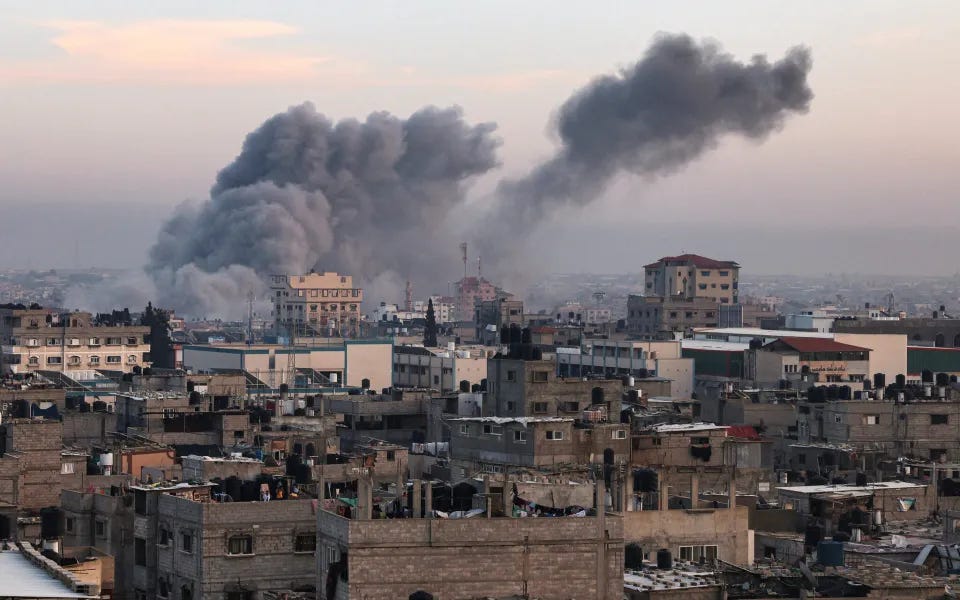
While the war between Israel and Hamas has dominated the headlines for many days now, he was obviously referring to the Gaza Strip as a new Warsaw ghetto where history would repeat itself. A few years ago, during an Israeli military operation in that territory, another person had used this same comparison in our conversation. The “Gaza equals new Warsaw” shortcut is actually common in certain far-left circles.
So here I am, through this brief message from my friend, thrown into the heart of this Israeli-Palestinian conflict. I’ve been deeply concerned about it for many years and have explored its root causes. I’ve studied its timeline and know the region well, having had contacts on both sides. And I’ve seen that there are people who desperately want peace, but others—whom I believe are growing in number—who will do everything to make it impossible.
In a future article, I’ll offer some perspective to shed light on this century-long tragedy and my thoughts on its latest heartbreaking developments. Here I’ll only note that the current war was triggered by the October 7 massacre, carried out by Hamas armed militias—1,400 Israeli civilians murdered in particularly brutal ways according to international observers. Hamas, which is a military wing of the Muslim Brotherhood, seized power in Gaza during the 2006 legislative elections. It first waged a civil war against Mahmoud Abbas’s Fatah, then caused the deaths of thousands more Israelis by carrying out suicide bombings over the past 20 years.
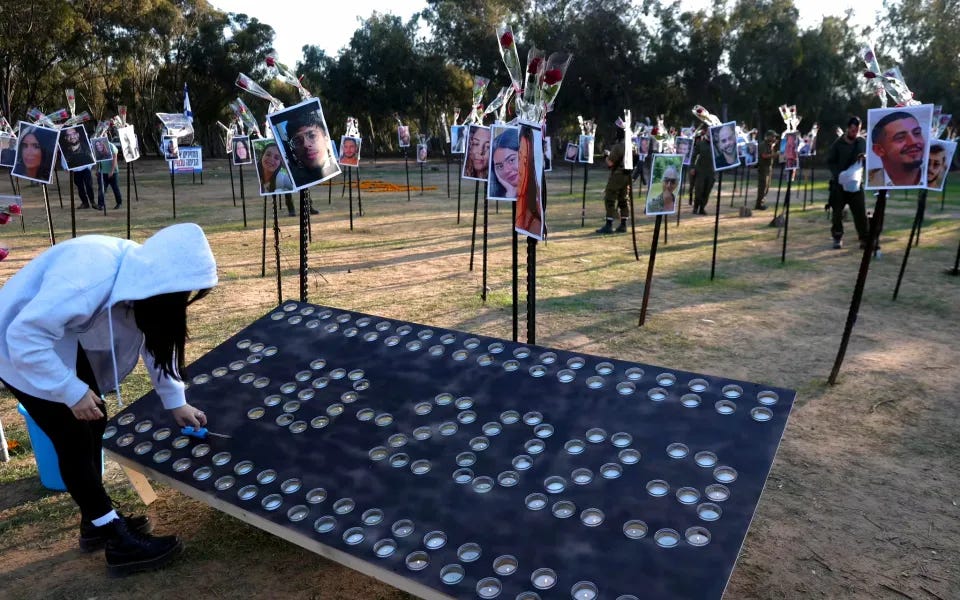
I don’t believe that the disproportionate retaliation ordered by the Netanyahu government will succeed in eliminating Hamas or enabling the emergence of partners capable of lasting peace negotiations. But I’m convinced that the trauma and grief experienced on both sides could have long been avoided if this conflict weren’t being exploited for political purposes by powerful people who benefit from it and indoctrinate their peoples.
As Paul Valéry said, “War is the massacre of people who don’t know each other, for the benefit of people who know each other and don’t massacre each other.” This latest explosion of violence will only push peace prospects even further away and will only bring a temporary ceasefire—after how many deaths, injuries, and shattered families?
But today, I want only to highlight the moral inversion that this equivalence between the Warsaw ghetto and Gaza creates, in my view. It deeply shocked and troubled me coming from a close friend whom I can’t imagine carelessly sorting humanity into good guys and bad guys. On the contrary, I know him to be thoughtful and open to the complexity of historical situations and human motivations, more interested in understanding than judging. So I’m troubled by the disturbing ease with which the word ghetto gets used to describe a certainly tragic situation but bears absolutely no resemblance to the profound weight of meaning and history it carries.
And I think it’s important to remember that a factual and accurate reading of current events, knowledge of the past, and respect for the memory of a people—6 million of whom were gassed in camps and 2.2 million shot during the Holocaust—should be enough to have the intellectual honesty to reject this comparison. Because it implies a particularly vile suggestion, and this is where this guilty inversion lies: if Gaza is a new Warsaw ghetto, then who are the new Nazis? Who are the new Jews?
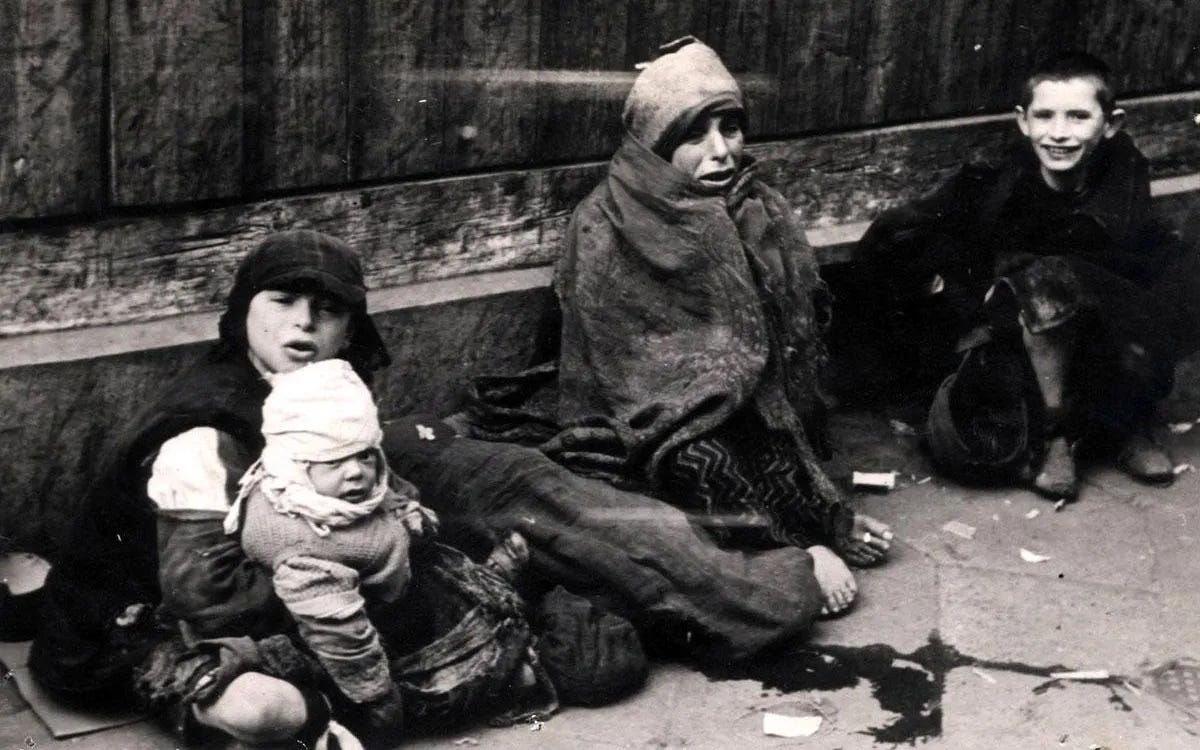
Can we equate the thousands of Jews locked in the Warsaw ghetto with Gazans who could, until recently, after sometimes lengthy security checks designed to identify potential terrorists, go work in Israel? On one side, people were being starved and marked for death, according to the extermination plan decided by the Nazis at the Wannsee Conference. On the other are Palestinians whose annihilation the Israelis have never planned.
Can we dare compare a territory that has received billions from the European Union and the United States since 2007 with a ghetto where Jews were completely abandoned by everyone? On one side, vast sums were largely used to ensure the lavish lifestyle of Hamas leaders, purchase weapons for October 7, and buy all the rockets and bombs fired at Israel for over 15 years. Yet Gazans were kept in poverty, and their children were educated to hate. On the other side, human beings were condemned to epidemics, starvation and despair, and their children risked death trying to escape and bring back whatever meager food they could find.
How can anyone honestly find a similarity between a society whose residents mostly support Hamas—which declares in its charter its refusal to accept Israel’s existence, which will therefore never accept peace and will continue attacks and assaults—and this Jewish people who went up in smoke, even though they had no hostile intentions toward the Germans?
I deeply respect the intellectual rigor and profound humanity of Albert Camus, the resistance fighter and activist who always showed moderation and judgment during World War II and the Algerian war. In early 1944, in issue 17 of Poésie 44, Pierre Seghers’ magazine, he emphasized the importance of carefully weighing and choosing the words we use.
In an article titled “On a Philosophy of Expression,” reviewing a book by philosopher Brice Parain, he writes: “Parain’s central idea is one of honesty: the critique of language cannot ignore the fact that our words commit us and that we must be faithful to them. To misname an object is to add to the world’s misfortune. And precisely the great human misery that long haunted Parain and inspired such moving passages in his work is the lie.”
“To misname an object is to add to the world’s misfortune.”
Albert Camus.
Yes, words commit us, words carry weight, and choosing them poorly means risking dishonesty and making the world even harder to understand and live in. It means introducing toxins into our shared narrative that will sooner or later add to our collective suffering and keep pushing back the prospect of a better and more just society.
Misnaming the elements of the conflict between Israel and the Palestinians of Gaza means adding even more hatred and revenge to this terrible tragedy, means dishonoring some today and others tomorrow. Instead, we urgently need to try patiently untangling the many knots of this century-old history and hearing the stories of both sides, to honor them and try to bridge the gap between them.
And especially here in France, allowing this lie to seep into people’s minds means fueling division within an increasingly fractured population on countless issues, means adding chaos to the progressive breakdown of the social fabric, by further encouraging blind anti-Semitism that no longer even tries to hide.
So let’s be vigilant about our use of language and careful to favor what encourages dialogue and mutual understanding rather than division and conflict !
© 2026 - Dialogues of the New World — Jérôme Nathanaël

In echo
If this text brings forth in you an image, a memory, a silence, a piece of music, or a few lines, you may set them down in the comments so as to enrich our shared imagination or reflection.
And if you wish to go further, send me a contribution of roughly one page for the Waymakers section. It will be published under your initials, a pseudonym, or anonymously, as you prefer. Other readers will be able to respond and dialogue with you.
New here? The Opening page introduces the author, the project, how to take part, contact details, and the agenda.