
Article disponible en français
The Eternal Present · Heritages · 30 min
To reread the traditions in order to understand what they have shaped and what they can still transmit.

Dedicated to the memory of Dan Elkayam, a 27-year-old Frenchman, and the other 15 Jewish people, including a 10-year-old girl, who were murdered on January 14, 2025, on Bondi Beach in Sydney, Australia, simply because they were Jewish. They were celebrating the first night of Hanukkah when the attack occurred.
“In the face of darkness, evil, and hatred, lighting the Hanukkah lights affirms my unwavering faith in humanity’s ability to reconcile with itself through love and spiritual awareness.” Jérôme Nathanaël
Hanukkah: more than a holiday, a philosophical tension
Historically, Hanukkah commemorates the Maccabees’ victory over the Seleucid occupiers in the 2nd century BCE and the rededication of the Temple in Jerusalem. The rabbinic tradition superimposed the miraculous story of a single vial of pure oil that kept the Temple Menorah burning for eight days, the time needed to produce new oil according to ritual standards, on this military and political event.
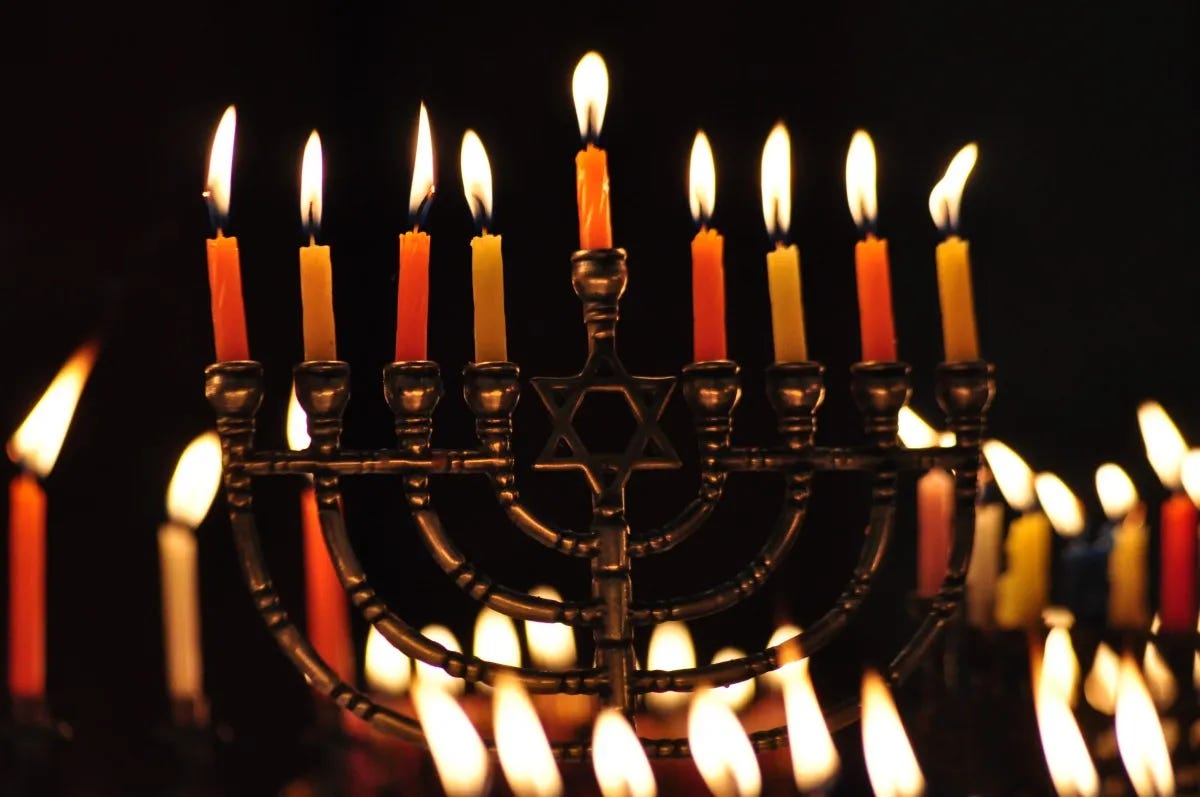
To commemorate the light that refused to go out, Jewish families light the candles of the Hanukkah menorah every evening for eight days. This illuminates the winter night and bears witness to their faith in a transcendent dimension beyond the limitations of our human condition.
Beyond the narrative of warriors and miracles, Hanukkah embodies a significant philosophical tension: the encounter between “Athens” and “Jerusalem” — two approaches to life, one based on reason and intellectual inquiry and the other on revelation and spiritual fidelity to a covenant. This duality leads us to reflect on the enigmatic blessing Noah gave his three sons, Shem, Japheth, and Ham, as they left the Ark and set out into the renewed world after the Flood.
Beyond its Jewish roots, let us restore this holiday’s light for each of us. This is possible if we are willing to enrich ourselves spiritually through meaningful human experiences. Let us rekindle this universal spark and accept the invitation to draw on ancient wisdom to illuminate our present.
First, we will examine the story of the Maccabees and the deeper meaning of Antiochus’s four prohibitions. Then, we will explore the philosophical tension between Athens and Jerusalem. Finally, we will discover how Noah’s blessing of his three sons, Shem, Japheth, and Ham, sheds light on our contemporary condition and offers a prophetic key to reestablishing the balance of our civilizations.
In this article:
Hanukkah: an investigation into a revolt
The four prohibitions: destroy the soul, not the body
Athens and Jerusalem: two relationships with the world
The three dimensions of humanity
The tripartite architecture: a lesson in history
Japheth in the service of Canaan
Hanukkah: an investigation into a revolt
Before we expand our discussion to symbolism, let us first clarify the historical context. The Hanukkah story is not a fairy tale but an account of a significant geopolitical crisis coupled with an intra-Jewish civil war and a fierce struggle for cultural identity.
The setting is the Hellenistic stranglehold.
In the second century BCE, Judea was a buffer zone between two superpowers that had inherited Alexander the Great’s empire: the Ptolemies of Egypt and the Seleucids of Syria. Following a period of Ptolemaic tolerance, Judea fell under Seleucid control around 200 BCE.
Greek culture was the standard of “modern” civilization at the time. In Jerusalem, some of the priestly elite—the “Hellenizers”—adopted Greek customs, such as language, philosophy, and gymnastics, to integrate into the universalism of the time. This created a social and religious divide between the “progressive” urban elite, who were open to cultural compromise, and the rural population, who were resistant to Greek customs and remained faithful to the Torah.
The spark: the madness of Antiochus IV
The conflict erupted during the reign of Antiochus IV Epiphanes (175–164 BCE). This authoritarian king, burdened by war debts to Rome, had his eye on the Temple treasury. Above all, he dreamed of unifying his diverse empire through forced Hellenization.
In Jerusalem, corruption plagued the High Priesthood. Jason and then Menelaus bought their positions from the king and introduced pagan customs. This culminated in the scandalous construction of a gymnasium where people practiced sports naked, just a stone’s throw from the Temple.
In 167 BCE, following a riot that he interpreted as a rebellion, Antiochus crossed a new threshold. A polytheist, he launched a religious persecution that was unprecedented in the ancient world. He transformed the Temple of Jerusalem into a sanctuary of Olympian Zeus, imposed the sacrifice of pigs there, and promulgated decrees that prohibited the pillars of Judaism—circumcision, the Sabbath, the study of the Torah, and the sanctification of the new month—on pain of death.
The Maccabean revolt (167–164 BCE)
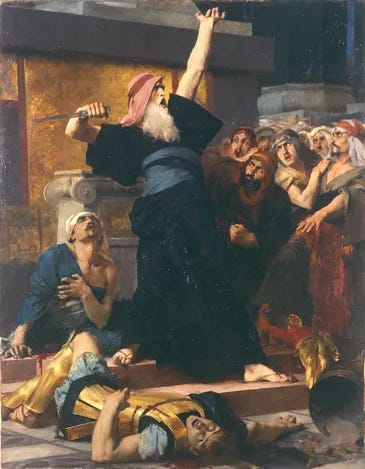
Resistance came not from the city but from the hills. In Modiin, Mattityahu, an elderly priest and a Cohen from the Hasmonean family, refused to sacrifice to an idol. In a fit of holy anger, he killed an apostate Jew and the king’s officer before fleeing to the mountains with his five sons.
Upon Mattityahu’s death, his son Judah, known as ha-Maccabi (”the Hammer”), took the lead in the uprising. Outnumbered and outgunned, the rebels waged a highly effective guerrilla war against the heavy Seleucid phalanxes. They fought on two fronts: against the Greek occupiers and the Hellenized Jewish collaborators.
Victory and Dedication
In 164 BCE, Judah recaptured Jerusalem and the Temple Mount. On the 25th day of the month of Kislev, they purified the sanctuary, destroyed the desecrated altar, and consecrated a new one. This is the literal meaning of Hanukkah: “inauguration” or “dedication.”
According to the Second Book of Maccabees, a fascinating historical detail is that the reason the festival lasts eight days is not because of the oil. Rather, it is because the fighters, who were living in hiding in caves, had been unable to celebrate Sukkot, which also lasts eight days, two months earlier. The first Hanukkah was therefore a “make-up Sukkot” celebration in the middle of winter.
“They celebrated the festival for eight days, in the manner of the Feast of Tabernacles (Sukkot), remembering that not long before, they had spent the Feast of Tabernacles in the mountains and caves...” (2 Maccabees 10:6).
From war to miracle: the transformation of the narrative
This is where history gives way to spirituality.
Contemporary texts, such as the Books of Maccabees, glorify the military exploits and warrior zeal of Judah Maccabee without ever mentioning the oil. Six centuries later, however, the Talmud takes a dramatic turn. Downplaying the war, it focuses solely on a supernatural event:
“When the Greeks entered the sanctuary, they desecrated all the oils [...] When the Hasmoneans defeated the Greeks, they found only one vial of oil bearing the seal of the high priest. There was only enough oil to light the candelabra for one day. A miracle occurred, and the oil lasted for eight days. The following year, the Sages established a celebration with the recitation of the Hallel (praises from Psalms 113–118) and thanksgiving.” (Babylonian Talmud, Shabbat 21b).
Why is there silence about the military victory?
First, for political reasons. The Hasmonean dynasty, descended from the Maccabees, ended up betraying its ideals. They usurped the kingship, which was reserved for the Davidic line. They also accumulated priestly and royal powers illegitimately. They were cruel to the Sages. Flavius Josephus recounts in his Antiquities of the Jews that King Alexander Jannaeus had eight hundred of them crucified. The rabbis were therefore wary of this warrior memory, which had become a burden.
Second, for reasons of survival. After the bloody suppression of the Bar Kochba revolt against Rome in 135 CE, glorifying military nationalism would have been suicidal for the dispersed Jewish communities.
To “save” Hanukkah, the Sages disarmed it. They turned their gaze from the sword of men to the divine light. Thus, Hanukkah transformed from a celebration of national independence into a festival of spiritual survival—the triumph of a small, pure vial against the darkness of the world.
The four prohibitions: destroy the soul, not the body
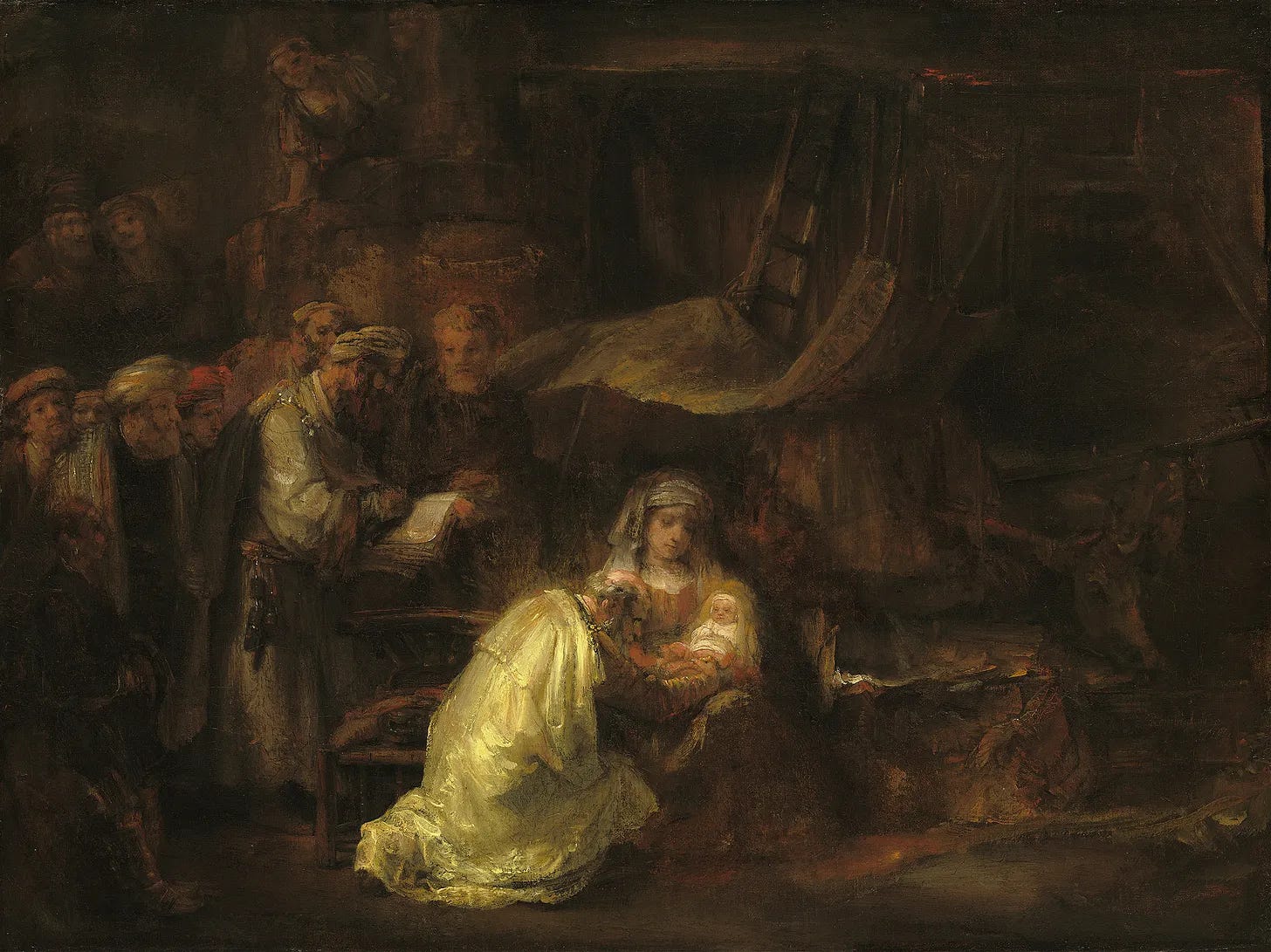
For Hebrews faithful to tradition, the decrees of Antiochus IV Epiphanes represented not only political oppression and a restriction of religious freedom but also an attempt at ontological annihilation. Unlike other enemies of Israel, such as Haman in the Purim story, who sought to destroy bodies through physical genocide, the Greeks aimed to destroy the Jewish soul through cultural and spiritual genocide.
Let us examine precisely what these four prohibitions meant in the Jewish consciousness of the time and why they struck at the very heart of Hebrew identity.
Shabbat: God’s kingship over time
To the Hellenistic mindset, which was focused on efficiency, production, and outward appearances, the weekly rest of Shabbat seemed absurd and unproductive — almost a sign of idleness.
For Hebrew thought, however, it is the seal of creation. It attests that the world unfolded in six symbolic stages by a Creator who then chose to withdraw. This withdrawal leaves room for humans, the crowning glory of the sixth day. Humans are invited to perfect creation and cultivate and keep it, provided they do not confuse good and evil.
Shabbat is a time of clarity: a time to cease doing in order to remember why we do; a time to recognize that humans are not absolute masters of nature, but rather God’s stewards; a time, in the beautiful words of Abraham Heschel, to build a “sanctuary in time.”
Prohibiting Shabbat reduces the individual to the status of a slave to matter. It enslaves one to the blind cycle of production and denies transcendence, confining humans to a profane, linear, and purely economic time.
The sanctification of the month (Kiddush haHodesh): control of the calendar
The prohibition against sanctifying the new month (Kiddush HaHodesh) is less well-known, but it was strategically devastating. The Hebrew calendar, which is based on lunar cycles, depended on the direct testimony of individuals who witnessed the appearance of the new moon. This testimony was validated by the Sanhedrin and then communicated from person to person.
Therefore, Jewish time is not automatic; it is constructed each month through the word and testimony of men. It is no coincidence that the first commandment given to the Hebrews, even before the Exodus from Egypt, was to define the beginning of the month. Controlling one’s time and consciously aligning with the cosmic rhythm was a way to break free from the dual slavery of Egypt, both social and spiritual.
However, without this monthly proclamation, it was impossible to determine the dates of festivals, causing the entire ritual structure to collapse. By disrupting this mechanism, Antiochus sought to destroy sacred time. If the people no longer knew when Passover occurred, they could not celebrate their liberation. Symbolically, they would return to exile.
This prohibition was intended to desynchronize the Jews from their history and the divine will, plunging the community into chaos.
Circumcision (Brit Milah): the Covenant in the flesh
In Greek aesthetics, absolute perfection is a harmonious and natural human body. In the gymnasium, a temple of Hellenic culture, the cult of the unmarked, unaltered naked body is celebrated. Circumcision was seen as barbaric mutilation there.
For Hebrews, however, it is the indelible mark of the covenant inscribed in the flesh on the eighth day, well before consciousness awakens. It proclaims that nature is not an end in itself but rather something to be perfected in order to be sanctified. Humans are not born complete; they must “cut” away part of their raw nature to make room for the divine. Even sexuality is called upon to transcend the purely animal realm and become a sacred mission.
Prohibiting circumcision, the Brit Milah, meant wanting to break the unbroken chain since Abraham, who left Babel to follow one God. Antiochus’s goal was clear: to abolish transcendence and make Jews like any other people, subject only to the law of nature and orphaned from their covenant.
The study of the Torah: the breath of life
For Hebrews, the Torah is much more than a book. It is the living Word and the matrix upon which the world was built. Its study is the breath of the Jewish soul and the act that keeps the world in balance. While all traditions accord their founding texts a central place, here the Torah is perceived as an organic link between God, the people, and the cosmos.
By banning its study, the Seleucids intended to cut off the source of transmission and dry up the source of life. Kabbalah recalls this fundamental equation: “Israel, the Torah, and the Holy One, blessed be He, are one.” Breaking this link condemns Jewish identity to death.
A people that no longer reads its foundational texts forgets who they are within a generation. Therefore, the decree aimed to transform Judaism into harmless folklore—an empty shell without intelligence or spirit—destined to dissolve into Greek culture.
As for the books of the Law, they tore up and threw those they found into the fire. Anyone found in possession of a Book of the Covenant, or anyone who took pleasure in the Law, was put to death by virtue of the royal edict (1 Maccabees 1:56-57).
Athens and Jerusalem: two relationships with the world
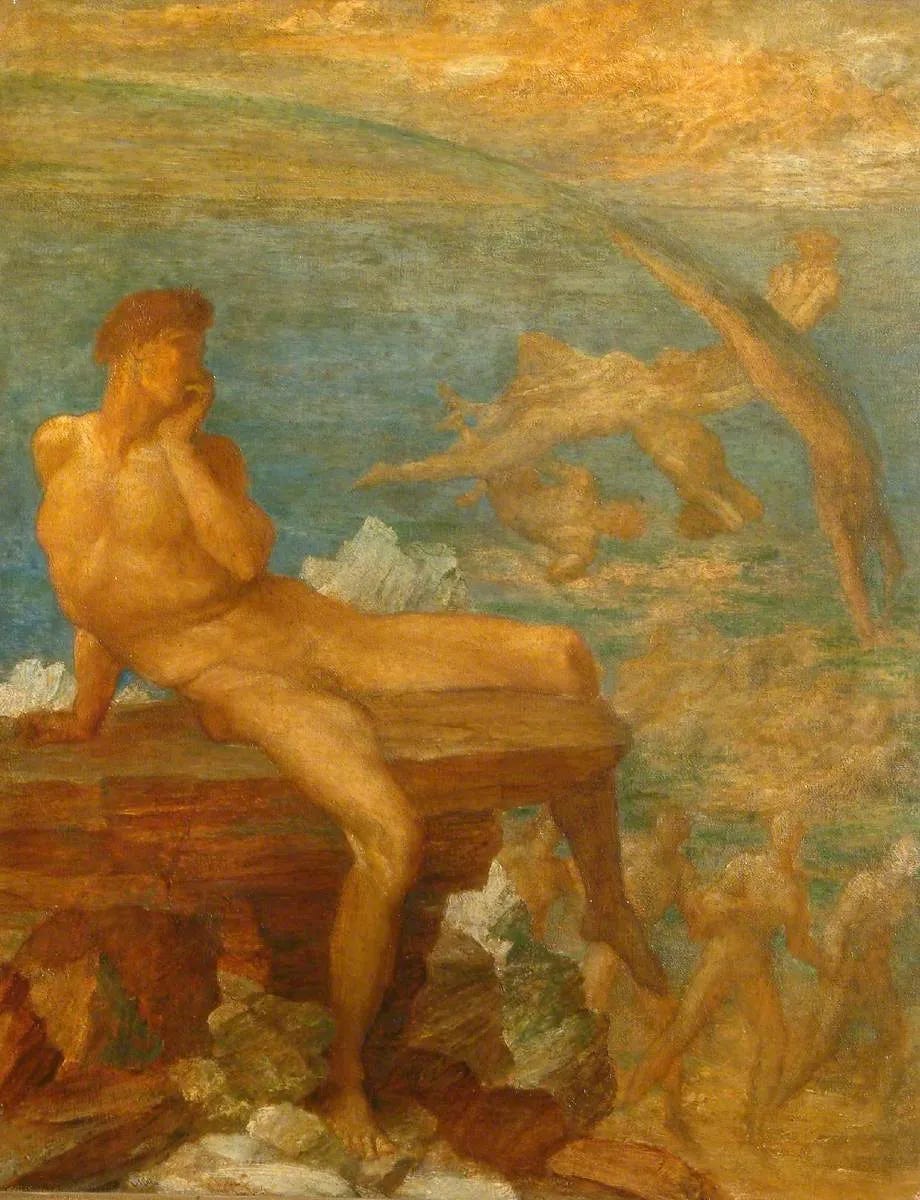
These four prohibitions implicitly draw a fundamental dividing line between two visions of humanity and the cosmos:
Athens: reason as measure
Athens celebrates autonomous reason, visible beauty, harmonious measure, and technical mastery of the world. According to Protagoras’ formula, man is the measure of all things. Perfection lies in the balance of forms, rational contemplation, and the fulfillment of nature as it presents itself. The Greek cosmos is an intelligible order (kosmos) governed by immutable laws that philosophy and science can grasp through intellect alone.
Jerusalem: unfinished creation
Jerusalem, on the other hand, proclaims the primacy of listening to the revealed Word and spiritual questioning at the heart of the Covenant. There, man is not measured, but rather, he responds. He is called, challenged, and required to choose between life, which is based on an ethic of sharing and love, and death, which is the consequence of refusing to participate in the sacredness of creation. Perfection is not immediately given in nature but must be achieved through creative obedience to the divine principles underlying the universe. The Hebrew world is not a closed kosmos but an open, unfinished creation striving toward its final redemption. Time is not cyclical, but rather, it moves toward fulfillment—a tikkun olam, or repair of the world.
The how and the why
Athens favors the visible, while Jerusalem favors the invisible. Athens venerates the natural body, while Jerusalem inscribes it in the Covenant through circumcision. Athens seeks truth through philosophical dialectic; Jerusalem, through the study of the Torah. Athens builds marble temples; Jerusalem builds sanctuaries in time. One exalts the universal through abstraction; the other, through spiritual existentialism and a responsibility to bear witness. One aspires to knowledge; the other, to holiness.
Athens asks, “How?” How should we live in the world? How should we use it wisely and with moderation to achieve human fulfillment—eudaimonia, the good life? Jerusalem, on the other hand, places the why at the heart of everything: Why are we here? What meaning should we give to our presence in space and our future in time? How can we consciously participate in a living power that transcends and encompasses us?
We are heirs of both cities.
This opposition is not a sterile clash between civilizations but rather a creative tension that runs through Western history. Whether we like it or not, we are heirs to both cities. Hanukkah asks each generation not to choose one over the other but to know how to inhabit this dual heritage without betraying critical intelligence or fidelity to transcendence. It is about thinking without giving up belief and believing without giving up thinking.
The Key to balance: Noah and his three Sons
The tension between Athens and Jerusalem that Hanukkah highlights is no accident. It stems from an ancient prophecy written at the dawn of our renewed humanity after the Flood.
According to the Bible, the Flood was triggered for a specific reason: the humans of that time were nothing but basar (בשר) and ‘hamas (חמס)—flesh and violence (Genesis 6:11-13). This was not just physical violence, but total violence: sexual transgressions that broke sacred boundaries, pagan cults that enslaved the human will, and crime that spilled blood without reason. It was tohu-bohu, a return to primordial chaos. Antediluvian humanity had mixed what God had separated, confusing beast and man, matter and spirit, reason and instinct. All order was collapsing. Humans had lost their fragile spiritual compass.
According to rabbinic tradition, the Flood lasted forty days—the time necessary for the soul to unite with the embryo and give it form—before Noah emerged from the Ark with his sons and the animals he had brought with him. Noah replanted a vineyard, became drunk on its wine, and revealed his nakedness. Ham mocked him, while Shem and Japheth covered him out of respect. Then, the three sons received a blessing from their father—not empty promises, but a prophetic destiny that would shape the centuries to come.
"Forty days after conception, the fetus is considered to be formed.” (Babylonian Talmud, tractate Berakhot 21a)
“It takes 40 days for a soul to be associated with an embryo and for its gender to be determined.” (Babylonian Talmud, tractate Berakhot 60a)
Adam = Mah: man is question
Before we examine this blessing, I would like to share a Kabbalistic detail that once surprised and struck me. Hebrew tradition employs gematria, the practice of assigning a numerical value to each letter. Two words have the same gematria value of 45: Adam (אדם), the primordial man before the fall into the confusion of good and evil; and Mah (מה), the eternal question. “What? Why?”
This numerical coincidence reveals an ontological truth: the essence of being human is to both exist and question. Unlike animals, who simply live their lives, humans cannot exist without wondering why they exist. From the beginning, humanity has carried this tension within itself; it must constantly question the mystery of life to give its existence meaning.
The three dimensions of humanity
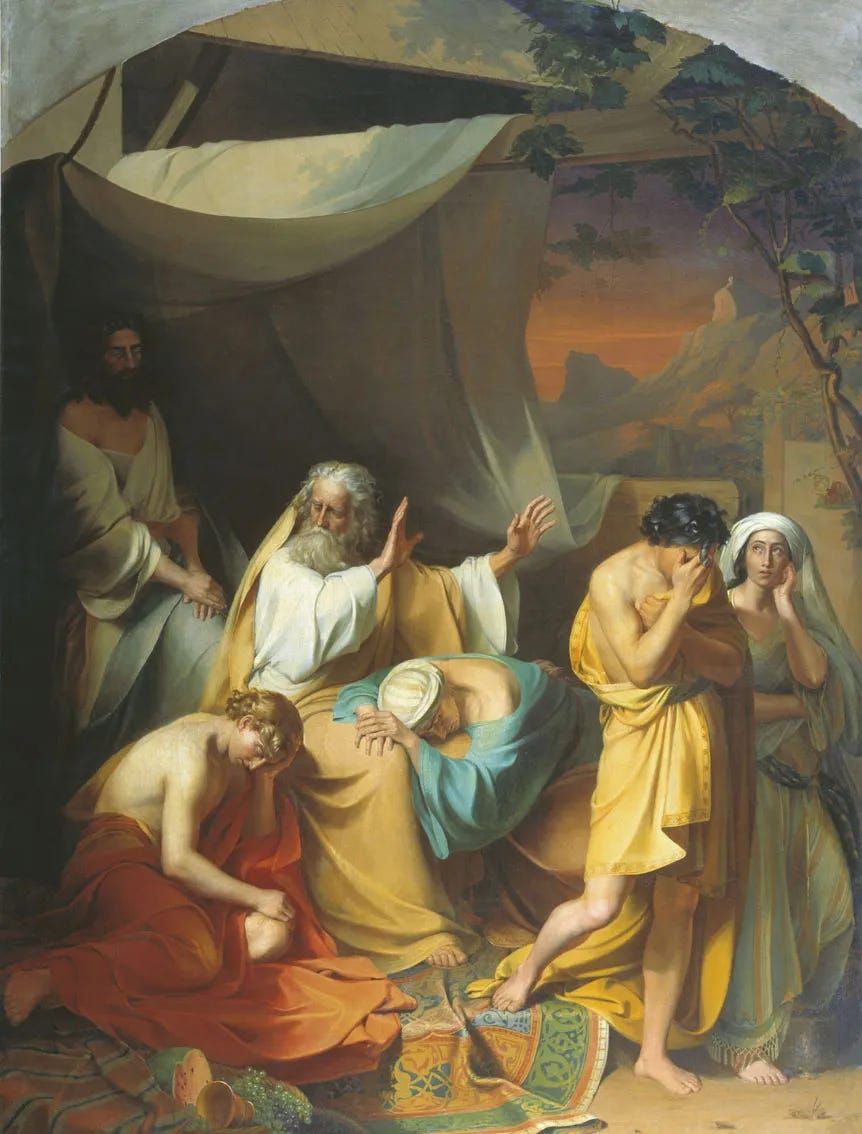
Let us now examine Noah’s blessing. Our goal is not to extract religious dogma, but rather to discover gems of meaning beneath the surface of the words that challenge our understanding of the world, ourselves, and our responsibility as human beings facing the future.
Below is my personal translation of Noah’s blessing to his sons after leaving the ark. Noah says:
“And he said, ‘Blessed be Adonai, God of Shem, and may Canaan be a servant to him. He will make Japheth great—he God, who will dwell in the tents of Shem, and Canaan will be a servant to them.’” (Genesis 9:26–27)
Shem: the Name, the identity, the Word
Noah first blesses “the G-d of Shem” — not Shem himself, but the relationship that Shem has with the divine. Shem (שם), whose name means “name” in Hebrew, embodies the power to give a name, establish identity, and say who one is — thus understanding the profound nature of the named thing or being.
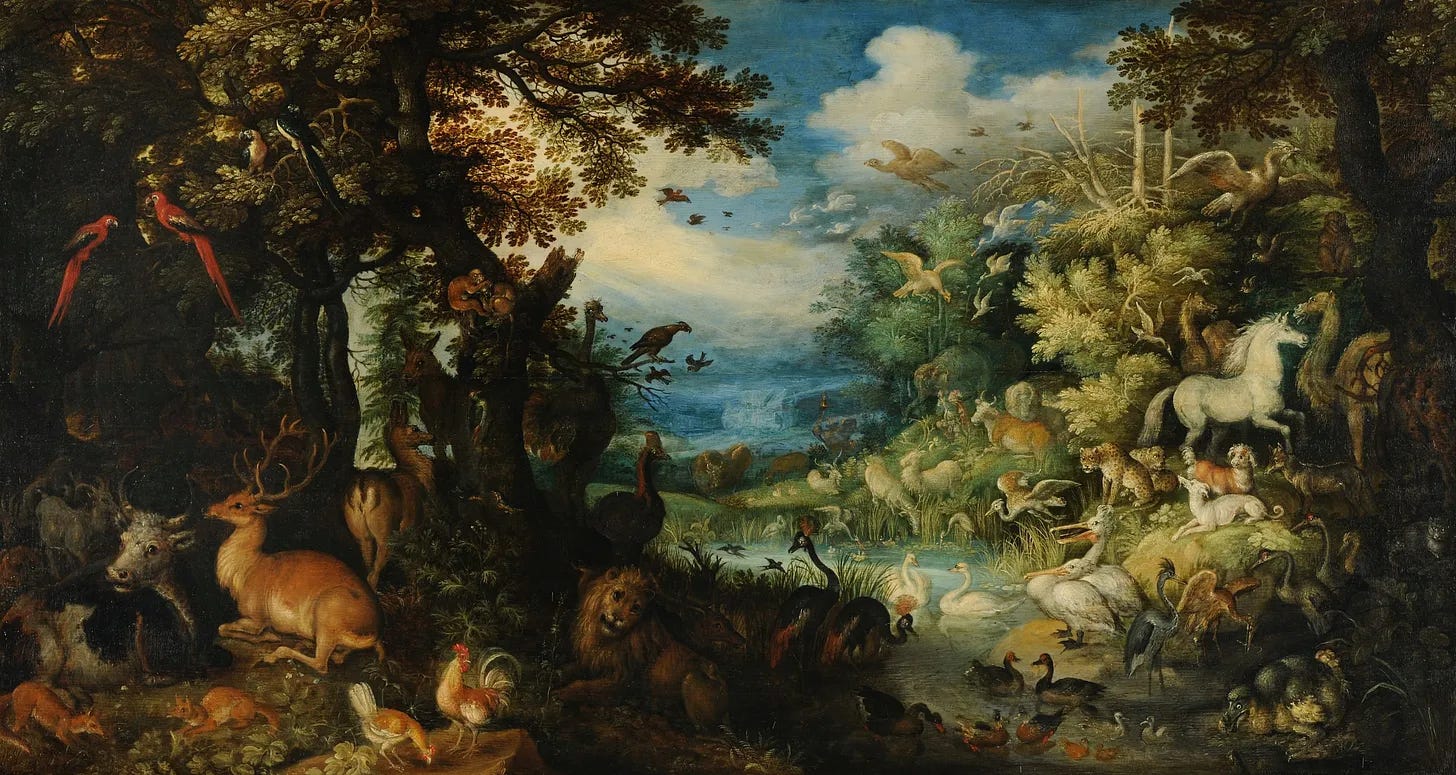
This is exactly what Adam did in Paradise. Before he and Eve were expelled from the Garden of Eden because of their spiritual fall—the consequence of their confusion between good and evil, between good unity (tov - טוב) and the brokenness of evil (ra’ - רע)—he was able to name the animals. This gesture could be interpreted as total knowledge of each vital energy.
By doing so, Adam gave meaning, intelligence, and belonging to each creature. In Hebrew thought, a name is not an arbitrary label; it is the essence of the named thing. To name is to create meaning and transform chaos into kosmos. The word creates, orders, and reveals.
And out of the ground the LORD God formed every beast of the field, and every fowl of the air; and brought them unto the man to see what he would call them; and whatsoever the man would call every living creature, that was to be the name thereof. And the man gave names to all cattle, and to the fowl of the air, and to every beast of the field. (Genesis 2:19-20)
From Shem to Jerusalem
According to the Bible, Shem is the father of the Semites, and tradition links him to Jacob, the father of the Hebrews. In the 11th century, Rashi, the great commentator on the Torah and the Talmud, wrote the following commentary on Genesis 25:27: “Jacob was a man of integrity, dwelling in tents” (yoshev ohalim - יושב אהלים). According to Rashi, these tents are “the tent of Shem and the tent of Eber.” Through this enigmatic phrase, Rashi reveals that Jacob frequented the tents of the sages—the custodians of a spiritual tradition dating back to the time of the Great Flood.
This chain of transmission would never be broken. The Hebrews descended into Egypt because of famine during Jacob’s time and his twelve sons’. They would later leave under Moses’s guidance. Much later, Solomon built the Temple in Jerusalem. Throughout these stages, we see that Shem symbolizes the thinking of Jerusalem: the primacy of the Word, the transmission of meaning, the listening to Revelation, the mastery of sacred time (the calendar and new months), and the respect for mystery.
The Temple built by Solomon and desecrated by Antiochus is precisely the one that the Maccabees re-inaugurate. Therefore, the story of Hanukkah is part of this long, unbroken chain: from Shem to Abraham, from Abraham to Jacob, from Jacob to Moses, from Moses to the Temple, and from the Temple to the Maccabees. With each generation, the same question arises: how can the Word be preserved in the face of world empires ?
Shem, the man of meaning:
By reading the following episode carefully, we can clearly see Shem’s attitude and respect for the sacred.
He precedes Noah’s blessing. After drinking new wine, Noah becomes drunk, strips naked in his tent, and of his three sons, only Shem takes the initiative to bring a tunic and cover his nakedness out of respect for his father. A peculiarity of the Hebrew text reveals this: the verb “to take” is singular. It could therefore be translated as: “Shem, followed by Japheth, takes...” Shem leads Japheth in this act of reverence, respecting his father’s privacy. This marks the boundary that opens up to transcendence and mystery. This foreshadows the future blessing in which Japheth is asked to dwell in Shem’s tents. Here is the text:
“And Noah the husbandman began, and planted a vineyard. And he drank of the wine, and was drunken; and he was uncovered within his tent. And Ham, the father of Canaan, saw the nakedness of his father, and told his two brethren without. And Shem and Japheth took a garment, and laid it upon both their shoulders, and went backward, and covered the nakedness of their father; and their faces were backward, and they saw not their father’s nakedness. (Genesis 9:20-23).
Japheth : expansion, beauty, and reason
Then Noah said to Japheth, “He will make him, Japheth, extensive—he G-d.” Here, the verb expressing the divine action to come and the name of the one who receives it are formed from the same root, which conveys the ideas of extension, expanse, and openness. Japheth embodies expansion, exploration, and taking possession of the visible world. He is the rationalist who measures, classifies, builds cities, and constructs the order of things technically.
Vowelizing this Hebrew root differently also yields the word “beauty.” According to Jewish tradition, Yavan, the son of Japheth mentioned in Genesis 10:2-4, is associated with Greece, notably in the Babylonian Talmud (Tractate Megillah 9a). Didn’t the Greeks first represent the human body in an idealized way? Were they not the inventors of philosophy, science, politics, and the arts? These disciplines guided the entire intellectual evolution of the West, as well as the development of technology and social organizations.
While Shem emphasizes spiritual questioning, transcendence, ethics, and overall, verticality and meaning, Japheth represents horizontality and the desire Japheth represents horizontality, the desire to master the visible universe, to understand it and use it to serve his ambitions in ever-greater expansion—even to the point of wanting to conquer Mars today!
This blessing will spread far and wide. The peoples descended from Japheth—the Greeks, the Indo-Europeans, and the West, in general—will dominate geographically and intellectually. Japheth symbolizes Athens’s way of thinking: autonomous reason, exploration, technê, the how of the world.
Ham and Canaan : strength, energy, and impulse.
Ham literally means “heat” or “raw energy.” It is impulse and passion—the force of nature. His son, Canaan, does not receive a blessing; he must become a servant. Why? Because Ham saw his father’s nakedness—his weakness, limitations, and finitude—and, instead of covering it with respect, exposed it publicly to mock it. He turned sacred fragility into derision. He refused to honor the paternal principle of transcendence—the limits beyond us. His descendants, in a spiritual sense, bear the consequences.
What are we to understand? Everything pertaining to materiality —power, strength, abundance—must do teshuvah (תשובה), a Hebrew word that literally means “return” or “response.” Unlike Christian “repentance,” which is based on guilt and shame, teshuva is the process of returning to one’s original essence. It is the rediscovery of one’s true soul, unaltered by selfishness, pride, greed, and domination. It is a path back to God through reconciliation with the divine, which is achieved through humility. It is the reparation that transforms evil into good, when, according to the Talmud, “faults become merits.”
This is exactly what Noah’s blessing reveals to us: “Blessed be Adonai, G-d of Shem, and may Canaan be a servant to him.” When strength is put at the service of transcendence and wisdom rather than selfish power, it becomes a blessing.
Reconciliation: Japheth in the tents of Shem
The crucial prophetic turning point is this: “Japheth shall dwell in the tents of Shem, and Canaan shall be a servant unto them.”
This is the key to the mystery. Japheth—representing reason, expansion, and technical beauty—will only be blessed if he enters the tents of Shem. In other words, rational strength, intelligence, and the ability to master the world must be placed under the roof of the revealed Word and the spiritual wisdom it enables. Japheth will only be great if he agrees to serve something greater than himself. Greek beauty will only be a blessing if it recognizes transcendence. Reason will only be wisdom if it bows down before Mystery.
Canaan—pure strength, unbridled energy, and material resources—becomes the servant that enables Japheth’s project: inhabiting the world with intelligence and reason while remaining oriented toward the tents of Shem. This allows Japheth to maintain direction, meaning, and the sacred. Servile strength—that is, strength submitted to the spiritual order—finds its greatness here by becoming the driving force of civilization. Ham’s raw heat, born of his refusal to show respect, becomes work accomplished in the service of the Covenant. Energy becomes creative when it obeys.
The tripartite architecture: a lesson in history
Noah does not divide humanity into three rival groups. Instead, he proposes a tripartite spiritual architecture applicable at both the civilizational and personal levels.
Shem: the heart, meaning, the Word, listening to the why
Japheth: the head, reason, expansion, controlled how
Canaan: the hands, energy, strength put at the service of the project
When Japheth lived under Shem’s roof
This prophecy orders history: for millennia, Japheth will live in Shem’s tents. Western civilizations will nourish their spirituality from Jewish, Christian, and then Islamic sources. Platonic Greece will seek God. Legal Rome will be steeped in the Torah. The Renaissance will resurrect antiquity, but the Protestant Reformation will restructure the West. Modern Athens built its cathedrals of knowledge—universities, museums, and libraries—in honor of the quest to improve the human condition and keep Shem’s tents intact.
Beyond the criticism that lucidity compels us to acknowledge about religions—fallible human constructs that have experienced serious deviations throughout history, some more than others—they have taken the place of Shem’s tents by transmitting wisdom and spirituality to enrich searching souls.
When Athens forgets Jerusalem
When Japheth tries to build his own tent, when the West tries to live by reason without listening to the transcendent, when Athens wants to be autonomous and forgets Jerusalem, that is when ‘hamas arises—the new violence. This process takes several generations because fundamental societal changes are slow. Gradually, Japheth, deprived of Shem’s spiritual vigilance, loses control of Canaan who then regresses to the deviance of his father Ham, which he was supposed to repair. Even worse, instead of following Shem’s example of covering his father’s nakedness, Japheth follows Canaan into cynicism, the loss of all values, and the rejection of all limits.
So, instead of slowly emancipating itself, humanity regresses into new forms of barbarism at the individual and societal levels: unbridled consumerism among the wealthy, accumulated anger among those struggling to make a living, violence among those who no longer respect anything but their instincts, nihilism of totalitarianism, ideology that takes itself for truth, technology without ethics, beauty devastated by meaninglessness.
The Maccabees: a prophetic rebellion
By banning the Torah and forcing Hellenization, Antiochus IV Epiphanes attempted to overturn Noah’s balance. He wanted Japheth to build alone, outside the tents of Shem. Like the small vial of oil that burned for eight nights instead of one, the Maccabean revolt is a manifestation of rebellion—not against reason or Hellenic beauty, but against their claim to autonomy.
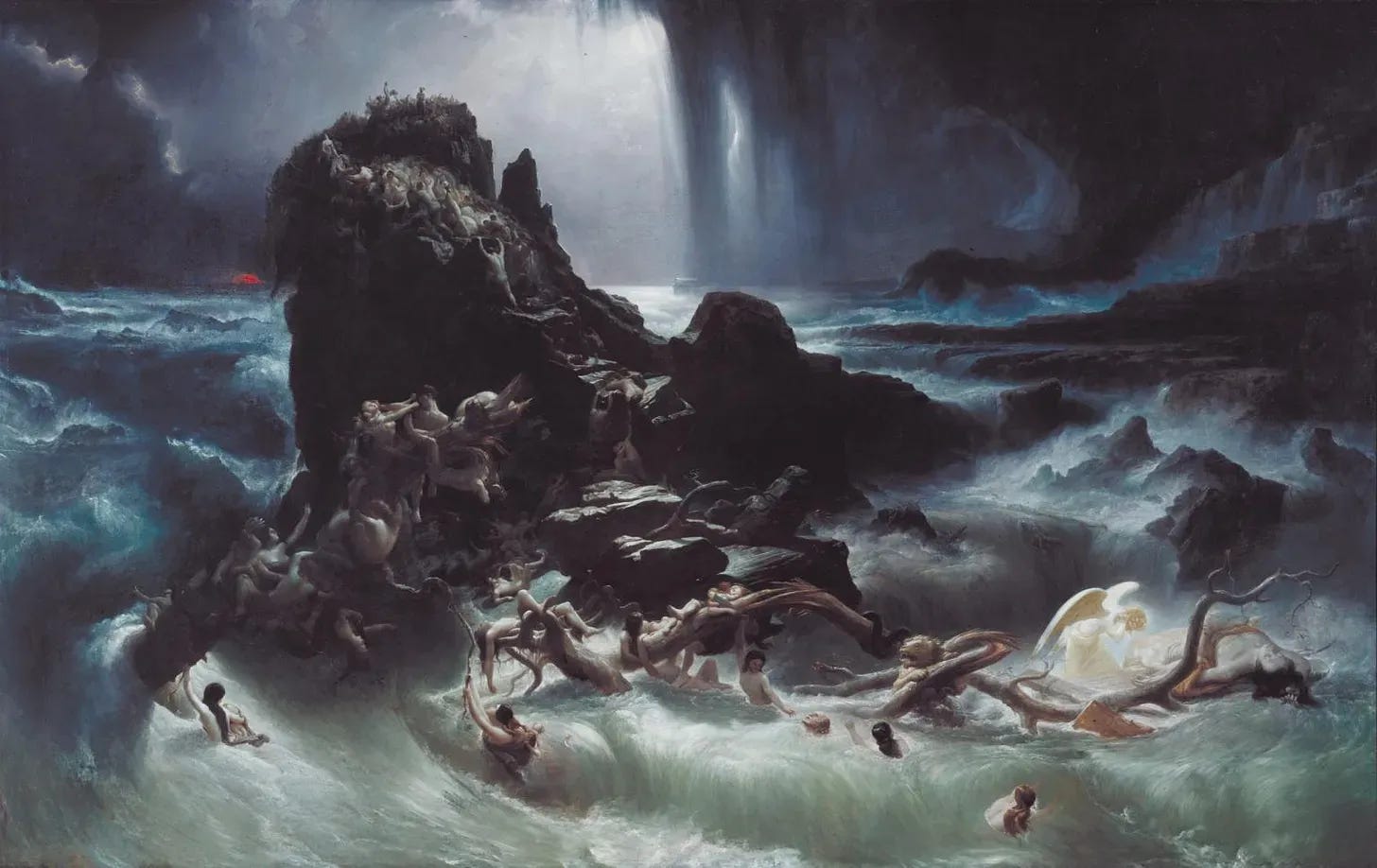
Japheth in the service of Canaan
We are indeed living in an age where Japheth has left the tents of Shem to run after Canaan.
This is why we are gradually approaching a dangerous deadline—the point at which humanity will largely lack ethical reference points and transcendence to strive for improvement. Personal development alone cannot remedy this because it can easily tip over into selfishness if self-improvement is not part of relationship with others. It will only slightly delay the return of humans to a level where they will be nothing more than bassar (בשר) and ‘hamas (חמס)—flesh and violence.
When reason loses its soul
Contemporary technology, extreme bureaucratization, artificial intelligence, and transhumanism are examples of Japheth in his apotheosis, subject to Canaan. However, without Shem, Japheth is a genius without conscience and beauty without soul. Technical reason can optimize extermination as effectively as production. It can create weapons capable of destroying all of humanity. It can enslave consciences through surveillance, nudging, and data manipulation.
This is one form of modern ‘hamas: organized, rational, invisible violence that commodifies and dehumanizes everything, slowly depriving people of the space and silence necessary to reconnect with themselves and question meaning once again. These are not the ancient wars where spilled blood cried out from the earth. Rather, they are systemic, integrated forms of violence that destroy the soul before the body and serve the appetites of Canaan, master of the world.
The three contemporary crises
The loss of meaning (Shem abandoned)
Our Western societies have developed immense knowledge, which today feeds the data farms of generative intelligence. However, they have forgotten to pass on the reason for living. Science explains how atoms work, but it does not answer the question, “To what end?” We accumulate data, not wisdom. Information, not meaning.
Younger generations in the West are asking themselves, “What’s the point?” Why study, work, and build if it’s just to perpetuate a meaningless system? This questioning is reflected in the high rates of depression, anxiety, and suicide among Western teenagers. This can be seen in the burnout epidemic among graduates who discover that their work has no purpose other than profitability. It can also be seen in the rise of addictions—to screens, substances, and online gambling—as desperate attempts to fill an existential void. Additionally, it can be seen in the demographic crisis, where people hesitate to have children because they cannot offer them a desirable future.
The fact is that Japheth has built a technically advanced civilization without foundations. The tents of Shem—the place of transcendent meaning, of the Covenant, and of the Word that gives direction—have been abandoned. Religions have failed to renew their language and relationship with the world, which has accelerated this abandonment.
When the servant becomes master (Canaan gone astray)
The energy of Canaan—the raw force of nature, matter, and time—no longer serves a common purpose. It has gone mad and been hijacked by multinational corporations and the powers of money. The fossil fuels we extract from the Earth, the data we extract from private lives, and the atoms we split are Canaan gone astray. It refuses to play its role as a driving force in service to humanity in order to satisfy its desires for power and domination.
This drift takes many forms: artificial intelligence deployed without prior ethical debate in the service of mass surveillance or behavioral manipulation, social networks designed to maximize addiction rather than authentic connection, and transhumanism that promises to “transcend” humanity without asking where or why.
We are witnessing chaos in the form of climate change, species extinction, migratory movements, information overload, and the psychological exhaustion of individuals bombarded with stimuli. We believed that we could use energy, time, and resources without limit or responsibility to Shem. This belief is creating a chain of imbalances that will ultimately threaten our survival.
The fragmentation of humanity
Without the balanced tripartite architecture of Noah—Shem establishing meaning and ethics, Japheth translating them into reason, and Canaan realizing them in reality—our societies are fragmenting. The technocratic elites —Japheth given over to his pride, have cut themselves off from the people who are still searching for meaning and feeling a vague inner call to connect with Shem but are unable to find a satisfactory answer.
Shared narratives that structure societies are collapsing, giving way to identity tensions that function by opposition. Everyone becomes someone’s enemy, and doors to dialogue are closing. It is becoming increasingly difficult to establish a collective project that provides meaning and direction for the future.
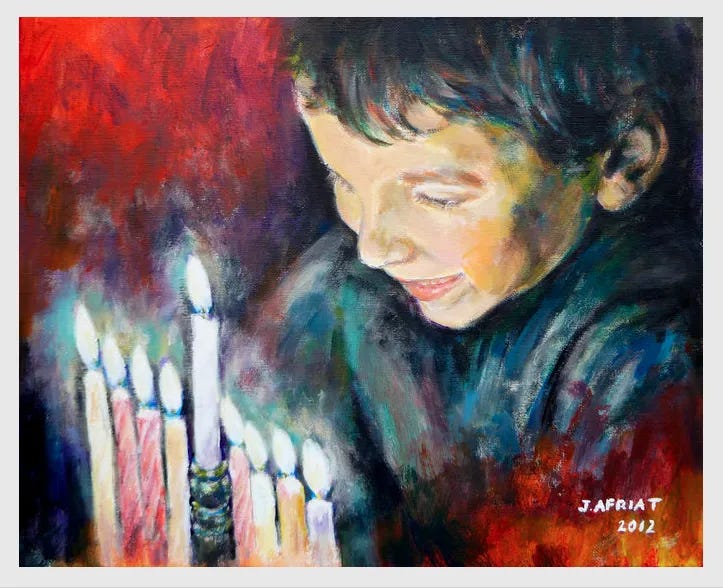
Relighting the Hanukkah menorah: a message for our times
This is where Hanukkah takes on a prophetic significance for our era. It does not say, “Let us return to the past. Let us abandon Athens for Jerusalem.” Rather, it makes a more nuanced and demanding statement: relighting the light is to restore the tripartite architecture.
The small vial of pure oil is the Ark of the Covenant, the embodiment of the Word that creates meaning. It is unique and inviolable, bearing the seal of the high priest. It belongs to no one else. It cannot be secularized, functionalized, or monetized. It simply is. It is Shem.
However, this light must illuminate a nine-branched menorah. The Hanukkah menorah is not the Temple menorah. It is a simple candlestick for everyday life and for the home. It says, “This transcendent light, this revealed Word, dwells in our ordinary lives, our streets, and our families.” It is Japheth who enters the tents of Shem—the technology of the candlestick (simple, reproducible, durable), the art of burning oil, the calculation of the eight days.
And Canaan? It is the work done to maintain this light—the hands that craft the Hanukkia menorah, press olives to make oil, and pour it every evening. It is matter’s energy put at the service of the sacred.
A call to our civilizations
To the technological West, Hanukkah asks: “Do you recognize that your reason, your beauty, your technical power must dwell in a house that transcends them? Do you accept that science is not an end, but a means? That technology serves ethics, not the other way around?”
This means restoring, in our universities, in our businesses, in our governments, the place of wisdom—not as a concession to the past, but as a necessary condition for survival.
To religions and spiritual traditions, Hanukkah also asks: “Do you recognize that Japheth—reason, criticism, science—is not your enemy, but your ally? That God does not fear questions? That faith that refuses critical debate is very little faith?”
This is what the Maccabees said when they reopened the Temple: they did not deny Greek science; they only refused to allow it to replace Revelation.
The light that refuses to go out
Why do the Hanukkah lights burn for eight days? Because beyond six days of work, beyond the seventh day of rest (Shabbat), there must be an eighth day—the day when humans start again, this time aware of their past mistakes. The day when they build with wisdom. Hanukkah is the irruption of eternal possibility into finite time. It is a rejection of determinism. It is the exercise of human freedom to rebuild the right order.
Then, despite the shortage, this light burns. Despite the fact that there was only enough oil for one day. It is the triumph of quality over quantity. Not of economic calculation, but of trust. Not violence, but fidelity.
Hanukkah offers a synthesis to our divided societies: not the identity-based withdrawal of a Shem who would survive alone or a Jerusalem closed in on itself; not the imperialism of reason of a Japheth without Shem or an autonomous Athens; not the domination of material appetites of a wayward Canaan, but rather, a path that presupposes the reinauguration of the temple of humanity that is our Earth. This path reestablishes a balance in which each of them rediscovers what makes them noble: Japheth returns to the tents of Shem; Canaan agrees to serve with dignity once again; and Shem recognizes the greatness of Japheth and the energy of Canaan.
This is what it means to inhabit the dual lineage of Athens and Jerusalem. It means thinking without giving up believing and believing without giving up thinking.
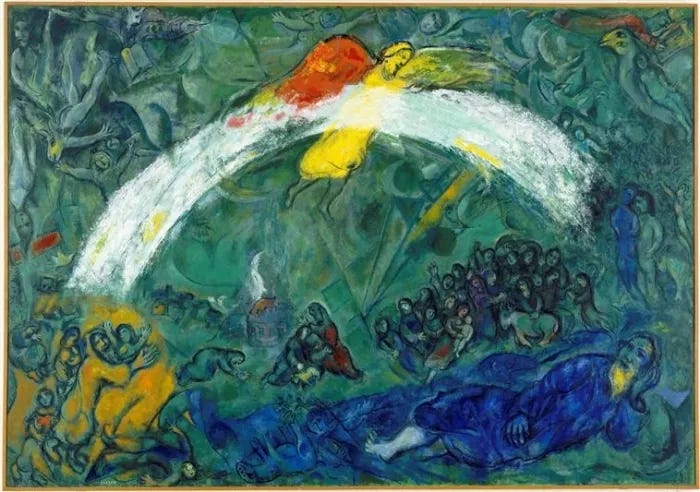
The final invitation
Each evening of Hanukkah, one more flame is added to the menorah, until there are eight. This represents a growing movement and an increase in light. In other words: “Light does not diminish when shared. It grows.” Each time someone rekindles the Word in their heart, home, or community, darkness recedes.
In our age of fragmentation and violence, this is a prophetic statement. It shows that it is possible to gradually restore the proper order and reintroduce meaning and connection. This will not be achieved through force or violent revolution, but rather through quiet fidelity, day after day, to a flame that refuses to be extinguished.
For each of us, this can begin by:
rehabilitating spaces of silence in the face of information overload (mastering Canaan);
cultivating philosophical and spiritual questioning beyond technical efficiency ( Japheth seeks Shem);
passing on meaningful stories to future generations (dwelling in the tents of Shem).
We must choose practices that connect us rather than practices that isolate us.
This requires patience. Tenacity. Daily courage. But it is possible. Every gesture counts. Each rekindled light calls for the next.
© 2026 - Dialogues of the New World — Jérôme Nathanaël

To go further
Do you see, in our time, a spiritual or cultural heritage that remains active, for better, for worse, or in some ambiguous fashion? Share your reading in the comments to spark discussion.
And if you wish to share more broadly your reflection on the heritages that shape us, send me a contribution of roughly one page for the Waymakers section. It will be published under your initials, a pseudonym, or anonymously, as you prefer. Other readers will be able to respond and dialogue with you.
New here? The Opening page introduces the author, the project, how to take part, contact details, and the agenda.